Belgium
Belgian culture & memes — surrealism, comics, beer & fries, Brel to Stromae, Van Damme, the no-government record, and the deadpan absurdism of a small bilingual country.
A chronological documentary of 435 moments spanning 1099–2026 on Loreline.
last updated 2026-07-16
Eras
- Art — The Belgian visual-art tradition — the Flemish Primitives, Bruegel, Rubens, Ensor, Magritte and the surrealists, Art Nouveau, modern sculpture and comics-as-art.
- Comics & Characters — Belgium invented the modern European comic. Tintin, the Smurfs, Lucky Luke, Marsupilami — and the meme afterlife of all of them.
- Music & Bangers — From Jacques Brel and Stromae to the eurodance and Tomorrowland years — the Belgian songbook, including the meme-tier hits.
- Food, Beer & Fries — Frietkot nationalism, Trappist beer, waffles, the chocolate, and the eternal "with or without mayonnaise" debate.
- Internet Memes — "Belgium doesn’t exist", the no-government world record, language-war jokes, and the homegrown online humour of a small bilingual country.
- Politics & Absurdities — A country that famously went 589 days without a government — the political moments Belgians turned into running jokes.
- Sport & Heroes — Cycling as a religion, the Red Devils, tennis golden girls, F1 at Spa, and the athletes a small country punches far above its weight with.
- Cities & Landmarks — Bruges, Ghent, Antwerp, the Grand-Place, the coast tram and the carillons — the places that built the Belgian self-image.
- History & Heritage — From Waterloo and the Congo to the trenches of the Westhoek and the founding of the EU — the heavy history under the light culture.
- Science & Invention — The Big Bang theory, the saxophone, Bakelite, the World Wide Web’s European home — Belgian minds that reshaped the world.
- Beer Culture — Beyond Trappist: lambic, gueuze, witbier, the café, the glassware ritual and UNESCO-listed Belgian beer culture.
- TV & Screen — Belgian television and the broadcast moments a whole country watched at once — cult TV, the news anchors, reality and the clips that became national in-jokes.
- Sketches & Comedy — Belgian sketch shows, stand-up and absurdist comedy — the bits and catchphrases that whole friend-groups still quote.
- Reality TV & Game Shows — From De Mol to Blokken — the reality formats and quiz shows (several Belgian-invented) that glued the country to the couch.
- Drama & Cinema — Belgian film and TV drama — Palme d’Or social realism, cult action, gritty crime series and the trailers that travelled the world.
- Viral & YouTube-Native — Clips that were born on the internet — viral ads, YouTuber moments, online music and the homegrown memes of a connected little country.
- — Godfrey of Bouillon. The Ardennes lord who led the First Crusade and became the first ruler of Jerusalem.
- — Bouillon Castle. Godfrey of Bouillon’s Ardennes fortress — a medieval crusader stronghold over the Semois.
- — Dinant. The Meuse-side town clinging to a cliff under its citadel — birthplace of the saxophone.
- — Orval Abbey. The romantic ruined-and-living Trappist abbey whose single beer is a grail.
- — Belgian Abbey Beers. The abbey-brewing tradition that gave the world dubbels, tripels and the glassware ritual.
- — Gravensteen, Ghent. The Castle of the Counts — a moated medieval fortress in the middle of Ghent.
- — Tournai Cathedral. The five-towered UNESCO cathedral of Belgium’s oldest city.
- — Graslei (Ghent). The medieval guild-house quay on the Leie — the postcard heart of Ghent.
- — Dinant — Collégiale & Citadel. The bulbous church spire under the cliff on the Meuse — the postcard of the Ardennes.
- — The Belfry of Bruges. The leaning medieval bell-tower over the Markt — and the "In Bruges" film’s climactic stage.
- — The Béguinages. The serene walled courtyards once home to lay religious women — UNESCO-listed across Flanders.
- — The Markt of Bruges. The gabled guildhouses and the belfry over the great market square — the picture-postcard heart of Bruges.
- — The Belfries of Belgium. The UNESCO-listed civic belfries — medieval symbols of municipal freedom across Flanders and Wallonia.
- — Battle of the Golden Spurs. 1302: Flemish militias routed French knights at Kortrijk — now the Flemish national holiday (11 July).
- — The Cloth Hall of Ypres. The medieval merchant hall flattened in WWI and rebuilt stone by stone.
- — Durbuy. Billed as "the smallest city in the world" — a tiny Ardennes stone village turned getaway.
- — Ghent & its Belfry. The dragon-topped belfry and the Graslei waterfront — Ghent, a medieval powerhouse turned hip city.
- — The Doudou of Mons. The Ducasse — a UNESCO festival pitting St George against a wicker-and-rope dragon in the main square.
- — The Carnival of Binche. The Gilles in wax masks and ostrich-plumes throwing oranges — a UNESCO masterpiece of living folklore.
- — Bruges (Brugge). The medieval canal city, "Venice of the North", frozen in 15th-century amber and now a tourist icon.
- — The Ghent Altarpiece. Van Eyck’s 1432 "Adoration of the Mystic Lamb" — a founding masterpiece of Western oil painting (and the meme-famous stolen panel).
- — Jan van Eyck — "Arnolfini Portrait". The Flemish Primitive who perfected oil painting — the mirror and the dog of the Arnolfini double portrait.
- — Rogier van der Weyden — "Descent from the Cross". The emotional pinnacle of early Flemish painting — grief carved in colour.
- — The Flemish Primitives. Van Eyck, Memling, Van der Weyden — the 15th-century Bruges painters who revolutionised oil painting.
- — The Burgundian Netherlands. The dazzling court of the Dukes of Burgundy — when Flanders was the richest region in Europe.
- — Leuven Town Hall. A wedding-cake of late-Gothic stonework — and the university city around it.
- — Hans Memling. The Bruges master of serene portraits and altarpieces — the quiet end of the Flemish Primitives.
- — The Bruegel–Bosch Imagination. The fantastical, teeming visions of the Low Countries — devils, peasants and proverbs.
- — Couque de Dinant. The rock-hard honey biscuit of Dinant — pressed in carved moulds, more keepsake than snack.
- — Charles V of Ghent. Born in Ghent in 1500, ruler of an empire "on which the sun never set" — a Belgian-born colossus.
- — St Rumbold’s Tower, Mechelen. The unfinished cathedral tower and carillon capital — Mechelen, the bell-ringing heart of Belgium.
- — Cathedral of Our Lady, Antwerp. The Gothic cathedral with Rubens altarpieces — the spire over Antwerp’s skyline.
- — Cathedral of Our Lady, Antwerp. The tallest Gothic spire in the Low Countries — home to Rubens’ altarpieces.
- — Vesalius — Modern Anatomy. Andreas Vesalius’ 1543 "De humani corporis fabrica" founded modern human anatomy.
- — St. Rumbold’s Tower, Mechelen. The unfinished giant tower whose 49-bell carillon trained Europe’s bell-ringers.
- — The Pajottenland. The rolling lambic country west of Brussels — Bruegel’s landscape, made real.
- — Pieter Bruegel the Elder. The 16th-century master of teeming peasant scenes and proverbs — the deep root of Flemish visual humour.
- — Mercator’s Projection. Gerardus Mercator’s 1569 map projection still shapes how the world pictures itself.
- — Ortelius — The First Atlas. Antwerp’s Abraham Ortelius compiled the first modern world atlas in 1570.
- — The Plantin Press. Antwerp’s great Renaissance printing house — now the UNESCO Plantin-Moretus Museum.
- — Simon Stevin. The Bruges mathematician who introduced decimal fractions to Europe — a Renaissance polymath.
- — The Spanish Netherlands. Habsburg rule, the Counter-Reformation and Rubens — the southern Low Countries under Spain.
- — Manneken Pis. The little peeing boy of Brussels (1619) — Belgium’s cheekiest national symbol, dressed in 1000+ costumes.
- — Peter Paul Rubens. Antwerp’s baroque titan — voluptuous canvases that gave us the word "Rubenesque".
- — Anthony van Dyck. Rubens’ brilliant pupil who became the great court portraitist of Europe.
- — Jacob Jordaens. Antwerp Baroque’s great painter of boisterous feasts — Rubens’ rowdier contemporary.
- — The Citadel of Namur. The great fortress above the Sambre-Meuse confluence — heart of Wallonia’s capital.
- — The Grand-Place. Brussels’ UNESCO-listed central square — guildhalls, gold leaf, and the biennial Flower Carpet.
- — Spa — The Original "Spa". The Ardennes water town whose name became the global word for a thermal resort.
- — Jenever. The juniper spirit and ancestor of gin — a Low Countries tradition with protected origin.
- — Spa — The Original Spa Town. The Walloon town whose healing springs gave the world the very word "spa".
- — Mattentaart. The curd-cheese tartlet of Geraardsbergen — an EU protected-origin Flemish pastry.
- — Faro. The sweetened, easy-drinking old cousin of lambic — Brussels café-beer history in a glass.
- — The Battle of Waterloo. 1815: Napoleon’s final defeat on Belgian soil — the Lion’s Mound now marks the field.
- — Rodenbach — Flemish Red. The oak-aged sour red-brown ale of Roeselare — a category of its own.
- — The Lion’s Mound. The great earthen pyramid topped by an iron lion, marking the field of Waterloo.
- — La Brabançonne. The national anthem born in the 1830 revolution — sung (when the words are remembered) in three languages.
- — The Belgian Revolution. 1830: independence from the Netherlands sparked, legend has it, by an opera. A nation is born.
- — Leopold I, First King. 1831: the new kingdom’s first monarch, a German prince, founds the Belgian dynasty.
- — Joseph Plateau. The Ghent physicist whose phenakistiscope made images move — a grandfather of cinema.
- — Wappers — "Episode of the Belgian Revolution". The 1834 romantic battle canvas that became the image of 1830 independence.
- — Quetelet & the "Average Man". Adolphe Quetelet of Brussels founded social statistics and gave us the Body Mass Index.
- — Westvleteren 12. The Trappist beer of Sint-Sixtus, sold only at the abbey gate — routinely voted the best on Earth.
- — Trappist Beer (Westvleteren etc.). Monk-brewed beer; Westvleteren 12 is routinely rated the best in the world. Beer is Belgian UNESCO heritage.
- — Saison Dupont. The benchmark farmhouse saison of Hainaut — the Walloon harvest-beer style that conquered craft brewing.
- — Adolphe Sax & the Saxophone. Dinant’s Adolphe Sax patented the saxophone in 1846 — the instrument that defined jazz.
- — Galeries Royales Saint-Hubert. Europe’s grand 1847 shopping arcade in Brussels — glass-roofed elegance.
- — The Brussels Waffle. Light, rectangular, crisp — dusted with sugar or piled with cream and fruit.
- — Belgian Waffles (Gaufres). Liège vs Brussels — the waffle schism. A diaspora ambassador and tourist cliché.
- — The Liège Waffle. Dense, caramelised pearl-sugar waffle eaten warm on the street — the Walloon waffle.
- — Belgian Endive (Witloof). Chicon / witloof — the bitter white vegetable accidentally invented in a Brussels cellar.
- — Antoine Wiertz. The megalomaniac Romantic painter of grotesque, gigantic canvases — Brussels’ strangest one-man museum.
- — Achel. The smallest and most remote of the Belgian Trappist breweries, on the Dutch border.
- — Chimay. The Trappist brewery of Scourmont Abbey — its red, blue and white caps known worldwide.
- — Ernest Solvay. The soda-ash industrialist whose fortune funded the legendary Solvay physics conferences.
- — Kekulé’s Benzene Ring. The Ghent-professor dream of a snake biting its tail — the structure of benzene.
- — Speculoos. The spiced caramelised biscuit — and the cult spread made from it.
- — Zénobe Gramme’s Dynamo. The Belgian inventor whose 1871 dynamo made practical electric power generation possible.
- — Cuberdon (Neuzeke). The cone-shaped raspberry sweet of Ghent — soft inside, and fiercely local.
- — Parc du Cinquantenaire. The triumphal arch and museums built for Belgium’s 50th anniversary — Brussels’ grand gesture.
- — Félicien Rops. The provocative Namur printmaker — symbolism, satire and scandal.
- — Palace of Justice, Brussels. Poelaert’s colossal 1883 courthouse — for decades the largest building of the 19th century, perpetually under scaffolding.
- — Leopold II & the Congo. The dark colonial chapter — Leopold’s brutal personal rule over the Congo Free State, still being reckoned with.
- — The Kusttram (Coast Tram). The world’s longest tram line, running the entire 67 km Belgian North Sea coast.
- — James Ensor — Masks. Ostend’s painter of grotesque carnival masks and skeletons — proto-expressionist, proto-surreal.
- — Constantin Meunier. The sculptor of miners and dockers — industrial labour cast in bronze.
- — Victor Horta & Art Nouveau. Brussels gave the world Art Nouveau architecture — sinuous iron, glass and whiplash curves.
- — Hôtel Tassel — Victor Horta. Horta’s 1893 townhouse — the birth of Art Nouveau architecture.
- — Fernand Khnopff. The aloof symbolist of sphinxes and silent women — Belgium’s master of fin-de-siècle mystery.
- — Rochefort. The Trappist ales of Saint-Remy Abbey — rich, dark and revered by beer hunters.
- — Moules-frites. Mussels and fries — the unofficial national dish, eaten by the pot.
- — Waterzooi. The creamy Ghent chicken-or-fish stew — Flemish comfort cooking.
- — Cantillon Brewery. The living lambic museum-brewery of Brussels — spontaneous fermentation kept alive.
- — Ostend — Queen of Belgian Resorts. The sea-front of the "Queen of the Belgian seaside", beloved since the Belle Époque.
- — Paling in ’t Groen. Eel in green herb sauce — a riverside Flemish delicacy.
- — Belgian Fries (Frieten/Frites). Double-fried, served from a frietkot in a paper cone with mayo. A point of fierce national pride.
- — The Semois Valley. The misty meandering river of the deep Ardennes — Belgium’s most romantic landscape.
- — The Pistolet. The round crusty Sunday-morning bread roll — a small but fierce Belgian breakfast ritual.
- — The Belgian Café (Bruin Café). The brown café — wood, beer mats and unhurried conversation, the social heart of a town.
- — Léon Frédéric. The symbolist realist of teeming peasant triptychs — a strange Belgian master.
- — The Brussels Sprout Joke. The vegetable the world blames on Belgium — a small, eternal national punchline.
- — Stoofvlees / Carbonnade. Beef slow-braised in brown Belgian beer — comfort food, frietkot-side.
- — The Caves of Han. The vast Ardennes cave system carved by the river Lesse — a natural wonder of Wallonia.
- — Lambic & Spontaneous Fermentation. The wild-yeast beer of the Zenne valley — Belgium’s most unusual brewing tradition.
- — The Belgian Coast Resorts. Knokke, De Panne, Blankenberge — the cabines, dijk and waffles of the North Sea summer.
- — Ostend — "Queen of Beaches". Leopold II’s belle-époque seaside resort — royal villas, the Kursaal and North Sea glamour.
- — The Antwerp Port. One of the world’s great ports and Europe’s petrochemical engine — Belgian industry at planetary scale.
- — Kriek (Cherry Beer). Lambic steeped with sour cherries — the fruit beer that charms newcomers.
- — The Antwerp Diamond District. For centuries the world’s diamond-trading heart — a square kilometre that cut most of history’s gems.
- — Gueuze. Blended, bottle-refermented lambic — the "Brussels Champagne", sour and complex.
- — Antwerp Central Station. The "Railway Cathedral" — one of the most beautiful train stations in the world.
- — Bakelite — The First Plastic. Leo Baekeland’s 1907 invention of Bakelite launched the age of plastics.
- — Léon Spilliaert. The Ostend painter of lonely seafronts and mirrored self-portraits — haunting symbolist solitude.
- — The Africa Museum (Tervuren). The grand colonial museum, controversially redesigned to confront Belgium’s Congo legacy.
- — Stoclet Palace. The 1911 Vienna-Secession mansion in Brussels with Klimt friezes.
- — The Brabant Fauvists. Rik Wouters and the joyous colour of early-20th-century Flemish painting — light before the war.
- — Belgian Chocolate (Praline). Jean Neuhaus invented the praline in 1912 Brussels — the gold standard of chocolate.
- — The Belgian Praline. Jean Neuhaus invented the filled chocolate in 1912 — the birth of an industry.
- — Tour of Flanders (Ronde). The Ronde van Vlaanderen — cobbled climbs, the Koppenberg, and a near-religious one-day classic in Flemish cycling.
- — The Burning of Leuven. 1914: German troops torched the university library and its medieval manuscripts — an atrocity that shocked the world.
- — King Albert I, the Knight King. The WWI soldier-king who stayed with his troops — a national hero, killed climbing in 1934.
- — The Battle of the Yser. 1914: Belgians flooded the Yser plain to halt the German advance — the front held for four years.
- — The Praline Box (Ballotin). The ballotin — the elegant Belgian chocolate box invented by Neuhaus’ wife in 1915.
- — "In Flanders Fields". The poppies of the Westhoek and the poem that made them the global symbol of remembrance.
- — In Flanders Fields. The poppies of the Westhoek and McCrae’s poem — Belgium as the eternal WWI battlefield.
- — Tyne Cot Cemetery. The largest Commonwealth war cemetery in the world — near Passchendaele.
- — The Zeebrugge Raid. 1918: the daring British attempt to block the U-boat port — a famous WWI naval action on Belgian shores.
- — Filet Américain. Seasoned raw minced beef with fries — a Belgian brasserie staple that startles every visitor.
- — The Strong Golden Ale. Bottle-conditioned strong blonde ales — deceptively drinkable, dangerously strong.
- — Constant Permeke. The heavy, earthbound Flemish expressionist of fishermen and farmers — raw and monumental.
- — Spa-Francorchamps. Eau Rouge, the Ardennes forest, and the greatest corner in Formula 1 — Belgium’s temple of speed.
- — The Menin Gate, Ypres. The WWI memorial where the Last Post has sounded nightly since 1928 for the missing of the Westhoek.
- — Georges Lemaître — The Big Bang. The Belgian priest-physicist who first proposed the expanding universe and the "primeval atom".
- — The Solvay Conferences. Brussels, 1927: the most famous photograph in physics — Einstein, Curie, Bohr and the birth of quantum theory.
- — The Last Post — Menin Gate. Buglers have sounded the Last Post under the Ypres memorial every evening since 1928.
- — Tintin (Hergé). Hergé’s boy reporter (1929), the founding work of the Belgian "ligne claire" comic tradition.
- — Magritte — "Ceci n’est pas une pipe". René Magritte’s 1929 "The Treachery of Images" — the original "this is not a X" template, ancestor of countless memes.
- — Snowy (Milou). Tintin’s loyal wire fox terrier — one of the most famous dogs in fiction.
- — Quick & Flupke. Hergé’s mischievous Brussels street kids — the cheeky counterpart to Tintin.
- — The IJzertoren. The towering Flemish peace-and-emancipation memorial on the Yser — "No More War" in four languages.
- — Orval Abbey. The Trappist abbey whose distinctive dry-hopped ale and fairytale legend define Belgian monastic brewing.
- — Westmalle Tripel. The abbey that arguably defined the "Tripel" style — golden, strong, foundational.
- — The Roubaix Velodrome. The open-air "Hell of the North" finish — the cathedral of cobbled-classics suffering.
- — Django Reinhardt. Born in Belgium, the gypsy-jazz guitar legend who reinvented the instrument with two fingers.
- — Spirou & Fantasio. The bellboy-hero of Belgian comics (1938) and his magazine that launched half the country’s cartoonists.
- — Corneille Heymans — Nobel Medicine. The Ghent physiologist who won the 1938 Nobel for discovering how the body senses blood oxygen.
- — Fort Breendonk. The grim WWII prison camp preserved as a memorial.
- — Fort Breendonk. The chillingly preserved WWII Nazi prison camp near Mechelen — a place of national memory.
- — Westvleteren 12. Brewed by Trappist monks at Sint-Sixtus — repeatedly voted the best beer in the world.
- — Captain Haddock. Tintin’s whisky-loving sidekick and his immortal curses — "Billions of blue blistering barnacles!"
- — The Battle of the Bulge. Winter 1944: the last great German offensive, and the siege of Bastogne — "Nuts!"
- — Paul Delvaux. The other great Belgian surrealist — dreamlike trains, classical ruins and sleepwalking figures.
- — Suske en Wiske. Willy Vandersteen’s Flemish adventure duo (1945) — the most-read comic in Dutch.
- — Suske en Wiske — Willy Vandersteen. The Flemish comic empire of Willy Vandersteen — adventures beloved across generations.
- — Blake & Mortimer. Edgar P. Jacobs’ ligne-claire adventure series (1946) — British heroes, very Belgian craft.
- — Lucky Luke. Morris’ cowboy "who shoots faster than his shadow" (1946) — a Franco-Belgian comics pillar.
- — Nero (Marc Sleen). Marc Sleen’s satirical comic strip (1947), in the Guinness book as longest-running by a single author.
- — Paul Delvaux. The dreamlike trains and moonlit nudes of the Belgian surrealist.
- — The Mardasson Memorial. The star-shaped American memorial at Bastogne — gratitude carved into the Ardennes.
- — Mayonnaise on Fries. The "fries with mayo" stereotype — a genuine cultural marker and a recurring international meme.
- — Frietkot Nationalism. The frietkot/friterie as the truest national institution — more uniting than any flag.
- — The Royal Question. 1950: the bitter post-war crisis over Leopold III’s wartime conduct nearly split the country.
- — Shrimp Croquettes. Garnaalkroketten — the beloved North Sea grey-shrimp croquette, a brasserie classic.
- — A Glass for Every Beer. The Belgian ritual: each beer in its own branded, shaped glass. Form follows beer.
- — Tomate-Crevettes. A hollowed tomato stuffed with grey shrimp and mayo — a brasserie starter of quiet national affection.
- — Marsupilami. Franquin’s yellow-spotted "houba houba" jungle creature (1952) — the most meme-able sound in Franco-Belgian comics.
- — Tintin — The Moon Rocket. Hergé’s red-and-white checkered moon rocket (1953) — predicting the Moon landing by 16 years.
- — Jommeke. Jef Nys’ blond Flemish boy-hero (1955) — a staple of Dutch-language childhoods.
- — The High Fens (Hautes Fagnes). The wild upland moor near the German border — Belgium’s highest, bleakest landscape.
- — Paul-Henri Spaak. The Belgian statesman called a "founding father of Europe" — first president of the UN General Assembly.
- — Gaston Lagaffe. Franquin’s lazy office anti-hero (1957) — the patron saint of Belgian workplace gags.
- — Brussels, Capital of Europe. The EU institutions made Brussels the de facto capital of a continent.
- — Expo 58. The 1958 Brussels World’s Fair — the Atomium, optimism and the atomic age made Belgian.
- — Dominique Pire — Nobel Peace. The Belgian Dominican friar who won the 1958 Nobel Peace Prize for aiding post-war refugees.
- — The Smurfs (Les Schtroumpfs). Peyo’s little blue creatures (1958) — a global franchise and a bottomless meme well ("smurf" as universal verb).
- — The Atomium. Brussels’ 1958 World’s Fair iron crystal — the most photographed Belgian structure and a surreal national emblem.
- — The Brussels Bubble. The European Quarter’s lobbyists, officials and journalists — a city-within-a-city.
- — Bokrijk Open-Air Museum. The living museum of historic Flemish buildings — Belgium’s rural past, reassembled.
- — Expo 58 — The World’s Fair (archive film). Period footage of the 1958 Brussels World’s Fair and the gleaming new Atomium.
- — Expo 58. The 1958 Brussels World’s Fair — atomic-age optimism, the Atomium, and Belgium centre-stage.
- — Jacques Brel — "Ne me quitte pas". The towering 1959 chanson, one of the most-covered songs in history. Peak Belgian melancholy.
- — Boule et Bill. Roba’s boy-and-cocker-spaniel strip (1959) — gentle Franco-Belgian family comedy.
- — VRT & RTBF. The two public broadcasters across the language line — the shared and separate screens of Belgium.
- — Pierre Alechinsky. The CoBrA-movement painter — gestural, calligraphic, restless Belgian abstraction.
- — Congo Independence — Lumumba’s Speech. 30 June 1960: Patrice Lumumba’s defiant speech as the Belgian Congo became independent.
- — Congo Independence (1960). Lumumba’s independence speech and the turbulent birth of the Democratic Republic of the Congo.
- — Toots Thielemans. The harmonica genius behind "Bluesette" — the most famous Belgian jazz musician ever.
- — Jacques Brel — "Les Vieux". His devastating 1963 chanson about ageing and the ticking clock.
- — Magritte — "The Son of Man". The bowler-hat man with a floating green apple — endlessly remixed in pop culture and memes.
- — Jacques Brel — "Amsterdam". Brel’s thunderous 1964 live performance — one of the greatest vocal crescendos ever filmed.
- — Witbier (Hoegaarden). The cloudy wheat beer with coriander and orange peel, revived by Pierre Celis at Hoegaarden.
- — Jacques Brel — "Amsterdam". The towering live performance — Brel at the absolute height of his powers.
- — Jacques Brel — "La chanson des vieux amants". Brel’s aching ode to long love — the chansonnier at his most tender.
- — Marcel Broodthaers. The poet-turned-conceptualist of mussel shells and fictional museums — Belgium’s most cerebral surreal heir.
- — Eddy Merckx — "The Cannibal". The greatest cyclist of all time. Cycling is a Belgian religion; Merckx is its god.
- — Jean-Michel Folon. The gentle dreamlike watercolours of little hatted men and winged figures — a beloved Belgian poster-artist.
- — Yoko Tsuno. Roger Leloup’s pioneering electronics-engineer heroine (1970) — a rare female lead in the Franco-Belgian canon.
- — Panamarenko. The Antwerp artist-inventor of fantastical, never-quite-flying flying machines — pure Belgian surreal whimsy.
- — Merckx — The Hour Record. Mexico City, 1972: Eddy Merckx’s legendary, agonising hour record on the track.
- — The Yellow-Jersey Years. Five Tours, five Giri, the hour record — Eddy Merckx’s palmarès is unmatched in cycling.
- — Chantal Akerman — "Jeanne Dielman". The Brussels auteur whose 1975 masterpiece was voted the greatest film of all time.
- — RSC Anderlecht. Belgium’s most successful football club — purple-and-white, 34 league titles, European silverware.
- — Plastic Bertrand — "Ça plane pour moi". The 1977 punk-pop novelty that became Belgium’s most exported earworm.
- — Roger De Vlaeminck. "Monsieur Paris-Roubaix" — four wins on the cobbles, one of the great classics riders.
- — Ilya Prigogine — Nobel Chemistry. The Brussels chemist whose work on dissipative structures won the 1977 Nobel.
- — Thorgal. Rosiński & Van Hamme’s Viking-fantasy epic (1977) — a Franco-Belgian comics landmark.
- — De Kiekeboes. Merho’s gag-a-page Flemish family comic (1977) — sharp, topical and hugely popular.
- — Club Brugge. The blue-and-black powerhouse of Bruges — Anderlecht’s great rival, a Champions League regular.
- — Pauwel Kwak & the Glass. The amber ale served in its iconic coachman’s stirrup glass and wooden holder.
- — De Collega’s. The 1980s civil-service workplace sitcom — foundational Flemish TV comedy.
- — Urbanus — stand-up. The vulgar, beloved Flemish comedian — a national institution since the 1970s.
- — Strip-Tease. The legendary fly-on-the-wall RTBF documentary series — unscripted, unnarrated Belgian human comedy.
- — Gaston en Leo — "De pastoors". The classic Flemish comedy duo’s slapstick double-act.
- — The Heysel Disaster. 1985: 39 dead at the European Cup final in Brussels — a tragedy that reshaped football.
- — Sandra Kim Wins Eurovision 1986. At 13, she gave Belgium its only Eurovision victory with "J’aime la vie".
- — Jambers. Paul Jambers’ blunt, immersive human-interest reportages — the godfather of Flemish documentary TV.
- — Sandra Kim wins Eurovision (1986). Belgium’s only Eurovision win — 13-year-old Sandra Kim with "J’aime la vie".
- — Arno — "Putain Putain". Ostend’s gravel-voiced rock poet and TC Matic — the soul of Belgian rock.
- — Jeanneke & Het Zinneke. Manneken Pis’ lesser-known peeing companions — a girl and a dog — completing Brussels’ irreverent trio.
- — New Beat / Belgian acid. Late-80s Belgian new beat — the slowed-down acid sound that birthed a genre.
- — Confetti’s — "The Sound of C". The 1988 new-beat anthem and its iconic dance — peak Belgian dancefloor.
- — Confetti’s — "The Sound of C". The 1988 new-beat dancefloor anthem with its unmistakable arm-cross dance.
- — Technotronic — "Pump Up the Jam". The 1989 Belgian new-beat smash that helped launch global house/eurodance.
- — The Comic Strip Center. Brussels’ Belgian Comic Strip Center in a Horta-designed building — a temple to the Ninth Art.
- — Belgian Minds at CERN. The continent’s great physics laboratory, where the Web was born — Belgian science woven into European big science.
- — The Comics Art Museum. Brussels’ Art-Nouveau temple to the ninth art, in a Horta-designed building — Belgium’s comics shrine.
- — Largo Winch. Van Hamme’s billionaire-adventurer thriller comic (1990), later films and TV.
- — Clouseau — "Daar gaat ze". The Wauters brothers’ 1990 Flemish pop staple, sung at every wedding since.
- — Vaya Con Dios — "Nah Neh Nah". Dani Klein’s smoky Brussels jazz-pop — a 1990 European smash.
- — Vaya Con Dios — "Nah Neh Nah". Dani Klein’s gypsy-jazz-pop trio — a giant 90s Belgian export.
- — King Baudouin Steps Aside. In 1990 the king briefly abdicated for a day rather than sign an abortion law — a uniquely Belgian solution.
- — Tien om te Zien. The summery 90s VTM chart show — Margriet Hermans, Blankenberge and schlager nostalgia.
- — R&S Records. The Ghent techno label that defined 90s electronic music worldwide — Aphex Twin, Derrick May and more.
- — Jaco Van Dormael. The director of "Toto le héros" and "Mr. Nobody" — Belgium’s great cinematic fabulist.
- — Praga Khan / Lords of Acid. Maurice Engelen’s Belgian new-beat and acid-house project — a cult electronic export.
- — Brussels Comic Book Route. The giant comic murals across Brussels — the city as an open-air bande-dessinée museum.
- — Toto le héros. Jaco Van Dormael’s 1991 Caméra d’Or debut — a poetic, time-jumping tale of a stolen life.
- — Technotronic — "Move This". The 1991 follow-up smash, revived worldwide by an ad decades later.
- — "Toto le héros". Jaco Van Dormael’s 1991 Caméra d’Or winner — a landmark of surreal Belgian cinema.
- — The Comic Book Route. Giant comic murals across Brussels turn the whole city into an open-air gallery of Belgian comics.
- — Samson en Gert. The talking-dog-and-owner duo (1989) — the most beloved Flemish kids’ show ever.
- — "Dag Sinterklaas". Bart Peeters & Hugo Matthysen’s deadpan children’s series — quoted by Flemish adults to this day.
- — Blokken. The Tetris-based VRT quiz that ran nightly for three decades — a Flemish dinner-time ritual.
- — "Man Bites Dog". The pitch-black 1992 mockumentary about a charming serial killer — a Belgian cult landmark.
- — Will Tura — "Hoop doet leven". The "Keizer van het Vlaamse lied" — his signature song, sung at King Baudouin’s funeral.
- — Eurodance Anthems. The Belgo-Dutch eurodance boom of the early 90s — pounding, unstoppable, everywhere.
- — Axelle Red. The Flemish-French soul-pop star, a fixture of 90s–2000s Belgian radio.
- — The Death of King Baudouin. 1993: a nation in mourning for the long-reigning, much-loved king.
- — Familieraad (Family Feud Belgium). The 1990s Flemish version of Family Feud — survey-says nostalgia.
- — dEUS — "Suds & Soda". Antwerp’s art-rockers who put Belgian indie on the global map in the 90s.
- — Helmut Lotti — "Goes Classic". The Ghent crossover tenor who sold millions making opera karaoke-friendly.
- — "Wittekerke". The long-running coastal soap (1993–2008) — a Flemish living-room institution for fifteen years.
- — Le Huitième Jour. Van Dormael’s 1996 film whose star Pascal Duquenne shared the Cannes best-actor prize.
- — Hooverphonic. The trip-hop band from Sint-Niklaas — lush, cinematic Belgian pop.
- — "The Eighth Day" (Le Huitième Jour). Jaco Van Dormael’s 1996 film whose lead, an actor with Down syndrome, shared the Cannes Best Actor prize.
- — Kabouter Plop. Studio 100’s gnome show — meme-tier for an entire Flemish childhood.
- — The White March. 1996: 300,000 marched in Brussels in silent protest — the largest demonstration in Belgian history.
- — Frank Vandenbroucke. The mercurial 1990s cycling talent — dazzling, doomed, and unforgettable to Belgian fans.
- — "Rosetta". The Dardennes’ 1999 Palme d’Or — its raw realism even inspired a Belgian youth-employment law.
- — The Dardenne Brothers. Two-time Palme d’Or winners — the social-realist face of acclaimed Belgian cinema.
- — Comic Statues of Brussels. Bronze comic-character statues dot Brussels — a city that wears its Ninth Art on its streets.
- — Hooverphonic — "Mad About You". The 2000 trip-hop classic from the Sint-Niklaas band — lush, cinematic Belgian pop.
- — In de Gloria — "Boemerang". The legendary fake-tabloid-TV sketch — a high point of Belgian comedy.
- — Luc Tuymans. The Antwerp painter whose pale, unsettling canvases made him one of the most influential living artists.
- — Wim Delvoye — "Cloaca". The provocateur behind the digesting machine and tattooed pigs — Belgian conceptual art with a grin.
- — In de Gloria — "Tetje en Fil". The cult Flemish sketch show (2000) whose absurd parodies are still quoted everywhere.
- — The Flandrien Weatherman. Belgian TV weather — a national fixation, delivered deadpan over endless grey skies.
- — The TV Formats Belgium Exported. A small market that punches far above its weight inventing globally-licensed TV formats.
- — Lara Fabian — "Je t’aime". The Belgian-Italian diva’s soaring ballad — a voice that fills stadiums.
- — Cécile de France. The Namur-born star of "L’Auberge espagnole" and "Hereafter" — Belgian cinema’s international ambassador.
- — F.C. De Kampioenen. The beloved football-club sitcom (1990–2011) — endlessly rerun Flemish comfort TV.
- — Stefan Everts — Motocross King. Ten-time motocross world champion — one of the sport’s greatest ever, from Belgium.
- — Justine Henin — The Backhand. Seven Grand Slams and the most beautiful one-handed backhand in the women’s game.
- — De Zaak Alzheimer (The Memory of a Killer). Erik Van Looy’s 2003 crime hit about an ageing hitman losing his memory — a Flemish classic.
- — Arno — "Putain Putain". The gravel-voiced Ostend rocker’s anthem — the eternal soul of Belgian rock-’n’-roll.
- — K3 — "Oya Lélé". The Studio 100 girl-group phenomenon — a generation of Flemish kids grew up singing along.
- — Soulwax — "NY Excuse". The Dewaele brothers’ electro-punk landmark — Ghent’s gift to the dancefloor.
- — Het Eiland. The bleak 2004 office-comedy cult series that predated and rivalled The Office tone.
- — Soulwax — "NY Excuse". The 2004 electro-rock floor-filler that defined the Ghent band’s live era.
- — Kim Clijsters — US Open 2005. The beloved Limburg star’s first Grand Slam, a fan favourite worldwide.
- — Neveneffecten — sketch. The surreal 2005 sketch trio (later Basta) — deadpan Flemish absurdism.
- — Soulwax / 2manydjs. The Dewaele brothers — Ghent’s mash-up pioneers who reshaped 2000s dance music.
- — Bye Bye Belgium (RTBF hoax). In 2006, public broadcaster RTBF faked Flanders declaring independence — panic, then a nation in on the joke.
- — De Pfaffs. The reality show following goalkeeper Jean-Marie Pfaff’s flamboyant family.
- — Regi — Flemish dance hits. The Milk Inc / Regi dance empire that soundtracked two decades of Flemish nights out.
- — Singing the Wrong Anthem. A would-be PM, asked to sing the Belgian anthem on national day, launched into the French Marseillaise instead.
- — Justine Henin — Roland-Garros. The one-handed backhand that won four French Opens.
- — Loft. Erik Van Looy’s 2008 erotic thriller — the highest-grossing Flemish film ever, remade twice abroad.
- — Kim Gevaert. The sprint queen of the 2000s — Olympic relay gold and a Belgian athletics icon.
- — Carglass jingle. The "Carglass repareert, Carglass vervangt" jingle — burned into every Belgian brain.
- — Milow — "Ayo Technology". The acoustic 2008 cover that made the Flemish singer-songwriter a continental star.
- — Stromae — "Alors on danse". The 2009 track that conquered Europe and made Stromae the face of modern Belgian music.
- — JBC — Belgian TV ads. The Belgian retail ad era — spots and jingles that became playground chants.
- — "Mr. Nobody". Van Dormael’s 2009 sprawling sci-fi on every life unlived — an ambitious Belgian epic.
- — Kim Clijsters — US Open 2009. World No.1 and four-time Grand Slam champion — her comeback US Open win as a mother is half of Belgium’s tennis golden era.
- — "Van Vlees en Bloed". Tom Lenaerts’ acclaimed butcher-family dramedy — "Ik zen nogal ne kèrel è!" became a national quote.
- — Philippe Geluck — "Le Chat". The French-Belgian cartoonist and TV wit whose cat character is a household name.
- — Bert Kruismans — stand-up. The Flemish comedian famous for explaining Belgium’s absurdities to Belgians.
- — Netsky. Antwerp’s drum-and-bass star — part of Belgium’s outsized electronic-music output.
- — Guy Verhofstadt. The former PM turned theatrical europhile — a fixture of EU-politics memes.
- — The Language War (FR vs NL). Flemish vs Walloon language tension, endlessly memed — from road-sign jokes to BHV.
- — Hallerbos — The Blue Forest. The bluebell carpet that turns a forest near Halle electric-violet for two weeks each spring.
- — Elio Di Rupo’s Bow Tie. The first French-speaking PM since 1979, instantly recognisable by his bow tie — a meme staple.
- — Rundskop (Bullhead). Michaël R. Roskam’s 2011 Oscar-nominated thriller — the breakout of Matthias Schoenaerts.
- — Basta — "Het Belspel". The 2011 prank that exposed and crashed Belgium’s scammy late-night call-TV quizzes.
- — "De Ronde". Tom Lenaerts’ ensemble drama set on the day of the Tour of Flanders — cycling as national tapestry.
- — Selah Sue. The soul-reggae singer-songwriter from Leuven — a defining 2010s Belgian voice.
- — Brussels-Halle-Vilvoorde (BHV). The electoral district whose split paralysed Belgian politics for years — peak procedural absurdity.
- — Selah Sue — "This World". The 2011 soul-reggae debut single from the Leuven singer-songwriter.
- — Hasta la Vista (Come as You Are). Geoffrey Enthoven’s 2011 road-trip comedy about three disabled friends — a festival favourite.
- — No Government for 589 Days. Belgium’s 2010–11 world record without a federal government became the country’s defining self-deprecating meme.
- — Selah Sue — "Raggamuffin". The Leuven singer’s soulful reggae-tinged breakout.
- — "Bullhead" (Rundskop). Michaël R. Roskam’s 2011 hormone-mafia noir — Matthias Schoenaerts’ Oscar-nominated breakout.
- — The Borlée Family. The 400m dynasty — twins, a sister and a coaching father who made Belgium a relay power.
- — "The Broken Circle Breakdown". Felix Van Groeningen’s 2012 bluegrass tragedy — an Oscar-nominated Flemish gut-punch.
- — "Salamander". The 2012 Flemish conspiracy thriller that travelled the world — the rise of Belgian prestige TV drama.
- — De Slimste Mens ter Wereld. The witty celebrity quiz that became Flanders’ most-watched and most-quoted show.
- — Alex Agnew — "Larger Than Life". The Antwerp rock-comedian’s biting, no-taboo stand-up era.
- — Eden Hazard — The Magician. The dribbling magician of the golden generation — his Chelsea goals at their dazzling peak.
- — Triggerfinger — "I Follow Rivers". The Antwerp rock trio’s 2012 storming cover that out-charted the original across Europe.
- — Tom Boonen — Paris-Roubaix. Flanders’ beloved "Tornado Tom" — his record-equalling fourth Roubaix win in 2012.
- — Balthazar. The Courtrai indie-rock band — one of the most acclaimed Belgian groups of the 2010s.
- — Student-City Brussels. The "kot" (student digs) and the bilingual chaos of studying in Brussels — a homegrown online genre.
- — Tomorrowland. The Boom mega-festival (2005–) that made Belgium the world capital of EDM.
- — Matthias Schoenaerts. The Flemish actor who broke through "Bullhead" into Hollywood and French arthouse alike.
- — "Eigen Kweek". The West-Flemish farmer-comedy with subtitles for the rest of Flanders — cult dialect TV.
- — Jean-Claude Van Damme — The Epic Split. The "Muscles from Brussels". The 2013 Volvo Trucks epic split became one of the most-shared ads ever.
- — Stromae — "Formidable". The 2013 hidden-camera drunk performance video — staged, devastating, and instantly iconic.
- — "Safety First". Jonas Geirnaert & co.’s absurd security-guard sitcom — early Flemish online-comedy crossover.
- — Stromae — "Papaoutai". The 2013 absent-father anthem — a billion-view meme-and-dance phenomenon.
- — François Englert — Higgs Boson. The Brussels physicist who shared the 2013 Nobel for predicting the Higgs boson.
- — The Monarchy. King Philippe and the royal family — a unifying (and gently mocked) symbol of a divided country.
- — Royal Satire. The monarchy as gentle national punching-bag — affectionate Belgian political satire.
- — Stromae — "Tous les mêmes". The 2013 half-man-half-woman gender-war video — peak Stromae visual concept.
- — F.C. De Kampioenen. The endlessly rerun Flemish sitcom (1990–) — its catchphrases are a shared dialect.
- — "Thuis". The VRT daily soap running since 1995 — the living-room ritual of Flanders.
- — Belgian Cult TV. The home-grown soaps and sketch shows that became national in-jokes across the language line.
- — Kamiel Spiessens — Bankkaart. Chris Van den Durpel’s rural everyman character — a Flemish TV institution.
- — Oscar and the Wolf — "Strange Entity". Max Colombie’s 2014 dream-pop hit — a staple of Flemish festival sets.
- — Lost Frequencies — "Reality". Felix De Laet’s 2014 global smash — Belgium’s biggest streaming export of the decade.
- — "I Am Aware" (JCVD meme). Van Damme’s cosmic interview quotes became a global text-overlay meme format.
- — JCVD — "I am aware" interview. Van Damme’s gloriously rambling philosophical interviews — a meme genre of their own.
- — "Het is Bert!". A tiny, deadpan Flemish clip that took on a meme life of its own.
- — "De Buurtpolitie". VTM’s daily neighbourhood-cop series — a ratings juggernaut and kids’-TV spin-off machine.
- — "Wat Als?". The hugely popular Flemish what-if sketch series with Jonas Geirnaert and friends.
- — De Ideale Wereld. The Flemish late-night satirical news show — Belgium’s answer to The Daily Show.
- — Oscar and the Wolf. Max Colombie’s dramatic electro-pop — a Flemish festival headliner.
- — StukTV — "Verover België". The Dutch YouTube duo’s viral chase-game set across Belgium.
- — Alloo bij de Wegpolitie. Luk Alloo riding shotgun with the Flemish highway police — a cornerstone of Belgian observational TV.
- — "Belgium Doesn’t Exist". The long-running online joke that Belgium is a fictional country invented by cartographers.
- — Six Governments, One Country. Federal, regional and community governments — a famously baroque political architecture.
- — Lost Frequencies — "Are You with Me". Felix De Laet’s 2014 tropical-house smash — Belgium’s EDM scene goes global.
- — Familie. VTM’s flagship soap since 1991 — Flanders’ longest-running drama.
- — Belgian Weather. The "it’s always grey and raining" national in-joke; the eternal Belgian small-talk topic.
- — Wim Helsen — Comedy. The cult Flemish stand-up known for absurdist, deadpan storytelling.
- — Dimitri Vegas & Like Mike. The Belgian DJ duo who topped the global DJ rankings — Tomorrowland’s house act.
- — Bart Cannaerts — "Trouwfeesten". The musical-comedian skewering the rituals of the Flemish wedding party.
- — Bazart — "Goud". The 2015 Dutch-language indie hit that made Bazart a Flemish festival headliner.
- — Belgian Political Gaffes. A steady supply of cringe-worthy ministerial moments that fuel Belgian political satire.
- — Blokken — Ben Crabbé Speechless. The Tetris-meets-quiz show that has run on VRT since 1994, with its eternal host.
- — K3 — "Eyo!". The Flemish girl-group juggernaut — a cultural institution for two generations of Belgian kids.
- — Brussels Bureaucracy Jokes. The maze of EU and Belgian institutions — a bottomless well of "it’s complicated" memes.
- — The Flemish Soap Operas. "Thuis" and "Familie" — the daily Flemish soaps that have run for decades on VRT/VTM.
- — The Voice van Vlaanderen — blind audition. A viral blind-audition moment — the format’s emotional Belgian highlights.
- — Average Rob. The Flemish prankster-YouTuber whose hidden-camera bits racked up millions of views.
- — "Beau Séjour". The eerie 2016 supernatural-murder series — Flemish TV noir picked up worldwide.
- — Kevin De Bruyne — The Assists. One of the finest playmakers of his generation — the passing engine of City and the Red Devils.
- — Baba Yega — Belgium’s Got Talent. The masked dance crew’s golden-buzzer act — a homegrown viral sensation.
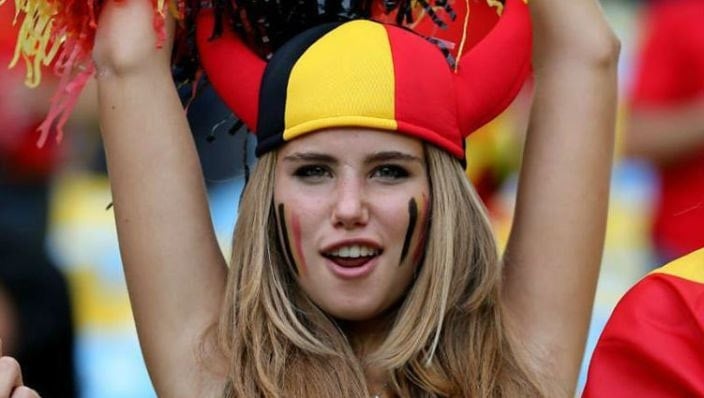
- — The Belgian Flag Memes. The black-yellow-red tricolore endlessly recaptioned in Euro-politics and football memes.
- — 10 Verschillen tussen Nederlanders en Belgen. The viral comedy explainer of the eternal Dutch-vs-Belgian rivalry.
- — "Callboys". Jonas Geirnaert & Jeroen Perceval’s pitch-black male-escort comedy — Flemish prestige raunch.
- — Man Bijt Hond. The cult VRT human-interest show finding poetry in everyday Flemish life.
- — Coely. The Antwerp rapper-singer — a leading voice of Belgium’s new urban-music wave.
- — De Slimste Mens — Bird Impressions. The cult quiz show’s most-replayed moment — a contestant doing bird calls. National comfort TV.
- — "They’re Belgian, Not French!". The eternal online crusade to reclaim "French" fries as Belgian — a patriotic meme staple.
- — Vlaanderen Vakantieland. The long-running travel show that taught Flanders where to caravan.
- — Philippe Gilbert — Flanders 2017. World champion and monument-winner — his epic 55km solo win at the 2017 Tour of Flanders.
- — Paul Van Himst Buys a Hotdog. A surreal little football-legend moment that became a beloved Flemish in-joke.
- — Jean-Marie Pfaff — Best Saves. The legendary 1980s Red Devils goalkeeper — once named the world’s best, later a reality-TV star.
- — Thibaut Courtois — The Wall. Golden Glove at the 2018 World Cup — his save vs Brazil that sent Belgium to the semis.
- — Angèle — "Balance ton quoi". The Brussels pop phenomenon who became the voice of a new francophone generation.
- — Red Devils — Belgium 3-2 Japan. The 2018 World Cup comeback from 2-0 down — the night the golden generation announced itself.
- — "Girl". Lukas Dhont’s 2018 Cannes Caméra d’Or — a tender, controversial Flemish ballet drama.
- — Romelu Lukaku — World Cup Goals. The Red Devils’ record goalscorer — the striking force of the golden generation.
- — Wout van Aert — The Cyclocross Duels. The mud-spattered rivalry that defined a generation of cyclocross.
- — Boer zkt Vrouw. The farmer-dating reality hit — wholesome, awkward and endlessly quotable.
- — Acid (Nordin Vasli). One of Flanders’ biggest YouTubers — challenges, vlogs and a teen-culture empire.
- — The Red Devils. Belgium’s golden-generation national football team — world No.1 and a source of rare national unity.
- — Red Devils — Belgium 2-1 Brazil. The 2018 World Cup quarter-final upset over the favourites — Belgium’s finest hour.
- — Girl. Lukas Dhont’s 2018 debut about a trans teenage ballerina — Caméra d’Or at Cannes.
- — Balthazar — "Fever". The Ghent band’s sleek 2019 single — Belgian art-pop at its most assured.
- — #LikeMe. Ketnet’s hit musical series — peak Gen-Z Flemish content and a chart-topping soundtrack.
- — Cyclocross Country. Belgium is the world capital of cyclocross — muddy winter racing watched by huge, beery crowds.
- — Regi & friends summer anthem. The yearly Flemish summer dance single — a reliable viral chart event.
- — "Undercover". The Flemish–Dutch drug-bust thriller that became one of Netflix’s first Belgian global hits.
- — Kevin De Bruyne — The Playmaker. The pinpoint passes of one of the finest midfielders of his era.
- — Kompany — The Leicester Screamer. Manchester City captain and Red Devils leader — his title-winning thunderbolt vs Leicester in 2019.
- — "The Twelve" (De Twaalf). The Flemish courtroom drama (2019) that became one of Netflix’s first Belgian global hits.
- — Zwangere Guy — "Brussels State of Mind". The raw Brussels rapper turning the bilingual capital into a hip-hop anthem.
- — Merckx Wins the Tour. Eddy Merckx’s crushing 1969 Tour de France debut — the legend begins.
- — The Vivaldi Coalition. A 2020 government of four party-families named after "The Four Seasons" — Belgian coalition-building as baroque art.
- — Belgische Internetgekkies. A compilation of homegrown Belgian internet weirdness — the local meme canon in one place.
- — Marc Coucke — "Franke Teut". The self-made entrepreneur on his own bluntness — a much-quoted Flemish-businessman meme.
- — De Mol — The Reveal. The saboteur-hunt game show whose annual unmasking grips Flanders.
- — The Mystic Lamb’s Restored Face. The 2020 restoration revealed the lamb’s "humanoid" face — instant viral meme across the internet.
- — Martine Tanghe’s Last Journaal. The nation’s news anchor for 42 years signs off — a collective televised goodbye in 2020.
- — Mathieu van der Poel — Tour of Flanders 2020. The duel with van Aert over the Belgian bergs — modern cycling theatre.
- — The Reckoning with Leopold II. The contested statues of the king whose Congo Free State rule is now openly confronted.
- — Temptation Island Vlaanderen — Gringo. The relationship-testing reality show that minted catchphrases and meme legend Gringo.
- — Nafissatou Thiam — Heptathlon Gold. Double Olympic heptathlon champion — modern Belgian athletics royalty.
- — Stromae — "Santé". His 2021 comeback single, a toast to the invisible workers — an instant chart-topper.
- — Metejoor ft. Babet — "1 Op Een Miljoen". The 2021 Flemish-language mega-hit that ruled the Ultratop for months.
- — Average Rob — The Skimboard Video. The Flemish prankster-creator recreating his viral skimboard hit — Belgian YouTube at scale.
- — Philippe Geubels — Comedy. Flanders’ most beloved deadpan comedian, master of the awkward silence.
- — Angèle — "Bruxelles je t’aime". The Brussels pop superstar’s love letter to her bilingual hometown.
- — FC De Kampioenen. The beloved Flemish sitcom about a hopeless amateur football club — a national institution.
- — Remco Evenepoel — World Champion. The young phenom’s solo ride to the 2022 road world title.
- — Conner Rousseau — "Ik zou mij schamen". The young Vooruit leader’s scolding "I’d be ashamed, pipo" line became an instant Flemish reaction meme.
- — Wout van Aert — Tour de France. The Belgian all-rounder winning sprints, mountains and time trials alike.
- — "Close". Lukas Dhont’s 2022 Grand Prix winner — a heartbreaking study of boyhood friendship.
- — Remco Evenepoel — Wollongong 2022. The prodigy carrying Belgian cycling into a new era — his solo ride to the 2022 world title.
- — Close. Lukas Dhont’s 2022 Grand Prix winner — a tender, devastating story of boyhood friendship.
- — Wout van Aert — The Solo. The all-rounder dominating road, cyclocross and time trials — his sensational 2022 Tour stage solo.
- — Reality TV from the Low Countries. Belgian-Dutch production created Big Brother and reshaped global reality television.
- — The Cobbled Classics. The brutal pavé spring classics where Belgian riders have always reigned — mud, dust and hard men.
- — Tomorrowland 2023 — Aftermovie. The Boom mega-festival’s annual cinematic recap — Belgium’s gift to global dance music.
- — Dimitri Vegas & Like Mike — Tomorrowland. The hometown brothers headlining the festival they helped make legendary.
- — Tourist LeMC. The Antwerp singer-rapper whose warm, Flemish-language songs became festival singalongs.
- — Jacky Ickx — The Le Mans Walk. Six-time Le Mans winner and F1 great — his protest of the running start changed the race forever.
- — Internetgekkies — Belgische Special. The compilation of homegrown Belgian internet weirdness and viral clips.
- — Bart De Wever — "Do You Speak English?". The N-VA leader fielding an awkward English question — endlessly clipped and remixed online.
- — Kamagurka & Herr Seele — "Cowboy Henk". The anarchic Flemish comic-and-TV duo whose absurd humour shaped a generation.
- — Camille — "Oostende". The young Flemish singer-songwriter — a defining voice of the 2020s Dutch-language pop revival.
- — Thuis. The VRT soap running since 1995 — the daily ritual of Flemish living rooms.
- — Salvatore Adamo — "Tombe la neige". The Sicilian-Belgian crooner’s 1963 standard, beloved from Paris to Tokyo.
Full text archive: /loreline-text/belgium.md