Billboards
The billboard — from hand-pasted bill posters and painted brick walls to the roadside giants of Route 66, the neon blaze of Times Square, the campaigns that became icons, and today's towering LED spectaculars. A visual history of the biggest advertising medium ever built, all the way back to the 'bill posters' whose boards gave the trade paper Billboard its name.
A chronological documentary of 73 moments spanning 1850–2026 on Loreline.
last updated 2026-07-16
Eras
- The Painted Wall & Bill Posters — The origins of outdoor advertising: 19th-century bill posters pasting playbills on any flat surface, the painted brick 'wall dogs', ghost signs and the trade that literally gave us the word 'billboard'.
- Roadside America — As the automobile remade the country, the billboard rose along the highways — standardized boards, Burma-Shave's roadside poems, Route 66 and the fight over the American roadside.
- Times Square & Neon — The billboard as spectacle: the electric blaze of the Great White Way, Piccadilly Lights, the neon of Las Vegas, and the spectaculars that turned advertising into architecture.
- Iconic Campaigns — The billboards that entered the culture: the Marlboro Man, Apple's Think Different, Benetton's shock ads, the hand-painted rock boards of the Sunset Strip and the campaigns everyone remembers.
- Digital & LED — The 21st-century billboard: the all-digital Times Square, giant LED spectaculars, programmatic and interactive boards, and projection turning whole buildings into screens.
- Billboards in Art & Protest — When the billboard talks back: subvertising and culture-jamming, protest boards, Banksy, 'Three Billboards', and the bill-posting trade that named the magazine Billboard in 1894.
- — The playbill and the poster. Theaters and circuses papered towns with posters; the demand for space created the trade of the bill sticker.
- — The circus and the giant poster. Barnum and the great circuses pioneered the spectacular multi-sheet poster pasted across whole barns and walls.
- — The first Coca-Cola wall sign. Coca-Cola painted its first wall advertisement in Cartersville, Georgia, in 1894 — a sign still visible today.
- — Times Square in its neon heyday. Through the 1930s and '40s, Times Square became the world's most famous canvas of light and advertising.
- — The Camel cigarette 'smoke ring' sign. From 1941, a Times Square billboard blew real smoke rings for a Camel cigarettes ad — a spectacular of its age.
- — Volkswagen — Think Small. DDB's 1959 'Think Small' remade advertising with wit and white space; it topped Ad Age's century list.
- — The Times Square 'spectacular'. The giant animated 'spectaculars' of Times Square combined lights, motion and even waterfalls into advertising theater.
- — The Marlboro Man. From 1954, the rugged Marlboro Man rode across billboards worldwide in one of advertising's most iconic campaigns.
- — The hand-painted rock boards of Sunset Strip. From the 1960s, giant hand-painted billboards for rock albums towered over LA's Sunset Strip — art as advertising.
- — Avis — We Try Harder. Avis's 1962 'We're number two, we try harder' turned a weakness into an iconic campaign.
- — Silk Cut — the purple silk. Banned from naming the product, Silk Cut ran years of cryptic purple-silk billboards — advertising as riddle.
- — The Milk Tray Man. Cadbury's daring 'all because the lady loves Milk Tray' man became a British advertising legend.
- — The OXO family. The long-running OXO family adverts became a warm fixture of British living rooms.
- — Happiness is a cigar called Hamlet. Hamlet's 'Happiness is...' ads, scored to Bach's Air on the G String, are treasured British classics.
- — The Energizer Bunny. The drumming pink bunny that 'keeps going and going' became a permanent ad icon from 1989.
- — Got Milk?. The 1993 'Got Milk?' campaign and its milk-mustache billboards became an American institution.
- — Wonderbra — Hello Boys. Eva Herzigová's 1994 'Hello Boys' Wonderbra billboards famously stopped traffic across Britain.
- — Budweiser frogs. Bud's croaking frogs became one of the most quoted ad campaigns of the '90s.
- — Subvertising and culture jamming. Activists and artists hijack billboards — the Billboard Liberation Front and Adbusters turn ads against themselves.
- — Apple — Think Different. Apple's 1997 'Think Different' billboards, featuring Einstein, Gandhi and Dylan, relaunched the brand.
- — Guinness — Surfer. Guinness's 'Good things come to those who wait' surfer ad topped polls as the greatest of all time.
- — The rock-album Sunset boards. Record labels paid for towering hand-painted Sunset Strip boards for albums from the Beatles to Guns N' Roses.
- — See Rock City. Painted on hundreds of barn roofs from the 1930s, 'See Rock City' became one of the most famous roadside campaigns. The subject dates from 1935; this photograph was taken in 2005.
- — The neon of Las Vegas. The Las Vegas Strip turned the illuminated sign into an art form — the cowboy Vegas Vic and a desert of neon. The subject dates from 1955; this photograph was taken in 2008.
- — The Great White Way. By the 1900s, electric signs blazed so brightly over Broadway that Times Square earned the name 'the Great White Way'.
- — Ghost signs. Faded painted-wall ads survive on old buildings for a century — the 'ghost signs' of a lost advertising age. The subject dates from 1910; this photograph was taken in 2009.
- — Banksy and the billboard. Street artists from Banksy on have used the billboard as a canvas for satire and dissent.
- — Old Spice — The Man Your Man Could Smell Like. Old Spice's 2010 campaign became a viral phenomenon and revived a dying brand.
- — The Golden Arches. McDonald's Golden Arches became one of the most recognized signs on Earth, glowing over roadsides worldwide. The subject dates from 1962; this photograph was taken in 2012.
- — Piccadilly Lights, London. London's Piccadilly Circus has carried illuminated advertising since 1908 — Britain's answer to Times Square. The subject dates from 1930; this photograph was taken in 2012.
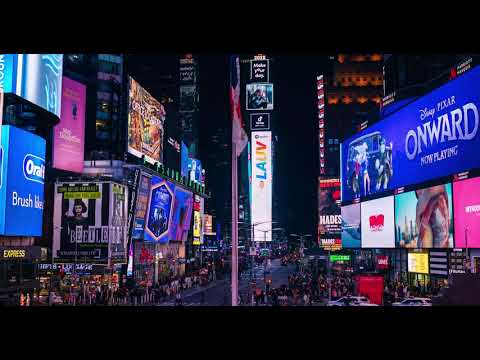
- — The all-digital Times Square. By the 2010s Times Square's last painted signs were gone, replaced by vast LED screens like the block-long Nasdaq tower.
- — The wall dogs and painted walls. 'Wall dogs' hand-painted enormous advertisements directly onto brick, high above the street.
- — Times Square today. Modern Times Square is a canyon of screens — a permanent, dazzling storm of digital advertising.
- — Pepsi vs Coke — the cola wars. The billboard cola wars — Pepsi and Coke sniping at each other on giant boards — became advertising theater.
- — I ❤ NY. Milton Glaser's 1977 'I ❤ NY' logo became the most imitated and beloved piece of civic advertising ever.
- — The Hollywood Sign. Erected in 1923 as an ad for a housing development ('Hollywoodland'), it became the world's most famous sign. The subject dates from 1923; this photograph was taken in 2015.
- — Shibuya Crossing, Tokyo. Tokyo's Shibuya Crossing wraps its crowds in giant screens and sound — Asia's great advertising spectacle.
- — The Economist — white-out-of-red. The Economist's witty white-on-red poster campaign became one of advertising's most admired.
- — The Coca-Cola Times Square sign. Coca-Cola's Times Square sign has glowed in some form since 1920 — one of the longest-running billboards in the world.
- — The Piccadilly Lights, reborn. The single vast 2017 Piccadilly screen can show one ad or split into many — Europe's most famous digital board.
- — The new Piccadilly Lights. In 2017 Piccadilly Circus switched to a single vast ultra-HD screen, ending a century of separate signs.
- — Three Billboards Outside Ebbing, Missouri. The 2017 film made three roadside billboards the engine of a story — proof of the board's hold on the imagination.
- — McDonald's — Follow the Arches. McDonald's 2018 'Follow the Arches' used cropped pieces of its logo as directional billboards — pure icon.
- — The Burj Khalifa light shows. Dubai turned the world's tallest building into the world's largest billboard with vast LED light shows.
- — Billboards that changed policy. From the Three Billboards-inspired real protests to Grenfell and #MeToo, activists reclaimed the billboard.
- — Projection and building-sized ads. Advertisers now project campaigns onto whole buildings and landmarks, turning architecture into a screen.
- — 'Bil's boards' — the magazine Billboard. In 1894 a trade paper for the bill-posting industry launched as Billboard Advertising — the boards gave the magazine its name.
- — Welcome to Fabulous Las Vegas. Betty Willis's 1959 'Welcome to Fabulous Las Vegas' sign became a beloved American icon. The subject dates from 1959; this photograph was taken in 2018.
- — Nike and the Just Do It boards. Nike turned athletes into billboard-sized icons and made 'Just Do It' one of the most recognized slogans on Earth.
- — Lady Bird Johnson and the Highway Beautification Act. In 1965 the Highway Beautification Act, championed by Lady Bird Johnson, sought to tame the billboards along America's roads.
- — Spotify's data billboards. Spotify's witty data-driven billboards ('Dear person who played Sorry 42 times...') became a viral tradition.
- — The world's biggest billboards. From Saudi Arabia's record-breaking boards to Dubai's building-sized screens, the billboard keeps growing.
- — Netflix takes over the boards. As streaming boomed, Netflix and its rivals bought up whole cities of billboards to launch their shows.
- — Burma-Shave's roadside poems. From 1927, Burma-Shave lined the highways with sequential rhyming signs — the most beloved billboards in America. The subject dates from 1927; this photograph was taken in 2019.
- — Protest and the civil-rights sign. Hand-lettered signs and boards carried the messages of the civil-rights movement into public space. The subject dates from 1968; this photograph was taken in 2019.
- — The billboards of Route 66. The Mother Road bristled with hand-painted motel, diner and attraction signs luring travelers off the highway. The subject dates from 1950; this photograph was taken in 2019.
- — The billboard as protest. From civil-rights messages to modern political and social campaigns, the billboard has always been a way to shout in public.
- — Mr. Peanut over Times Square. The Planters Mr. Peanut spectacular, top-hatted and monocled, tipped his hat over Times Square for decades.
- — 'Guns Are Prohibited' and message boards. Public-service and message billboards — from wartime propaganda to health warnings — have long shaped opinion.
- — FedEx — the fast-talker. FedEx's 1982 fast-talking-man ad became one of the most famous of the decade.
- — Marlboro Country. The vast Western vistas of 'Marlboro Country' filled billboards for decades until tobacco ads were banned.
- — The bill posters. Before printing presses ran the world, bill posters pasted playbills and notices on every fence and wall — the original outdoor advertising.
- — The standardized billboard. Around 1900 the industry standardized the poster panel, and the modern rentable billboard was born.
- — The Glico Running Man, Osaka. Osaka's Glico Running Man sign, glowing over the Dotonbori canal since 1935, is one of Japan's most famous.
- — Absolut Vodka's bottle. The Absolut Vodka campaign turned a bottle shape into hundreds of witty billboards over two decades.
- — The Cup Noodles steam sign. A Times Square billboard that puffed real steam from a giant noodle cup ran for years as a beloved spectacular.
- — The first digital billboards. At the turn of the century, LED panels began replacing paper and paint — the billboard learned to change and move.
- — Benetton's shock images. Toscani's Benetton boards — a dying AIDS patient, a newborn — made the billboard a site of moral argument.
- — Benetton's shock billboards. Oliviero Toscani's United Colors of Benetton billboards courted controversy and redefined provocative advertising.
- — The Kodak Colorama. From 1950 the giant Kodak Colorama photos filled Grand Central Terminal — the world's largest photographs.
- — The roadside billboard. As Americans took to the automobile, billboards marched along every highway to catch the passing driver.
- — Coca-Cola's spectaculars. Coca-Cola has owned some of the most famous billboards in history, from Times Square to painted walls worldwide.
- — The Neon Museum boneyard. Las Vegas's Neon Museum preserves the great dead signs of the Strip in its famous 'boneyard'.
Full text archive: /loreline-text/billboards.md