A Berkeley grad student sues the State Department and establishes that source code is speech
FEB 21 1995 · 12:00
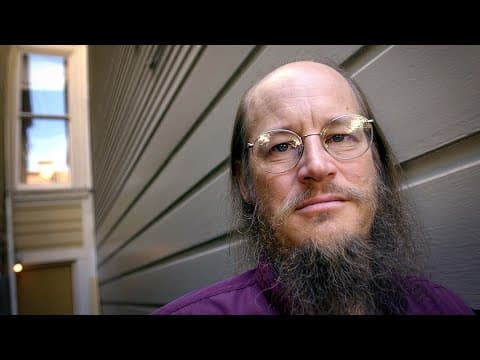
Video: The Government's Fight to Make Encryption Illegal Date: 1995-02-01 · Type: precursor · Hub: bay-area · Tags: bernstein, ITAR, first-amendment, code-is-speech, EFF, cindy-cohn, ninth-circuit, export-controls "Cryptographers use source code to express their scientific ideas in much the same way that mathematicians use equations or economists use graphs." Daniel J. Bernstein was a Berkeley mathematics graduate student who wrote a cipher called Snuffle and tried to publish the source code on the internet, which the State Department informed him would constitute illegal arms trafficking under ITAR. With EFF lawyers Cindy Cohn and Lee Tien, he sued. The case proceeded through the Northern District of California and up to the Ninth Circuit over four years, producing a sequence of rulings that systematically dismantled the constitutional premise on which the cryptography export regime rested. The district court ruled in 1996 that source code was speech protected by the First Amendment; the Ninth Circuit affirmed in a 1999 opinion by Judge Betty Fletcher that has become one of the more consequential digital-era constitutional texts. The holding — that the expressive act of writing code is categorically equivalent to the expressive act of writing equations, and that both are protected from prior restraint — was exactly the argument the cypherpunks had been making in the register of political manifesto since 1991. Bernstein translated that argument into case law. The practical consequences were immediate: the Clinton administration revised export controls in January 2000, effectively decriminalizing the export of strong cryptography and ending a decade of government position that mathematics was a weapon. The open-source cryptographic ecosystem that followed — OpenSSL, GPG, the entire TLS infrastructure — rests on the legal foundation Bernstein and the EFF's team established. Cindy Cohn, who led the EFF legal team on the case, later became EFF's executive director; Bernstein went on to a career of designing cryptographic primitives, including Curve25519, ChaCha20, and Poly1305, which underlie most modern encrypted communication. Facts • Filed February 1995, Northern District of California; EFF legal team led by Cindy Cohn • District court: Bernstein v. U.S. Department of State, 922 F. Supp. 1426 (N.D. Cal. 1996) • Ninth Circuit affirmance: Bernstein v. U.S. Dept. of Justice, 176 F.3d 1132 (9th Cir. 1999), 6 May 1999 • Clinton administration revised ITAR export controls January 2000, effectively decriminalizing strong crypto export • Bernstein later designed Curve25519, ChaCha20, and Poly1305 — foundations of modern encrypted communications Primary Documents • Bernstein v. US Dept. of Justice — EFF case page — https://www.eff.org/cases/bernstein-v-us-dept-justice
Source: cyberpunkoracle.com
Part of Cypherpunk · Watch in the documentary
More from Cypherpunk
- San Francisco is where the cypherpunks were named and where their mailing list r
- Hughes writes the cypherpunk program as a programmer's love letter
- May posts a fake intelligence-trafficking notice to demonstrate that what can be
- Bell serializes a prediction market for the deaths of public officials, and the
- Cottrell ships Mixmaster and turns Chaum's 1981 theory into software anyone can
- Barlow writes the declaration of cyberspace independence at a Davos party, the n