fritz-kola
The cult German indie cola. Founded in Hamburg in 2002 by two students with €7,000, the famous two-faces logo and the highest caffeine the law allowed, fritz-kola grew from a phenomenon in Hamburg’s bars into one of Europe’s best-known independent soft drinks — and a fixture of clubs, bars, festivals and parties everywhere.
A chronological documentary of 46 moments spanning 2002–2025 on Loreline.
last updated 2026-07-16
Eras
- The Founding (2002, Hamburg) — In 2002 two Hamburg students, Mirco Wolf Wiegert and Lorenz Hampl, started fritz-kola with about €7,000, mixing the first batches and selling crates out of a car to the bars of their home city. They wanted a cola with more caffeine, less compromise and no big corporation behind it.
- The Look & The Ethos — Two black-and-white faces, a stark minimalist label, returnable glass bottles, and provocative, witty poster campaigns — fritz-kola built an identity that was deliberately the opposite of the global cola giants, leaning into independence, design and a high-caffeine kick.
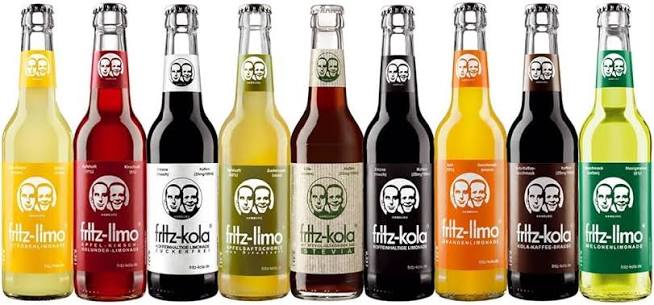
- The Range — Beyond the flagship kola came fritz-limo (lemonade, orange, rhubarb, melon), fritz-spritz, the mischung (kola-lemon), and sugar-free and "super zero" variants — a whole range built on the same independent recipe-first philosophy.
- The Rise across Europe — From the bars of Hamburg, fritz-kola spread across Germany and into the Netherlands, Austria, Switzerland, France, the UK and beyond — carried by word of mouth, gastronomy and a refusal to behave like a normal soft-drink company.
- At the Party — Clubs, Bars & Festivals — fritz-kola became the unofficial fuel of the European nightlife and festival scene — the bottle on the bar, the mixer in the long drink, the fridge at the club, the sponsor at the festival, the late-night caffeine of a generation.
- Today & The Brand — Two decades on, fritz-kola is a major independent brand with a sustainability streak ("Pfand gehört daneben"), bold campaigns, and a founder who still frames it as a mission rather than just a drink.
- — fritz-kola is founded (2002). Mirco Wolf Wiegert and Lorenz Hampl, students in Hamburg, launch fritz-kola with around €7,000 — mixing early batches and delivering crates to bars themselves.
- — The founders’ mission. Mirco Wolf Wiegert on building fritz-kola from nothing — a story of stubborn independence and treating a cola company as a training ground for something bigger.
- — Maximum caffeine. fritz-kola launched with the highest caffeine content German law allowed (25 mg/100 ml) — "viel Koffein" became a core part of its identity and its late-night appeal.
- — fritz-limo & the range. fritz expanded into fritz-limo (lemonade, orange, rhubarb, melon), the kola-lemon mischung, and later spritz and sugar-free lines — all on the same recipe-first philosophy.
- — fritz-mischmasch — kola & orange. Mischmasch Kola-Orangen-Limonade (16870302373).jpg
- — The campaigns. Witty, provocative, design-led poster and film campaigns — often poking at the big cola corporations — built fritz-kola a cult following.
- — The minimalist label. Stark black-and-white typography and a deliberately un-corporate look set fritz-kola apart on every shelf and bar. The subject dates from 2004; this photograph was taken in 2009.
- — Born of the Hamburg nightlife. fritz-kola’s home was the bar and club scene of Hamburg — the Kiez, the Reeperbahn, the independent venues where it first caught on.
- — The two faces. The logo — two stylised black-and-white portraits of the founders — became one of the most recognisable indie-brand marks in Germany. The subject dates from 2002; this photograph was taken in 2010.
- — The indie-drink wave. fritz-kola rode and helped define a wave of independent German drinks — alongside Club-Mate — that conquered the bar, café and hacker/maker scenes across Europe.
- — fritz-kulturgüter — the wordmark. Fritz-kulturgueter schwarz.png
- — After hours — Café Lotte. Café Lotte nach Feierabend.JPG
- — The bottle on the bar. In clubs and bars across Germany, fritz-kola became the default — straight from the fridge or as the high-caffeine mixer in a late-night long drink.
- — In the bar — SissiKingKong. SissiKingKong am Tag.jpg
- — "Öffentlicher Koffeinverkehr". Fritz-kola öffentlicher Koffeinverkehr.jpg
- — Mirco Wolf Wiegert at deGUT (2014). fritz-kola’s co-founder tells the start-up story at the Deutsche Gründer- und Unternehmertage.
- — Across Europe. From Hamburg the brand spread across Germany, the Netherlands, Austria, Switzerland, France and the UK — carried by gastronomy and word of mouth rather than mass advertising.
- — fritz-kola bus advertising. Fritz-kola Buswerbung .jpg
- — At the club — Black End, Dortmund. Black End Dortmund.JPG
- — fritz at re:publica & the festival circuit. fritz-kola became a fixture of conferences, festivals and events — here at Berlin’s re:publica — the bottle in everyone’s hand.
- — "Pfand gehört daneben" — the ethos. fritz-kola leaned into sustainability and social causes — the "deposit belongs beside the bin" campaign, returnable bottles, and a self-consciously responsible brand stance.
- — Hackerbrause? Techno-Drink? — the secret of the indie cola. A German TV report on how independent drinks like fritz-kola and Club-Mate became the fuel of the techno, hacker and party scenes.
- — Fritz-Kola-Chef Wiegert (WirtschaftsWoche). A business-press interview on running fritz-kola independently.
- — Hamburg nightlife — home turf. Hamburg Harmonie.jpg
- — Hamburg’s Kultlokale — the venue scene. An NDR documentary on Hamburg’s cult bars and beach spots — the gastronomy world fritz-kola was born into.
- — "fritz gegen Goliath". The story of the indie cola taking on the global giants — fritz versus Goliath.
- — fritz-kola at re:publica (2017). -rp17 - Tag 3 (34412522432).jpg
- — "mund auf für toleranz" — fritz-kola’s tolerance campaign. fritz-kola’s own campaign celebrating diversity — the brand wearing its values openly.
- — fritz-kola sugarfree. Cola sugarfree.jpg
- — Sugar-free & "super zero". The sugar-free and "super zero" variants extended the range while keeping the caffeine kick.
- — Wiegert — "Can you drink the world beautiful?". A Rheinische Post interview with Mirco Wolf Wiegert on purpose, business and the brand’s mission.
- — David vs Goliath — taking on the big cola. How fritz-kola built a brand from nothing against the multinational soft-drink machine.
- — fritz-session at Open Flair festival. fritz-kola’s own festival sessions — live music with Hi!Spencer at the Open Flair edition.
- — "Pfand gehört daneben" & Hitzehilfe. fritz-kola’s sustainability and social campaigns — leaving deposit bottles for collectors, heat-help for the homeless.
- — The start-up success of fritz-kola. How two students built one of Europe’s best-known independent soft drinks.
- — fritz-kola Werbespot — "Joker meets Fritz-Kola". A striking fritz-kola advertising film.
- — fritz-kola & the music scene. fritz-kola turned up everywhere music happened — sponsoring sessions and concerts like this rooftop set, soundtracking the independent nightlife it belonged to.
- — fritz-spritz — "Dare to Drink Different". fritz’s organic spritz line and the brand’s "dare to drink different" ethos.
- — The founder’s story — in depth. A long-form podcast interview with fritz-kola founder Mirco Wolf Wiegert.
- — "Fritz gegen Goliath" — the purpose talk. A deeper look at fritz-kola’s purpose-driven, anti-corporate positioning.
- — fritz-kola — the marketing. A look at fritz-kola’s distinctive, design-led advertising approach.
- — How do you make a kola? (with the founder). A light look at the recipe and craft behind fritz-kola, with the founder.
- — fritz-spritz — stop-motion. A playful stop-motion film for the bio-rhabarberschorle.
- — Twenty years of fritz-kola. Two decades on, fritz-kola is one of Europe’s biggest independent soft-drink brands — still privately held, still leaning on design, caffeine and an anti-corporate story.
- — fritz-kola at the Chaos Communication Congress. 38C3 Sitzgelegenheiten.jpg
- — The first bottles. The early fritz-kola bottle — glass, returnable, with the stark two-faces label that would become instantly recognisable. The subject dates from 2003; this photograph was taken in 2025.
Full text archive: /loreline-text/fritz-kola.md