The Utah Teapot
1975
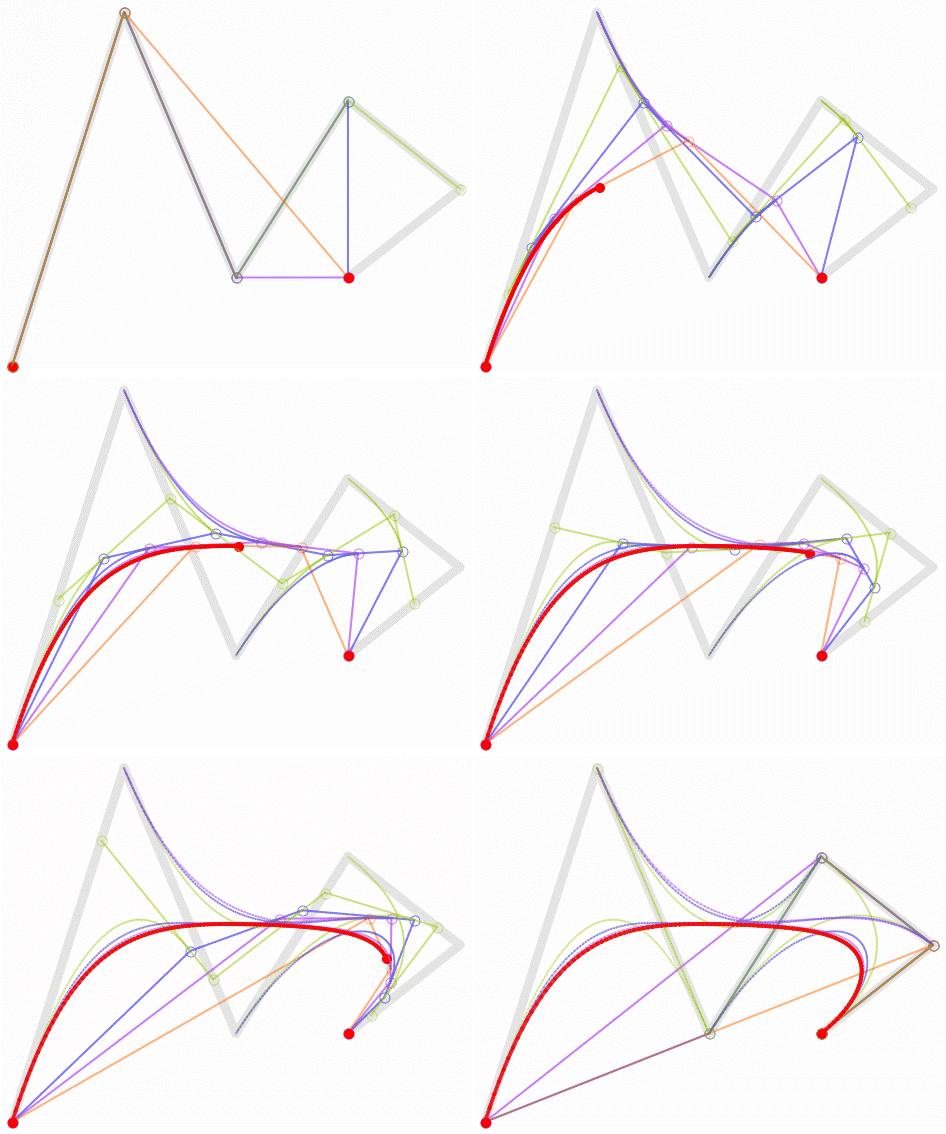
A cubic Bezier curve constructing itself. Newell built the Utah teapot from 32 bicubic Bezier patches in 1975. Place: University of Utah Computer Graphics Lab, Salt Lake City Figures: Martin Newell, graduate researcher · Sandra Newell, his wife, who suggested the teapot over afternoon tea · Jim Blinn, Ed Catmull, and the Utah graphics cohort Martin Newell needs a test object for his rendering research at Utah. The object has to be familiar (so rendering errors are obvious), mathematically interesting (curvature, handle, spout, lid), and small enough that the geometry fits in 1975-era memory. His wife Sandra suggests the Melitta teapot on their kitchen table. He sketches it on graph paper, measures the control points by eye, and encodes it as 32 bicubic Bezier patches. The teapot, modeled in an afternoon, has the perfect surface topology for testing: a hole through the handle, a non-convex spout, a flat lid that catches light differently than the curved body, a base that demonstrates shadow accuracy. It is, by accident, the most pedagogically useful test object computer graphics has ever had. The original physical teapot now sits in the Computer History Museum in Mountain View. Video: Tom Scott visits the Computer History Museum to tell the story of Martin Newell's 1975 reference object.
Source: gif-oracle.vercel.app
Part of GIfs · Watch in the documentary