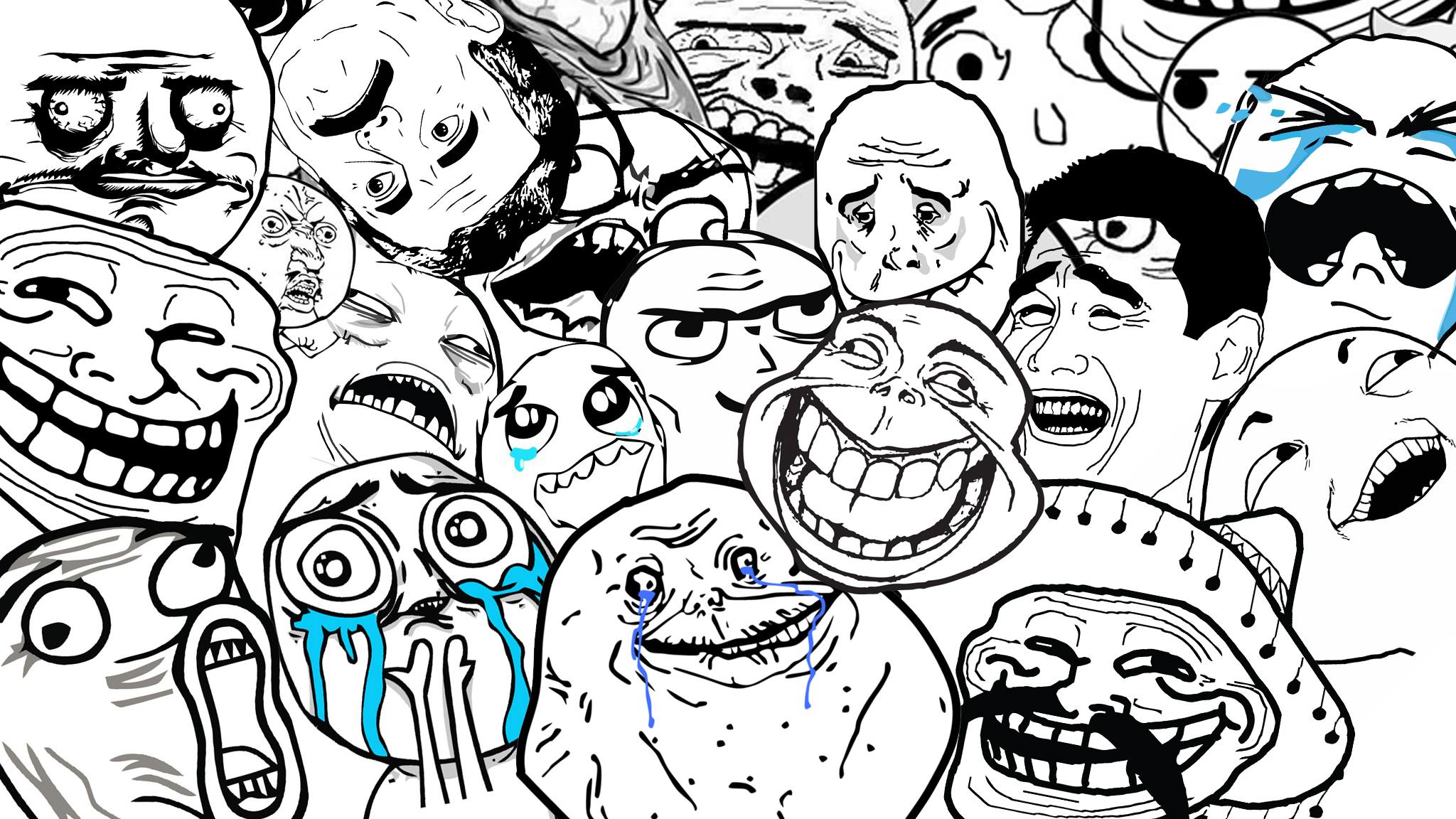
MEMEs
Every confirmed meme in the Know Your Meme database, image macros, catchphrases, characters, events, the full taxonomy of internet culture from the Dancing Baby (1996) to the present. Built from knowyourmeme.com.
A chronological documentary of 26,092 moments spanning 1925–2026 on Loreline.
Curated by Olivier · last updated 2026-09-24
Eras
- Music & Song Memes, Songs, remixes, lyric edits, and audio memes.
- Other, Memes that span multiple genres or fit no single category.
- Image Macros & Advice Animals, Captioned-image templates, advice animals, and exploitables.
- Catchphrases & Slang, Memorable quotes, phrases, and internet slang.
- Anime & Cartoons, Anime, manga, and animated-series memes.
- Viral Videos, Memes that are fundamentally a viral video clip.
- Gaming, Video-game characters, gameplay, and gamer culture.
- Politics & Current Events, Political figures, elections, and current-events memes.
- Dances & Challenges, Dance trends and viral challenges.
- Copypasta & Text, Copypasta, greentext, and text-based memes.
- Ads, Brands & Parody, Advertisements, brand mascots, and product parodies.
- Reaction Images & Faces, Single reaction faces and images used as replies.
- Internet Drama & Personalities, Influencer drama, controversies, and online personalities.
- Absurdist & Shitposts, Surreal, deep-fried, ironic, and absurdist humor.
- Creepypasta & Horror, Creepypasta, cursed images, and horror memes.
- Wholesome & Feel-Good, Heartwarming, uplifting, feel-good memes.
- - Burma-Shave Roadside Signs. Date: 1925-1963 · Place: United States (originating Minneapolis, Minnesota) · Figures: Allan Odell, copywriter and inventor of the format · Clinton Odell, Burma-Vita Company founder · Leonette Odell, contest judge · Tags: Advertising, Roadside, SerialFormat 01. The Distributed Punchline In 1925 Allan Odell convinces his father Clinton, owner of the Minneapolis-based Burma-Vita Company, to spend two hundred dollars on small red and white wooden signs planted in sequence along Highway 65 toward Albert Lea. Five signs at a hundred-foot spacing, each carrying one fragment of a single message, plus a sixth reading Burma-Shave. The form is the meme. The driver decodes the joke across roughly eighteen seconds of road time, supplies the rhythm in their own head, and shares the punchline at the next stop. By 1935 there are seven thousand sign sets across forty-five states. 02. Public Authorship From 1928 onward Burma-Vita runs an annual jingle contest, paying one hundred dollars for accepted verses. Tens of thousands of submissions a year arrive at the Minneapolis office; Leonette Odell sorts them. The audience writes the meme it then reads from a car window. Within this vale / Of toil / And sin / Your head grows bald / But not your chin / Burma-Shave is a 1933 submission, not a copywriter's line. "Past schoolhouses / Take it slow / Let the little / Shavers grow / Burma-Shave", Burma-Shave roadside sequence, 1960, the company's penultimate year of signage 03. End of the Form The Interstate Highway Act of 1956 raises typical cruising speeds and pushes traffic onto limited-access roads with no shoulder for a six-sign sequence. Philip Morris buys Burma-Vita in 1963 and pulls the signs that same year. The format outlives the product as a template: every subsequent roadside teaser campaign, every multi-panel internet image macro that withholds its punchline across a scroll, descends from a Highway 65 sequence eighteen seconds long. Sources • Frank Rowsome Jr., 'The Verse by the Side of the Road: The Story of the Burma-Shave Signs and Jingles' (Stephen Greene Press, 1965) • Smithsonian National Museum of American History, Archives Center, Burma-Shave Collection • Bill Vossler, 'Burma-Shave: The Rhymes, the Signs, the Times' (North Star Press, 1997)
- - Kilroy Was Here. Date: 1939 onward · Place: Allied military installations, then ships, then everywhere · Figures: James J. Kilroy, shipyard inspector at Fore River Shipyard (Quincy, MA, leading attribution) · unknown wartime taggers worldwide · Tags: WWII, Proto-Meme 01. A Shipyard Inspector and a Phrase James J. Kilroy, riveter inspector at the Fore River Shipyard in Quincy, Massachusetts, writes KILROY WAS HERE in yellow crayon on the hulls of completed ship sections, partly as a tracking signature so management knows the work is checked. The sections ship out across the Atlantic; the phrase travels with them. American soldiers find KILROY WAS HERE already scrawled inside tanks, on the walls of bombed-out bunkers, on the underside of bridges they thought they'd captured for the first time. Other origin candidates exist (a Sergeant Francis Kilroy of the Air Transport Command; British Mr Chad; Australian Foo Was Here). The James Kilroy attribution wins because the American Transit Association awarded him the credit in 1946. 02. The First Meme That Knew It Was a Meme By 1945 the phrase, often paired with the bald-head-with-fingers-over-wall doodle, appears at the Potsdam Conference (according to a Truman aide), on the underside of the torch of the Statue of Liberty, on Mount Everest in 1953 (Hillary's team finds it scratched into ice). Stalin reportedly asks who Kilroy is, twice. Dawkins won't coin the word for thirty years. But KILROY WAS HERE is, in retrospect, the first meme that EVERYBODY understood as a meme: a unit that propagates because propagating is the point, that exists to mark its own propagation. "KILROY WAS HERE.", everywhere, 1939 onward Sources • Charles Panati, Extraordinary Origins of Everyday Things (1989) • American Transit Association award announcement (1946) • Wikipedia, Kilroy was here
- - We Can Do It! (Rosie the Riveter). Date: 1943 · Place: Pittsburgh, Pennsylvania (Westinghouse Electric internal poster) · Figures: J. Howard Miller, illustrator · Geraldine Hoff Doyle and Naomi Parker Fraley, candidate models · Penny Colman, historian who surfaces the poster in 1994 · Tags: Poster, Wartime, Rediscovery, Feminism 01. Two-Week Factory Poster In February 1943 the Westinghouse War Production Coordinating Committee posts J. Howard Miller's We Can Do It! inside Midwest plants for roughly two weeks. The audience is female line workers. The purpose is to discourage absenteeism, not to celebrate them. Fewer than 1,800 copies ever print. The poster vanishes back into Westinghouse archives by March. Through the 1940s, 50s, 60s, and 70s the image is functionally unknown. The wartime woman-in-the-workforce icon of record is instead Norman Rockwell's muscular Saturday Evening Post cover from May 29, 1943, which Westinghouse never used. 02. 1982 Rediscovery as Replicator The Washington Post Magazine reprints Miller's poster in 1982 inside a National Archives feature. Second-wave feminist publishers grab it. By the late 1980s it appears on mugs, t-shirts, refrigerator magnets, and the cover of Smithsonian Magazine in 1994. The bandana, the bicep, the speech bubble lock into a single readable unit. The image becomes the meme it was never designed to be. Geraldine Hoff Doyle claims herself as the model in 1984; Naomi Parker Fraley produces stronger photographic evidence in 2015. The replicator outlives both candidates. "We Can Do It!", J. Howard Miller, Westinghouse internal poster, February 1943 03. Posthumous Memetic Life By 2008 the bandana-and-flex composition is on Hillary Clinton campaign merchandise, Beyoncé Instagram posts, and Halloween costume racks. The original Westinghouse purpose (work harder, complain less) is fully overwritten by the audience purpose (women working at all). Rosie is one of the earliest cases of a sleeping image waking up four decades after print as a self-replicating symbol. The lesson is template: a poster's meaning is set by the audience that finds it, not the client that paid for it. Sources • James J. Kimble and Lester C. Olson, 'Visual Rhetoric Representing Rosie the Riveter,' Rhetoric & Public Affairs, Vol. 9 No. 4, 2006 • Penny Colman, Rosie the Riveter: Women Working on the Home Front in World War II (Crown, 1995) • William L. Bird and Harry R. Rubenstein, Design for Victory: World War II Posters on the American Home Front (Princeton Architectural Press, 1998) • Margot McCain, 'The Woman Behind Rosie the Riveter Dies at 96,' The New York Times, January 22, 2018
- - The Doomsday Clock. Date: June 1947 · Place: Chicago, Illinois · Figures: Martyl Langsdorf, designer · Eugene Rabinowitch, Bulletin co-editor · Hyman Goldsmith, Bulletin co-editor · Tags: Iconography, ColdWar, RecurringUpdate 01. Seven Minutes Martyl Langsdorf, a landscape painter married to Manhattan Project physicist Alexander Langsdorf, designs the cover of the June 1947 Bulletin of the Atomic Scientists. She crops a clock face to the upper-left quadrant and sets the hands at seven minutes to midnight because, she later says, it looks right. Editors Eugene Rabinowitch and Hyman Goldsmith run it on the cover. The image is meant for one issue. It has now run on every cover for seventy-nine years. 02. The Update as the Meme The replication mechanism is the announcement. In 1949, after the Soviet atomic test, the hands move to three minutes to midnight; in 1953, after the United States and Soviets test thermonuclear devices, to two minutes. Each move generates global front pages, and the same icon recirculates intact. The clock works because it is one image with one variable. Every newsroom in the world already has the file; the wire only needs to carry the new minute count. "Setting the hands of the Bulletin clock is not a measurement; it is a statement.", Eugene Rabinowitch, Bulletin of the Atomic Scientists editorial, 1958 Sources • Bulletin of the Atomic Scientists, vol. 3, no. 6, June 1947 • Kennette Benedict, 'Doomsday Clockwork', Bulletin of the Atomic Scientists, 2015 • Robert K. Elder and J. C. Gabel, 'The Doomsday Clock at 75' (Bulletin of the Atomic Scientists / Hat & Beard Press, 2022)
- - Wilhelm Scream. ’s yelp which has been used in hundreds of films and television shows since 1951. The scream is named after the fictional character Private Wilhelm from the 1953 western film The Charge at Feather River.
- - Wilhelm Scream - Sound Effect
- - The Peace Sign. Date: 21 February 1958 · Place: London, United Kingdom · Figures: Gerald Holtom, designer · Hugh Brock, Direct Action Committee organizer · Bertrand Russell, CND figurehead · Tags: ProtestIcon, Semaphore, Counterculture 01. N and D Gerald Holtom, a professional designer and conscientious objector, sketches the symbol at his Twickenham home in February 1958 for the Direct Action Committee's planned Aldermaston march. He overlays the semaphore positions for N and D, for Nuclear Disarmament, inside a circle. Holtom also describes the figure as a person with hands outstretched downward in despair, in the posture of Goya's peasant before the firing squad in The Third of May 1808. He offers it free of copyright. 02. Atlantic Crossing On 4 April 1958, between four and ten thousand marchers carry the symbol from Trafalgar Square to the Atomic Weapons Establishment at Aldermaston. Within a year the Campaign for Nuclear Disarmament adopts it as logo. Bayard Rustin brings it to the United States in 1958, then Albert Bigelow flies it on the ketch Golden Rule into the Marshall Islands test zone. By 1965 it is on lapel pins at every Vietnam-era march; by 1970 the National Park Service permits it on Park Service maps as a protest landmark. No copyright means perfect replication. "I drew myself, the representative of an individual in despair, with hands palm outstretched outwards and downwards in the manner of Goya's peasant before the firing squad.", Gerald Holtom, letter to Hugh Brock, 1973 Sources • Ken Kolsbun and Mike Sweeney, 'Peace: The Biography of a Symbol' (National Geographic, 2008) • Andrew Rigby, 'A Peaceful Symbol Made in Britain', Peace News, March 2008 • Commonweal Collection, University of Bradford, Gerald Holtom papers
- - Campbell's Soup Cans. Date: July 9, 1962 · Place: Ferus Gallery, Los Angeles, California · Figures: Andy Warhol, painter · Irving Blum, Ferus Gallery dealer · Walter Hopps, co-founder of Ferus · Tags: Art, Replication, PopArt 01. Thirty-Two Cans on a Shelf Warhol's first solo exhibition in Los Angeles opens July 9, 1962, at Irving Blum's Ferus Gallery. Thirty-two canvases, one per Campbell's Soup variety then sold, each 20 by 16 inches, lined up on a narrow white shelf like supermarket inventory. Five paintings sell at one hundred dollars each. Blum buys them back and reassembles the set for himself. The form is the argument. A meme is a thing identical to its neighbors that nevertheless asks to be looked at. Warhol stages exactly that condition and dares the room to find difference. 02. From Painting to Silkscreen By August 1962 Warhol drops hand-painted execution for photo-silkscreen. Marilyn, Elvis, Liz, electric chairs, car crashes, dollar bills now come off the Factory wall in editions of dozens, sometimes hundreds. The medium is replication itself. The artist's labor is the choice of source image and the tolerance for misregistration. Warhol describes the goal as becoming a machine. He is also describing the function of a meme. "I want to be a machine.", Andy Warhol to G. R. Swenson, ARTnews, November 1963 03. Template for the Reproducible Image Every later image macro, reaction-image grid, and four-panel meme template inherits Warhol's premise: meaning lives in the variation across a repeated frame, not in any single instance. The Campbell's grid is a 1962 proof that the public will pay attention to a thing precisely because there are thirty-two of it. Blum's reassembled set sells to MoMA in 1996 for fifteen million dollars. The grid is now hung exactly as Ferus showed it. Sources • Andy Warhol and Pat Hackett, POPism: The Warhol Sixties (Harcourt, 1980) • Kirk Varnedoe and Adam Gopnik, High & Low: Modern Art and Popular Culture (MoMA, 1990) • G. R. Swenson, 'What Is Pop Art? Answers from 8 Painters, Part I,' ARTnews, November 1963 • Roberta Smith, 'Warhol's Soup Cans, As You've Never Seen Them,' The New York Times, April 25, 2015
- - The Smiley Face. Date: December 1963 · Place: Worcester, Massachusetts · Figures: Harvey Ball, freelance commercial artist · State Mutual Life Assurance Company of America, client · Bernard and Murray Spain, button retailers · Franklin Loufrani, French registrant · Tags: Icon, Button, CorporateMorale 01. Forty-Five Dollars In December 1963 the State Mutual Life Assurance Company of America hires Harvey Ball, a freelance commercial artist in Worcester, Massachusetts, to design a morale image for employees rattled by a corporate merger. Ball spends about ten minutes drawing a yellow circle, two oval eyes, and a curved mouth. State Mutual pays him forty-five dollars. The first hundred buttons are printed for an internal Friendship Campaign. Ball never registers the design. He earns nothing further from it for the rest of his life. 02. Fifty Million Buttons In 1970 Philadelphia novelty retailers Bernard and Murray Spain pair Ball's face with the phrase Have a Nice Day and sell it on buttons, mugs, and bumper stickers. By 1972 they have moved over fifty million units. In France in 1971 Franklin Loufrani registers the smiley commercially, founding what becomes The Smiley Company. Two parallel meme economies run for decades on an unregistered ten-minute drawing. "I made a smile. Just a yellow smile. Never thought it would go anywhere.", Harvey Ball, interview with the Worcester Telegram & Gazette, 1998 03. Ancestor of the Emoji On 19 September 1982 at Carnegie Mellon, Scott Fahlman proposes the colon-hyphen-parenthesis sequence as a joke marker on a bulletin board. Shigetaka Kurita's 1999 NTT DoCoMo emoji set includes a yellow circular smile directly descended from Ball's design. The yellow disc is one of the few twentieth-century icons that travels intact across paper, plastic, ASCII, Unicode, and PNG. Sources • Jimmy Stamp, 'Who Really Invented the Smiley Face?', Smithsonian Magazine, 13 March 2013 • Luke Stark and Kate Crawford, 'The Conservatism of Emoji', Social Media + Society, 2015 • Worcester Historical Museum, Harvey Ball Collection
- - Frodo Lives. Date: 1965-1969 · Place: United States (originating university campuses and New York City subway) · Figures: J. R. R. Tolkien, author · Donald A. Wollheim, Ace Books editor · Tolkien Society of America, founders Dick Plotz and Ed Meskys · Tags: Fandom, Graffiti, ButtonCulture 01. The Ace Paperback In 1965 Donald A. Wollheim's Ace Books exploits a perceived copyright gap and publishes an unauthorized paperback of The Lord of the Rings, seventy-five cents a volume. Houghton Mifflin and Ballantine respond with an authorized paperback edition that fall. By 1968 over three million copies circulate in the United States. The Tolkien Society of America forms in 1966 around Dick Plotz, a Bronx high school student, and Ed Meskys. Buttons, posters, and graffiti follow within months. 02. The Slogan as Counterculture The phrase Frodo Lives appears in Sharpie on New York subway platforms, on Berkeley telephone poles, on Pentagon protest signs in October 1967. Variants spread: Gandalf for President, Go Go Gandalf, Come to Middle-earth. Tolkien receives so much fan mail at his Sandfield Road address in Oxford that he and his wife are forced to change their telephone number in 1968. He calls the American admirers his deplorable cultus. "Many young Americans are involved in the stories in a way that I am not.", J. R. R. Tolkien, letter to Rayner Unwin, 12 September 1965 Sources • Humphrey Carpenter, 'J. R. R. Tolkien: A Biography' (Allen & Unwin, 1977) • Nancy Martsch, 'Tolkien Fandom Review' (Beyond Bree Press, 2014) • Marquette University, J. R. R. Tolkien Collection, fan letters 1965-1973
- - Keep on Truckin'. Date: February 1968 · Place: San Francisco, California · Figures: Robert Crumb, cartoonist · Don Donahue, Apex Novelties publisher · Blind Boy Fuller, original song source 1936 · Tags: Underground, Comix, BootlegEconomy 01. A One-Page Filler Robert Crumb draws the strip as a one-page filler for the first issue of Zap Comix, published by Don Donahue's Apex Novelties in San Francisco in February 1968. Five panels of long-legged men strutting forward in big shoes, the only text the title borrowed from a 1936 Blind Boy Fuller blues. Crumb sells issue one out of a baby carriage on Haight Street with his wife Dana. Print run: about five thousand. 02. The Bootleg Decade By 1970 the strutting figure is on T-shirts, mudflaps, decals, rolling papers, and back windows of vans from Vermont to Oregon. Crumb sees almost none of the money; he has not bothered to copyright the image and the underground press regards copyright as a square hang-up. In 1977 he registers the design and sues a Long Island bootlegger. A federal court rules the image is in the public domain because of years of uncontested reproduction. The lawsuit costs him more than he wins. "It became a curse. I'd see it on people's vans, on bumper stickers, and I'd just cringe.", Robert Crumb, interview with Terry Gilliam, 1988 Sources • Patrick Rosenkranz, 'Rebel Visions: The Underground Comix Revolution 1963-1975' (Fantagraphics, 2002) • Terry Zwigoff (dir.), 'Crumb' (Sony Pictures Classics, 1994) • Robert Crumb v. Aurelio Productions, U.S. District Court, Eastern District of New York, 1977
- - Black Power Salute, Mexico City Olympics. Date: October 16, 1968 · Place: Estadio Olímpico Universitario, Mexico City · Figures: Tommie Smith, gold medalist 200m · John Carlos, bronze medalist 200m · Peter Norman, silver medalist (Australia) · John Dominis, Life photographer · Tags: Photograph, Protest, Gesture 01. Eight Seconds on the Podium Tommie Smith wins the 200m in 19.83 seconds, a world record. John Carlos finishes third behind Australian Peter Norman. On the podium the two Americans bow their heads during the Star-Spangled Banner, shoes off, black socks visible, and each raises a single black-gloved fist. Smith's right hand, Carlos's left, because they had to share one pair of gloves Carlos forgot in the Olympic Village. John Dominis shoots the frame for Life. Wire services move it overnight. By Thursday October 17 the image is on front pages in every Olympic-broadcasting country. 02. A Gesture That Compresses an Argument The composition is self-contained: two bowed heads, two raised fists, one white ally wearing the Olympic Project for Human Rights badge in solidarity. No caption is required for the photograph to mean what it means. That self-sufficiency is what makes a gesture memetic. Smith and Carlos are suspended from the US team within forty-eight hours by IOC President Avery Brundage and ordered out of the Olympic Village. They return to threats, lost endorsements, decades of professional cost. Peter Norman is left off Australia's 1972 team despite running qualifying times. "If I win I am American, not a black American. But if I did something bad then they would say a Negro. We are black and we are proud of being black.", Tommie Smith, post-race press conference, Mexico City, October 16, 1968 03. The Fist as Reusable Mark The raised fist predates Mexico City as a labor and Black Power symbol, but the Dominis frame makes it the canonical visual citation. Athletes from Colin Kaepernick to the 2020 US Open winners reach back to this podium frame deliberately. Statues of Smith and Carlos stand at San José State University, unveiled October 2005, with Norman's spot left empty so visitors can stand in it. A meme in the original Dawkins sense: a unit of cultural transmission that survives across decades, hosts, and media because the gesture itself is the argument. Sources • Tommie Smith with David Steele, Silent Gesture: The Autobiography of Tommie Smith (Temple University Press, 2007) • John Carlos and Dave Zirin, The John Carlos Story: The Sports Moment That Changed the World (Haymarket Books, 2011) • Douglas Hartmann, Race, Culture, and the Revolt of the Black Athlete (University of Chicago Press, 2003) • Salt: The Documentary on Peter Norman, dir. Matt Norman (2008)
- - Have a Nice Day. Date: 1970-1972 · Place: Philadelphia, Pennsylvania · Figures: Bernard Spain, novelty wholesaler · Murray Spain, novelty wholesaler · Harvey Ball, smiley creator · Tags: Catchphrase, Bumper, Seventies 01. The Spain Brothers Brothers Bernard and Murray Spain run a small novelty wholesale operation out of Philadelphia. In September 1970 they pair Harvey Ball's unregistered yellow smile with the phrase Have a Nice Day on a button. They register the combined design and order an initial run from a New Jersey button manufacturer. By the end of 1971 they have sold an estimated twenty million units. By 1972, fifty million. Wholesale price: about three cents per button. 02. Saturation and Backlash The phrase appears on mugs, ashtrays, T-shirts, postcards, McDonald's bags, gas station receipts, and bumper stickers. By 1973 it is the standard sign-off of supermarket cashiers from Florida to Oregon. The phrase precedes the corporate scripting; the corporate scripting reinforces the phrase. Cynical reuse begins almost immediately. In 1972 Underground Press Syndicate papers run the smiley with a bullet hole between the eyes. Watchmen's 1986 cover image, a smiley with a blood smear, is a direct response to the 1970 saturation. "We must have sold fifty million buttons by 1972. We weren't artists. We were button guys.", Murray Spain, interview with the Philadelphia Inquirer, 1996 Sources • Susan Strasser, 'Satisfaction Guaranteed: The Making of the American Mass Market' (Pantheon, 1989) • Daniel J. Boorstin, 'The Image: A Guide to Pseudo-Events in America' (Atheneum, 1962, reissued 1992) • Philadelphia Inquirer, 'The Spain Brothers and the Yellow Smile', 14 April 1996
- - Hang In There, Baby. Date: 1971 · Place: Los Angeles, California · Figures: Victor Baldwin, photographer · Jeanne Baldwin, co-author of 'Kliban's Cat'-era poster context · Argus Communications, distributor · Tags: Poster, Workplace, OfficeKitsch 01. Sassy on the Bamboo Victor Baldwin, a Los Angeles photographer best known for the 1961 book The Funny Side of Cats, shoots a kitten named Sassy clinging to a bamboo pole sometime in 1970. The image is published as a poster by Argus Communications of Niles, Illinois, in 1971 with the caption Hang In There, Baby. Argus prints it on heavy stock, retails it at one dollar fifty, and ships it to college bookstores and head shops nationally. 02. The Office Wall Within eighteen months the poster is on cubicle walls, dorm rooms, dentist offices, and high school guidance counselor doors across the United States. President Carter is reported to have a copy in a White House staff office in 1977. By 1979 over three hundred and fifty thousand copies are sold. The template, animal in difficulty plus motivational caption, becomes the dominant inspirational format for the next thirty years and the structural ancestor of every captioned cat picture on the early web. The image macro is born in a 1971 office supply catalog. Sources • Hannah Rosefield, 'A Brief History of Hang In There, Baby', The Paris Review Daily, 29 July 2014 • Victor Baldwin, 'The Funny Side of Cats' (Putnam, 1961) • Argus Communications product catalogs 1971-1979, Newberry Library trade collection
- - Pet Rock. Date: August 1975 to February 1976 · Place: Los Gatos, California (originator) · United States (market) · Figures: Gary Dahl, advertising copywriter and inventor · Rod Lawrence, illustrator of the manual · Tags: Object, Fad, Joke 01. A Joke Sold at Cost-Plus Gary Dahl, a Los Gatos copywriter, is drinking with friends in April 1975 when they complain about pets. He says his pet is a rock. He goes home and writes a 32-page training manual: how to housebreak it (place on newspaper), how to teach it to sit, stay, attack. The rock costs him about a penny from a builder's supply in Rosarito Beach. The straw-filled box and manual cost a dollar. He retails it for $3.95. He sells about 1.5 million units between August and Christmas 1975, mostly through Neiman Marcus and department-store novelty counters. 02. The Object That Replicates by Embarrassment The Pet Rock works as a meme because the gift carries the joke for the giver. The recipient laughs, shows colleagues, who buy one for their cousin. The product is the punchline; the box is the delivery system. By December 1975 Newsweek, Time, and the Tonight Show have all done segments. Dahl is on Carson twice. Five months in, every five-and-dime is stocked with knockoffs: pet rocks with googly eyes, Pet Rock cemeteries, divorce papers for your rock. The category collapses inside its own saturation by Valentine's Day 1976. Dahl walks away with a reported $15 million in revenue and roughly $2 million in profit. "Sometimes I look at people and wonder how I ever sold them a rock.", Gary Dahl, quoted in People magazine, November 1975 03. Template for the Ironic Object Every later joke product (Yule Log VHS, Snuggie, Big Mouth Billy Bass, The Onion's I Am the Walrus T-shirts) descends from a Los Gatos garage in 1975. The Pet Rock proves a market exists for objects whose only function is to be a meme other people can witness you owning. Dahl dies in 2015 in Jacksonville, Oregon. The original packaging design with Rod Lawrence's deadpan dog-manual illustrations is in the Smithsonian National Museum of American History. Sources • Gary Dahl, The Care and Training of Your Pet Rock (Rock Bottom Productions, 1975) • Margalit Fox, 'Gary Dahl, Inventor of the Pet Rock, Dies at 78,' The New York Times, April 1, 2015 • Bruce Watson, 'The Pet Rock Story,' Smithsonian Magazine, March 2015 • 'And You Thought It Was Just a Rock,' People, November 24, 1975
- - Dawkins Coins 'Meme'. Date: 1976 · Place: The Selfish Gene, chapter 11, Oxford University Press · Figures: Richard Dawkins, evolutionary biologist, 35 · Tags: Theory, The Word 01. A Replicator That Isn't Genetic Richard Dawkins ends The Selfish Gene with a chapter ('Memes: the new replicators') proposing that ideas, tunes, and cultural patterns replicate from brain to brain by imitation, mutate, and compete for attention the way genes compete for survival. He needs a one-syllable noun. He shortens the Greek mimeme to meme by analogy with gene. His examples are quiet: God as a successful meme, the tune of a hymn, the practice of celibacy among priests as a meme that survives despite carrying its own non-reproductive payload. He is not thinking about cartoon frogs. 02. Patient Word The term sits dormant in academic memetics for two decades. Daniel Dennett picks it up in Consciousness Explained (1991). Susan Blackmore's The Meme Machine (1999) tries to build a discipline around it. None of this is what survives. What survives is the word as the internet uses it: an image (with or without caption) that spreads, mutates, and gets used as social vocabulary. Dawkins's framing is correct in shape and wrong in tone. He coins a word for tunes; we use it for cats with grammar errors. The replicator does not know its own future use. "We need a name for the new replicator, a noun that conveys the idea of a unit of cultural transmission, or a unit of imitation.", Richard Dawkins, The Selfish Gene (1976), chapter 11 Sources • Richard Dawkins, The Selfish Gene (Oxford University Press, 1976) • Susan Blackmore, The Meme Machine (1999) • Dawkins's 2013 interview reflecting on 'internet meme'
- - I Want My MTV. Date: 1 August 1981 (channel launch); March 1982 (campaign launch) · Place: New York City · Figures: George Lois, art director · Bob Pittman, MTV co-founder · Les Garland, MTV programming chief · Mick Jagger, first celebrity spot · Tags: AdCampaign, Catchphrase, Shibboleth 01. The Cable Holdouts MTV launches on 1 August 1981 carried by very few cable operators in the major markets. Manhattan does not have it. By early 1982, with affiliate uptake stalled, Bob Pittman and Les Garland hire art director George Lois to flip the carriage strategy from supply to demand. Lois pitches a single line: I Want My MTV. The viewer is the lever; the cable operator is the target. 02. The Shibboleth Spot Lois films Mick Jagger first, in a single take, instructing the camera: I want my MTV. Pat Benatar, Pete Townshend, David Bowie, and Stevie Nicks follow within weeks, each delivering the same six syllables in their own voice. The spot ends with a phone number for the local cable office. Affiliates report thousands of calls a day. Within eighteen months MTV is in the top ten US markets. The line becomes a catchphrase the way the Beatles' name is a catchphrase: by force of repetition by celebrities who matter more than the product they are selling. "If you don't get MTV where you live, call your cable operator and say: I want my MTV.", campaign tag, voiced by Mick Jagger, March 1982 03. Citation Loop Dire Straits releases Money for Nothing in 1985 with Sting singing the phrase as a hook. The song wins the 1986 MTV Video of the Year. The ad campaign for the channel has become the lyrical content of a song aired on the channel. The structure, celebrity-as-shibboleth demanding access to the product on the audience's behalf, is repeated in every Got Milk and Just Do It campaign for the next two decades, and is the template the influencer economy of the 2010s automates. Sources • Rob Tannenbaum and Craig Marks, 'I Want My MTV: The Uncensored Story of the Music Video Revolution' (Dutton, 2011) • George Lois, 'Damn Good Advice (For People With Talent)' (Phaidon, 2012) • Museum of the Moving Image, MTV campaign archive, accession 1982-1989
- - Scott Fahlman Proposes:-). Date: 19 September 1982 · Place: Carnegie Mellon University CS bboard, Pittsburgh · Figures: Scott E. Fahlman, computer scientist, Carnegie Mellon · Tags: Emoticon, Visual Primitive, BBoard 01. 11:44 AM On A Tuesday On 19 September 1982 at 11:44 AM, Scott Fahlman posts to the CMU computer science department bulletin board with a modest proposal. A thread about elevator physics has gone sideways because nobody can tell which messages are jokes. Fahlman suggests:-) as a joke marker and:-( for the opposite. The post is recovered in 2002 from a backup tape after twenty years of being thought lost. The original survives as a flat text file with the timestamp intact. "I propose that the following character sequence for joke markers::-) Read it sideways.", Scott Fahlman, CMU CS bboard, 19 September 1982 02. The First Visual Primitive The smiley escapes Carnegie Mellon within weeks via ARPANET gateways, hits Usenet by 1983, and is universal by the time the web exists. It is the first widely-adopted visual element in text-only communication, a tiny ASCII glyph that does what a body would do if a body were present. Every emoji on every phone in 2026 descends from these three characters. Fahlman, asked about emoji decades later, said he prefers his original because it requires effort to decode and reward to recognize. Sources • Scott Fahlman, 'Smiley Lore:-)' (CMU faculty page) • Mike Jones, recovery of the original 1982 post (Microsoft Research, September 2002) • The New York Times, 'A Universal Symbol, in Need of Marketing' (29 September 2007)
- - Where's the Beef?. Date: 9 January 1984 · Place: Chicago, Illinois (filmed) · Figures: Cliff Freeman, Dancer Fitzgerald Sample copywriter · Joe Sedelmaier, director · Clara Peller, performer · Walter Mondale, Democratic presidential candidate · Tags: Catchphrase, Television, Politics 01. Eighty-One Years Old Cliff Freeman writes the spot at Dancer Fitzgerald Sample in New York. Director Joe Sedelmaier casts Clara Peller, an eighty-one-year-old former manicurist he has used in earlier commercials, and shoots in Chicago in late 1983. The thirty-second spot for Wendy's airs nationally on 9 January 1984. Peller has emphysema and can barely get the line out on take. Sedelmaier dubs it cleaner in post. The line is three words and a fluffy bun. 02. The Mondale Use Within a month Where's the Beef? is on T-shirts, novelty records, and the lips of late-night hosts. Wendy's same-store sales jump thirty-one percent for the quarter. On 11 March 1984, during a Democratic primary debate in Atlanta, Walter Mondale turns to Gary Hart and asks where the beef is in his New Ideas platform. The clip dominates the next news cycle. Mondale wins the nomination. He loses forty-nine states to Reagan. "When I hear your new ideas, I'm reminded of that ad: Where's the beef?", Walter Mondale to Gary Hart, Democratic primary debate, Atlanta, 11 March 1984 03. End of the Endorsement In 1985 Peller appears in a Prego spaghetti sauce ad declaring she has finally found the beef. Wendy's drops her for crossing brand lines. She dies in August 1987 at age eighty-five. The structure of the joke, an old woman demanding the missing thing, persists as the basic template of every short-form video question meme that follows. Sources • Bob Garfield, 'And Now a Few Words From Me: Advertising's Leading Critic Lays Down the Law' (McGraw-Hill, 2003) • New York Times, 'Clara Peller, 85, Star of Wendy's TV Spots, Dies', 13 August 1987 • Jonathan Mahler, 'The Long History of Where's the Beef', Slate, 30 January 2014
- - Tank Man. Date: June 5, 1989 · Place: Chang'an Avenue, near the Beijing Hotel, Beijing · Figures: Unidentified protester, subject · Jeff Widener, AP photographer · Stuart Franklin, Magnum · Charlie Cole, Newsweek · Arthur Tsang Hin Wah, Reuters · Terril Jones, AP (alternate ground-level frame) · Tags: Photograph, Anonymity, Protest 01. The Morning After On the morning of June 5, 1989, one day after the PLA clears Tiananmen Square, a column of Type 59 tanks rolls east on Chang'an Avenue. A man in a white shirt and dark trousers, carrying two shopping bags, walks into the lead tank's path and refuses to move. The lead tank tries to go around him; he steps with it. He climbs onto the hull, speaks to the crew, climbs back down. Bystanders pull him into the crowd. The tanks continue east. Five photographers shoot the encounter from balconies of the Beijing Hotel, roughly half a mile away with long lenses. Widener (AP), Franklin (Magnum), Cole (Newsweek), Tsang (Reuters), plus Jones at street level. Cole's frame wins the 1990 World Press Photo of the Year. 02. A Frame Without a Name The image moves on wire services within 24 hours. By Wednesday June 7 it is on every front page outside mainland China. Inside China it is censored from the moment of capture and remains so on Weibo, WeChat, and Baidu image search to the present day. The number 64, references to candles, even certain emoji are filtered annually around June 4. The man's identity is never confirmed. The Chinese government has at various points named different candidates, all denied. The anonymity is structural to the meme: the figure is any single person against any column of tanks. "Why are you here? You have done nothing but create misery. My city is in chaos because of you.", as reconstructed in Frontline, 'The Tank Man,' PBS, April 11, 2006 03. The Replicating Silhouette The composition (lone vertical figure, perpendicular horizontal column) becomes the most-cited protest photograph of the late twentieth century. Time names it among the 100 Most Influential Images. The silhouette is reused on Hong Kong 2019 banners, Belarus 2020 posters, AI image-prompt jailbreak tests in 2024. An image becomes a meme when stripping it to the line drawing still carries the argument. Tank Man passes that test inside its own first news cycle. Sources • Patrick Witty, 'Behind the Scenes: Tank Man of Tiananmen,' The New York Times Lens Blog, June 3, 2009 • Frontline, 'The Tank Man,' dir. Antony Thomas, PBS, April 11, 2006 • Stuart Franklin, 'I took the Tiananmen Square tank picture. Here's what it means today,' The Guardian, June 4, 2019 • Louisa Lim, The People's Republic of Amnesia: Tiananmen Revisited (Oxford University Press, 2014)
- - You've Got Mail. Date: 1989 (recorded), 1993-2017 (in service) · Place: Quantum Computer Services, Vienna, Virginia (later AOL) · Figures: Elwood Edwards, voice actor · Tags: Audio Meme, AOL, Notification Sound 01. Elwood Edwards In A Living Room In 1989, Karen Edwards mentions to her husband Elwood, a voice actor, that her employer is looking for someone to record system prompts for their new online service. Elwood records four phrases on a tape recorder in their living room: Welcome, You've got mail, Files done, Goodbye. He is paid two hundred dollars. The phrases ship with Quantum Link, then with AOL when Quantum rebrands in 1991. 02. Three Syllables That Defined A Decade By 1996, You've got mail is so culturally bonded to AOL that Warner Bros. names a Nora Ephron film after it. Edwards never received royalties; AOL gave him a one-time bonus and the use of the line for life. He drove a cab in Cleveland for most of the 90s. The sound is retired when AOL Mail shuts down its desktop client in 2017. Elwood Edwards dies on 5 November 2024. The obituaries lead with the three syllables. "You've got mail.", Elwood Edwards, recorded on a home tape deck, 1989 Sources • The New York Times, 'Elwood Edwards, Voice of You've Got Mail, Dies at 74' (5 November 2024) • CNN, 'Meet the voice behind AOL's You've Got Mail' (15 August 2015) • Wikipedia, 'Elwood Edwards'
- - Godwin's Law. Date: August 1990 · Place: Usenet, primarily talk.* and soc.* newsgroups · Figures: Mike Godwin, attorney, Electronic Frontier Foundation · Tags: Usenet, The First Internet Law 01. The Observation Mike Godwin, then 34 and working as an attorney for the Electronic Frontier Foundation, posts an observation to Usenet in August 1990: As an online discussion grows longer, the probability of a comparison involving Nazis or Hitler approaches one. He is describing a behavior he has watched repeat for years on the discussion networks of the pre-web internet. Godwin will later say in interviews that he posted it less as humor than as a meme deliberately, an attempt to put a name on the pattern that would slow the pattern down. He invented the term for what he was creating; he wanted users to think twice before reaching for the Hitler comparison. 02. The First Internet Law It works imperfectly. The reductio-ad-Hitlerum reflex outlives Usenet, outlives the discussion networks of every following decade. But Godwin's Law itself becomes the first widely-acknowledged internet folk-law, taught informally to new users for 35 years and counting. It is also the first internet meme in the Dawkins sense to be designed by its author to do a specific cultural job. Godwin's Law is, in its original 1990 sense, a memetic countermeasure to a worse meme. Mike Godwin is a memetic engineer. "As an online discussion grows longer, the probability of a comparison involving Nazis or Hitler approaches one.", Mike Godwin, Usenet, August 1990 Sources • Mike Godwin, Wired (October 1994): 'Meme, Counter-meme' • Wikipedia, Godwin's law
- - Leetspeak Orthography. Date: BBS era through late 1990s · Place: Pirate BBS scenes, then alt.* hierarchies, then Counter-Strike chat · Figures: Pirate scene sysops · 2600 readership · Quake clan tag culture · Tags: Orthography, Subcultural Filter, 1337 01. Filter Evasion Becomes Identity Leetspeak, the substitution of digits and punctuation for similar-looking letters, starts as a pragmatic tool on pirate BBSes in the late 1980s. Operators name boards +H3 W4R3Z H0US3 to slip past automated keyword scanners run by lawful sysops. By the time the web exists, the cipher has detached from utility and become a marker of belonging. By the late 1990s Quake clan tags are written [D34TH], Counter-Strike trash talk is j00 g0t 0wn3d n00b, and the convention is fully self-aware. Magazines like 2600 use it editorially. 02. The First Internet Register Leetspeak is the first major orthographic register native to networked computing. SMS abbreviation, lolspeak, doge, zoomer caps, the present-day iykyk attention economy, all inherit from it the principle that how you spell it is identity work, not noise. It also previews the present-day tactic of using deliberate misspellings (unalive, seggs) to evade platform moderation. Same trick, thirty years apart. Sources • The Jargon File 4.4.7, entry 'B1FF' and 'leetspeak' • Mikhaila Friel, 'A Brief History of Leetspeak' (Atlas Obscura, 30 May 2018) • Wikipedia, 'Leet'
- - The Trojan Room Coffee Pot. Date: 1991-2001 · Place: Computer Laboratory, University of Cambridge · Figures: Quentin Stafford-Fraser, researcher · Paul Jardetzky, researcher · Tags: First Webcam, Live Feed, Cambridge 01. A Camera Pointed At A Coffee Pot Quentin Stafford-Fraser and Paul Jardetzky install a camera in the Trojan Room of the Cambridge Computer Lab in 1991. It points at the shared coffee filter machine. A frame-grabber updates an image three times a minute so researchers on other floors can check whether the pot is full before walking down. It is a private internal utility for two years. Then in November 1993, Daniel Gordon and Martyn Johnson plug it into the early World Wide Web. 02. The First Webcam Becomes A Pilgrimage By 1995 the coffee pot is one of the most-visited URLs on Earth. Strangers from every continent load cl.cam.ac.uk/coffee/coffee.html to check the level of a coffee pot in a building they will never enter. Krups eventually replaces the pot with a sponsored model. The feed is unplugged at 09:54 GMT on 22 August 2001. The final pot sells at auction for $4,800. Every Twitch stream and Ring doorbell descends from it. Sources • Quentin Stafford-Fraser, 'The Trojan Room Coffee Pot' (May 1995, cl.cam.ac.uk) • BBC News, 'The Coffee Pot That Started It All' (22 August 2001) • Wikipedia, 'Trojan Room coffee pot'
- - Seems Legit / Sounds Legit. “Seems Legit” is an expression mostly used in image macros as a sarcastic retort to a poor attempt at deception or factually questionable statements.
- - All Your Base Are Belong To Us. Date: 1992 origin, 2000-2001 viral peak · Place: Sega Mega Drive port of Zero Wing, Japan · Tribal War forums, USA · Figures: Toaplan, original developer · Bad translator, unknown · Bad_CRC, Tribal War forum user · Tags: Mistranslation, Image Macro Wave, Flash 01. Someone Set Up Us The Bomb Toaplan ports the arcade shooter Zero Wing to the Sega Mega Drive in 1992. The European release adds a cutscene whose English translation is among the worst ever committed to ROM. The villain CATS announces: All your base are belong to us. The captain replies: For great justice. The lines circulate quietly in emulator scene chat through the late 1990s as a private joke about awful localisation. 02. Tribal War Photoshops The World In late 2000, the Tribal War gaming forum starts a thread Photoshopping the phrase onto everything: highway signs, the White House, the moon. A Flash video by user Bad_CRC, scored to a Laziest Men On Mars techno track, hits Newgrounds in February 2001 and the format crosses over into broadcast TV, USA Today, and a Wired feature within weeks. It is arguably the first image macro to dominate the wider internet from a single hour's worth of source material. The grammar of format a phrase, paste it on anything is the entire blueprint of 2010s meme culture, prefigured. Sources • Wired, 'It's the World's Bomb' (Tony Long, 23 February 2001) • Know Your Meme, 'All Your Base Are Belong To Us' • USA Today, 'Net joke takes off, takes flight' (26 February 2001)
- - Future Crew's Second Reality. Date: 29 July 1993 · Place: Assembly demoparty, Helsinki · Figures: Future Crew, Finnish demogroup · Purple Motion (Jonne Valtonen), music · Skaven (Peter Hajba), music · Psi (Sami Tammilehto), code · Marvel (Mika Tuomi), code · Tags: Demoscene, 486 PC, Real-Time Art 01. Eight Minutes On A 486 At the Assembly 1993 demoparty in Helsinki on 29 July, Future Crew premieres Second Reality, an eight-minute audiovisual demo that runs in real time on a 486 PC. Purple Motion and Skaven compose the soundtrack in Scream Tracker. Psi and Marvel write the code. The plasma effects, 3D vector cityscape, and Stargate-style tunnel sequence are computed live, not pre-rendered. It wins the PC demo competition by acclamation and is included on the cover CD of the October 1993 PC Format magazine, putting it on millions of home machines. 02. The First Native Internet Aesthetic The demoscene is the first artistic subculture born on Usenet and FTP, distributing executables through alt.binaries and Hornet Archive. Future Crew's members go on to found Remedy Entertainment (Max Payne, Alan Wake) and Hummingbird Studio. Purple Motion scores Angry Birds films decades later. Second Reality is a Library of Congress-inducted artifact in 2020, the first demo so recognized. The grammar of the kinetic title sequence, the impossible camera move, the synchronized drop, descends from here. "We just wanted to make something that would make people in the hall stand up.", Sami 'Psi' Tammilehto, Future Crew, interview in Pelit magazine, 1993 Sources • Future Crew, Second Reality release notes (Assembly 1993) • Library of Congress, 'Selections to the National Recording Registry' announcement (March 2020) • Lassi Tasajarvi, 'Demoscene: The Art of Real-Time' (Even Lake Studios, 2004)
- - Eternal September. Date: 1 September 1993 · Place: Usenet, all hierarchies · Figures: America Online, gateway provider · Dave Fischer, coiner of the term · Tags: Usenet, Endemic Newbie, AOL 01. The September That Never Ended Every September, college freshmen got internet accounts and flooded Usenet with stupid questions; by October the upperclassmen had taught them the norms. On 1 September 1993, America Online opens a Usenet gateway to its subscribers, and the September cohort never stops arriving. The cycle of acculturation breaks. The term Eternal September is coined by Dave Fischer in a January 1994 post to alt.folklore.computers. It calcifies fast into Usenet's foundational defeat narrative. 02. The First Platform Collapse Narrative Every later platform inherits the structure. Digg dies when Reddit users flood it; Reddit oldheads watch newcomers arrive after every Apollo shutdown; Twitter veterans complain about Elon's people; bluesky has its own September. The Eternal September is the prototype of this place was better before you got here, and it dates to a specific morning. Sources • Dave Fischer, original post (alt.folklore.computers, 25 January 1994, Google Groups archive) • Wikipedia, 'Eternal September' • The Jargon File 4.4.7, entry 'September that never ended'
- - The Good Times Virus Hoax. Date: November 1994 · Place: AOL chat, then global email · Figures: Anonymous AOL user, originator · CIAC (US Department of Energy), official debunker · Tags: Hoax, Chain Email, Moral Panic 01. Do Not Open Any Email Titled Good Times A warning appears on AOL message boards in late November 1994. An email with the subject Good Times contains a virus that will erase your hard drive if you open it. The warning urges you to forward it to everyone you know. People do, by the million. There is no virus. There is no email titled Good Times. The warning itself is the payload. CIAC, the US Department of Energy's incident response team, publishes a formal debunk in December 1994; it does not help. 02. The First Self-Replicating Hoax Good Times is the first widely-studied example of a memetic virus in the strict Dawkinsian sense, an idea that hijacks human attention to replicate itself with no payload other than its own propagation. Every forward this to ten people chain email that follows works the same way. It also previews the entire grammar of internet fear: an unspecified harm, an authoritative-sounding warning, an instruction to spread. QAnon will use the same template thirty years later. Sources • CIAC Notice E-19, 'Good Times Virus Hoax' (US Department of Energy, December 1994) • Les Jones, 'Good Times Virus Hoax FAQ' (1995, archive.org) • Wikipedia, 'Good Times virus'
- - Carmack's.plan Files. Date: 1994 to 2000 · Place: id Software, Mesquite, Texas, via finger protocol · Figures: John Carmack, programmer, id Software · finger daemon, RFC 1288 · Tags: Finger, Dev Log, id Software 01. Finger [email protected] The finger protocol, RFC 1288, lets anyone on the internet type finger user@host and read that user's.plan file, a plain text file in their home directory. It is designed in the 1970s for telling colleagues where you went for lunch. John Carmack, lead programmer of Doom and Quake, uses it from 1994 onward as a public engineering diary. Carmack posts terse notes about renderer bugs, BSP tree optimizations, network protocol redesigns, and the occasional Ferrari acquisition. Fans mirror the.plan to Usenet within minutes of each update. 02. The First Dev Blog Carmack's.plan invents the public engineering postmortem as a genre. Quake's deathmatch netcode, the abandonment of the original Trinity engine, the decision to GPL Doom in 1999, all are announced first via finger. The format is read-only, no comments, no replies, a one-way broadcast from the workstation of the most influential graphics programmer alive. Blogs absorb the practice by 1999. By 2010 every studio has a dev blog. Carmack stops updating the.plan when he leaves id in 2013, but the archive at floodyberry.com preserves every entry. "I do most of my best programming work at four in the morning, fueled by Diet Coke and the knowledge that nobody is going to interrupt me.", John Carmack.plan file, 1996 Sources • John Carmack.plan archive, mirrored at floodyberry.com • David Kushner, 'Masters of Doom' (Random House, 2003) • RFC 1288, 'The Finger User Information Protocol' (December 1991)
- - Dihydrogen Monoxide Hoax. The dihydrogen monoxide (DHMO) hoax is designed to convince people that "dihydrogen monoxide" (a scientific name for pure water) is an extremely dangerous chemical that is present in most consumer products.
- - Free Kevin Stickers. Date: 15 February 1995 to 21 January 2000 · Place: Worldwide, via 2600 Magazine and laptop lids · Figures: Kevin Mitnick, hacker · Emmanuel Goldstein (Eric Corley), editor of 2600 · Tsutomu Shimomura, security researcher · Tags: Hacker Culture, Sticker, 2600 01. Held Without Trial The FBI arrests Kevin Mitnick on 15 February 1995 in Raleigh, North Carolina, after a manhunt assisted by Tsutomu Shimomura. Mitnick is held without bail for four and a half years, eight months of it in solitary confinement, on the prosecutorial theory that he could start a nuclear war by whistling into a payphone. Emmanuel Goldstein at 2600 Magazine prints the first FREE KEVIN bumper stickers in 1995. They are distributed free at 2600 meetings on the first Friday of every month at payphones and food courts in dozens of cities. 02. The First Hacker Cause Celebre FREE KEVIN stickers cover laptop lids at every DEF CON from 1996 to 2000. The yellow-and-black livery is unmistakable. The freekevin.com site, the documentary Freedom Downtime (2001), and the New York Times opinion column by John Markoff that started the whole pursuit, become a generational litmus test. Mitnick is released on 21 January 2000. The stickers persist. They are the prototype for every laptop-lid political sticker that follows, from Snowden to Stallman. "Kevin Mitnick is in prison for downloading source code. He hurt nobody. Free Kevin.", 2600 Magazine editorial, Spring 1996 Sources • Jonathan Littman, 'The Fugitive Game: Online with Kevin Mitnick' (Little, Brown, 1996) • 2600 Magazine archive, Spring 1995 through Winter 1999-2000 • Emmanuel Goldstein, 'Freedom Downtime' documentary (2001)
- - GeoCities Neighborhoods. Date: 1995-1999 · Place: Beverly Hills, California (GeoCities HQ); SoHo, Area51, Heartland, etc. (virtual) · Figures: David Bohnett, founder, GeoCities · John Rezner, co-founder · Tags: Web 1.0, Themed Communities, Personal Homepage 01. Pick A Neighborhood David Bohnett launches Beverly Hills Internet in 1994, renames it GeoCities in 1995, and gives every user a free homepage filed under a themed neighborhood. SoHo is for artists. Area51 is for sci-fi. Heartland is for family content. The Tropics is for travel. You pick the neighborhood that fits your page, then claim a street address inside it. By 1999 GeoCities is the third most-visited domain on the web, with thirty-eight million pages. 02. The Last Time The Web Was A Place Neighborhoods give web 1.0 its specific aesthetic: tiled backgrounds, MIDI autoplay, welcome to my homepage, neighborhood-themed link rings. The geographic metaphor is taken literally, with community leaders moderating each district by hand. Yahoo buys GeoCities in January 1999 for $3.57 billion, kills the neighborhood structure in 2001, and shuts the whole thing down on 26 October 2009. The Archive Team rescues 650 GB of raw HTML in the final weeks. "Welcome to my page! This page is best viewed in Netscape Navigator at 800x600.", Canonical GeoCities homepage opener, c. 1996 Sources • Wired, 'GeoCities: A Pale Shadow of Its Former Self' (Bob Liu, 26 October 2009) • Archive Team, 'GeoCities' (archiveteam.org) • Olia Lialina, 'A Vernacular Web' (2005, contemporary.archive.org)
- - Under Construction GIFs. Date: 1995-1999 · Place: GeoCities, Angelfire, Tripod, personal homepages worldwide · Figures: Anonymous web 1.0 page builders · Animated GIF clip-art archives · Tags: Web 1.0 Aesthetic, Animated GIF, Eternal WIP 01. A Hard Hat And A Shovel By 1995 nearly every personal homepage on the web carries the same image: a tiny animated GIF of a man in a yellow hard hat digging, or a sawhorse, or a striped barricade. The label reads Under Construction. The pages are not under construction; they are finished. The GIF is decorative. 02. The Eternal Beta Tim Berners-Lee himself complains about them in 1996, calling the construction GIF the most overused image on the web. Clip-art archives like Andy's Art Attack distribute thousands of variations. They become the visual signature of an era that understands its own incompleteness as a feature. The aesthetic returns in 2020s vaporwave revivals and Neocities homepages, fully ironic, fully sincere. Sources • Olia Lialina, 'A Vernacular Web' (2005) • Tim Berners-Lee, 'Style Guide for Online Hypertext' (W3C, 1995) • Cameron's World (cameronsworld.net), curated GeoCities reconstruction (2015)
- - The Dancing Baby. Date: Autumn 1996, mainstream peak September 1998 · Place: Kinetix (Autodesk subsidiary), San Francisco · Ally McBeal, Fox Broadcasting · Figures: Michael Girard, 3D animator, Kinetix · Robert Lurye, animator · David E. Kelley, showrunner, Ally McBeal · Tags: Viral Video Precursor, 3D Animation, Forward This 01. A Character Studio Demo File Michael Girard and Robert Lurye build a sample animation for Character Studio, an Autodesk 3D Studio Max plugin, in autumn 1996. It is a diapered toddler doing the cha-cha in a void, included on the demo disc so animators can study motion-capture bone rigs. A LucasArts developer named Ron Lussier optimises the file, retitles it Baby Cha-Cha-Cha, and forwards it around. By summer 1997 it is forwarded around the entire AOL-using world as a.gif and as an.avi. 02. Crossover On Ally McBeal On 9 September 1998, the season premiere of Ally McBeal includes the Dancing Baby as a recurring hallucination representing Ally's biological clock. Network television acknowledges an internet meme on prime time, an early-historic milestone. Blue Swede's Hooked on a Feeling overlays the baby's dance. It is the first viral video in the modern sense: a file circulated independently of its origin, decoupled from authorship, mutated, captioned, broadcast back to its audience by mass media. Sources • The New York Times, 'The Dancing Baby Goes Mainstream' (Lisa Napoli, 11 September 1998) • Wired, 'Hooked on a Feeling' (Steve Silberman, 13 August 1998) • Know Your Meme, 'Dancing Baby'
- - The ICQ Uh-Oh. Date: November 1996 · Place: Mirabilis, Tel Aviv, Israel · Figures: Yair Goldfinger, Sefi Vigiser, Amnon Amir, Arik Vardi, co-founders, Mirabilis · Tags: Audio Meme, Chat Client, Pavlovian 01. Two Syllables That Owned The 90s Mirabilis launches ICQ in November 1996 out of a Tel Aviv apartment. The client plays a two-syllable sample, uh-oh, whenever a message arrives. The voice is recorded in-house and never credited on the splash screen. Within two years it is one of the most-recognised audio cues on Earth. 02. Sound As Trigger It is the first audio meme of the consumer internet, predating MSN Messenger nudges and Skype rings by years. AOL acquires Mirabilis in June 1998 for $407 million, largely on the strength of brand recognition that the uh-oh sample built unaided. Users who installed ICQ as teenagers in 1997 can still summon the sample from memory. Pavlovian conditioning shipped as a default notification. Sources • TechCrunch, 'The Rise and Fall of ICQ' (Steve O'Hear, 2010) • Wikipedia, 'ICQ' • Haaretz, 'How Four Israelis Created ICQ' (28 May 2014)
- - Mr. T Ate My Balls. Date: 1996 · Place: GeoCities (RodeoDrive/1234), USA · Figures: Nehal Patel, originator, college student · Tags: Image Macro Ancestor, GeoCities, Format Franchise 01. The First Format Franchise In 1996, Nehal Patel, a student at the University of Illinois, makes a GeoCities page consisting of scanned photos of Mr. T with crude captions like I ate your balls. The page goes around campus, then around the early web. Within months there are Alf Ate My Balls, Oprah Ate My Balls, Pikachu Ate My Balls, and hundreds more, each on its own GeoCities page. 02. Format Over Content It is the first internet franchise based purely on a swappable variable. The grammar is celebrity image + ate my balls caption. Change the celebrity, keep the format, get a new page. This is the structural skeleton of every image macro to follow, from LOLCats to Distracted Boyfriend. Wired covers the phenomenon in 1997 in a piece titled The Balls That Ate The Internet, the first time a mainstream tech magazine tries to explain a meme-of-memes. Sources • Wired, 'The Balls That Ate The Internet' (Steve Silberman, January 1997) • Know Your Meme, 'Mr. T Ate My Balls' • Archive.org Wayback, RodeoDrive/1234 GeoCities snapshots (1996-1998)
- - The Heaven's Gate Website. Date: 26 March 1997 · Place: Rancho Santa Fe, California · Figures: Marshall Applewhite, leader · Heaven's Gate (group) · Tags: Cult Artefact, Web 1.0, Time Capsule 01. Red Alert On 26 March 1997, 39 members of the Heaven's Gate group are found dead in a Rancho Santa Fe mansion, having taken phenobarbital and vodka in expectation of being collected by a spacecraft trailing the Hale-Bopp comet. Their website, heavensgate.com, has been online since 1995. On the day of the deaths it carries a flashing RED ALERT banner over an animated starfield. Surviving members commit to keeping the site online in perpetuity. Two of them, Mark and Sarah, answer email from [email protected] for the next 28 years. 02. A Frozen Page The site is preserved exactly as it was on 26 March 1997: tiled cosmic backgrounds, multiple frames, bright-blue Comic Sans, Java applet starfield, autoplaying MIDI. It is the most-visited untouched web 1.0 artefact on Earth, treated as both shrine and forensic document. It also marks the first time mass-suicide-by-cult is staged with the internet as the intended posthumous publishing channel. The pages are part of the message. Sources • The New York Times, 'Web Site Lives On as Mass Suicide's Last Will' (Pam Belluck, 28 March 1997) • heavensgate.com (preserved 1995-present) • Benjamin E. Zeller, 'Heaven's Gate: America's UFO Religion' (NYU Press, 2014)
- - Slashdot Launches. Date: 5 October 1997 · Place: Holland, Michigan, then Hope College dorm room · Figures: Rob Malda (CmdrTaco), founder · Jeff Bates (Hemos), co-founder · Kurt Gray, early developer · Tags: News Aggregator, Comment Moderation, Geek Culture 01. News For Nerds, Stuff That Matters Rob Malda registers slashdot.org on 5 October 1997 from his dorm room at Hope College in Holland, Michigan. The site is a hand-written Perl CGI aggregating Linux news, Star Wars rumors, and Carmack.plan updates. Jeff Bates joins within weeks as Hemos. The tagline, 'News for nerds, stuff that matters', is unironic. Threaded comments arrive in 1998 with the M1/M2 metamoderation system, the first serious attempt at distributed community moderation on the open web. Karma points, score thresholds, and the +5 Insightful tag enter the lexicon. 02. Imagine A Beowulf Cluster Of These Slashdot generates two enduring memes by 1998. Imagine a Beowulf cluster of these is the canonical comment on any new piece of hardware. Frist psot is the corrupted spelling of the race for the first comment. In Soviet Russia, car drives you spreads from Slashdot via Yakov Smirnoff revivals. The Slashdot Effect, the traffic spike that crashes any small site linked from the front page, is the first widely-recognized DDoS-by-popularity. The phrase enters technical English permanently. "Imagine a Beowulf cluster of these.", Anonymous Coward, Slashdot comment, repeated thousands of times from 1998 onward Sources • Rob Malda, 'Slashdot: 10 Years' retrospective (slashdot.org, 5 October 2007) • Andrew Leonard, 'Free Software Project' (Salon, 1999) • Wendy Grossman, 'net.wars' (NYU Press, 1997)
- - Bert Is Evil. Date: 1997-2001 · Place: Fractalcow.com, Manila, Philippines · Figures: Dino Ignacio, web designer, Manila · Tags: Photoshop, Webby Award, Format Franchise 01. Bert With Hitler Dino Ignacio, a 22-year-old web designer in Manila, launches Bert Is Evil in 1997. The site Photoshops Sesame Street's Bert into the company of history's worst people: Hitler, the Unabomber, Pol Pot. The bit is that Bert's face is unchanged, his expression always faintly disapproving, and yet the juxtaposition reads as confession. It wins a Webby Award for Best Weird Site in 1998. 02. Bert With Bin Laden In October 2001, a Bangladeshi printer pulls a Bert-with-Bin-Laden image off Google for an anti-American protest poster. Reuters photographs the poster being carried in a Dhaka street demonstration. The photo runs worldwide. Sesame Workshop releases a statement; Ignacio shuts the site down voluntarily, fearing for his safety. It is the first incident of a meme escaping the internet, getting laundered through global news photography, and reaching the audience that originally made it as a stranger. Sources • BBC News, 'Sesame Street's Bert linked to Bin Laden' (11 October 2001) • Dino Ignacio, statement on fractalcow.com (October 2001, archive.org) • Know Your Meme, 'Bert Is Evil'
- - The Bill Gates Bonus Chain Email. Date: 1997 · Place: Global email, originator unknown · Figures: Anonymous originator · Bill Gates, unwilling protagonist · Tags: Hoax, Chain Email, Bait 01. Microsoft Is Tracking This Email In 1997 an email begins circulating claiming Microsoft is beta-testing an email tracing program. Forward the message to enough friends and Bill Gates will personally send you a cheque, plus a copy of Windows 98. The numbers escalate by variant: $245, then $1,000, then $5,000 per forward, sometimes a trip to Disney World. It is the second viral hoax to dominate mainstream inboxes, after Good Times, and the first to use greed rather than fear as the propagation engine. 02. The Format Outlives Email Microsoft denies it formally, repeatedly, for over a decade. The forwards keep coming. Versions are still being shared on WhatsApp in 2018. The template, a powerful entity is secretly rewarding people who share this, becomes the spine of every Facebook share-to-win scam and every say amen chain post. It is the moment forwarding becomes its own reward structure, dopamine via sent-mail folder. Sources • Snopes, 'Bill Gates Money Giveaway' (first logged October 1997) • Microsoft official statement (microsoft.com/presspass, 1999) • Wired, 'Why Won't This Email Hoax Die?' (Brian McWilliams, 4 January 2002)
- - Polar Bear GIF. The Polar Bear Gif is an animated image of a polar bear walking, which has been used on Discord and in YouTube remix videos.
- - The Hampster Dance. Date: August 1998 (launched), peaks 1999 · Place: GeoCities, Canada · Figures: Deidre LaCarte, art student, Vancouver · Tags: Web 1.0, GIF Loop, Earworm 01. A Tribute To A Hamster Deidre LaCarte, a Vancouver art student, builds a GeoCities page in August 1998 as a tribute to her hamster Hampton. The page contains four rows of dancing animated-GIF hamsters and a looping sample from the Disney film Robin Hood: a sped-up clip of Roger Miller singing Whistle Stop. It is part of an informal traffic-building competition with her sister and a friend. By March 1999 the page is getting 14 million visits a month. LaCarte registers hampsterdance.com. 02. Hampton The Hampster Hits The Charts A Canadian production duo licenses the loop in 1999, expands it into a full novelty single credited to Hampton the Hampster, and releases The Hampsterdance Song in 2000. It hits the top 20 in the UK and Australia and goes platinum. The misspelling of hamster as hampster, originally a typo, becomes a load-bearing canonical detail. It is the first time a personal GeoCities page produces a chart-topping single. The whole arc, from one art student's birthday gift to a Hot 100 entry, takes 18 months. Sources • Wired, 'Hampsters on Parade' (Lindsey Arent, 16 March 1999) • The Globe and Mail, 'How a Vancouver student created a global hit' (3 February 2000) • Know Your Meme, 'Hampster Dance'
- - Fark.com Launches. Date: 1 April 1999 · Place: Lexington, Kentucky · Figures: Drew Curtis, founder · Squidly the Fark squirrel mascot · Tags: Weird News, Photoshop, Headline Tag 01. It's Not News, It's Fark Drew Curtis launches Fark.com on 1 April 1999 from Lexington, Kentucky, as a personal dumping ground for the weird news links his friends keep emailing him. Within a year it has a submission queue, a moderator team, and the iconic green tag system: Florida, Stupid, Asinine, Cool, Hero, PSA, Photoshop. The Florida tag, applied to any story involving Florida Man before Florida Man is a Twitter account, codifies a regional joke into a national one. 02. Photoshop Contests As Folk Form Fark's Photoshop contests, launched in 1999, are the first sustained mass-participation image-manipulation events on the open web. A weekly thread posts a source image, users submit edits, the funniest go to the front page. The format trains a decade of meme-makers in compositing before image-macro generators exist. By 2003 Fark serves four million daily users. The site is older than 9/11, older than Google's IPO, and is still owned by Drew Curtis from Lexington. It is the longest-running independently-owned major aggregator on the English-speaking web. "It's not news, it's Fark.", Drew Curtis, Fark.com tagline, 1999 Sources • Drew Curtis, 'It's Not News, It's Fark' (Gotham Books, 2007) • Fark.com 10-year retrospective post (1 April 2009) • Wired, 'The Drew Curtis Interview' (April 2003)
- - Mahir Çağrı: I Kiss You. Date: August 1999 · Place: İzmir, Turkey · Figures: Mahir Çağrı, journalist and accordion player · Tags: Personal Homepage, Accidental Virality, Pre-Influencer 01. I Like Sex Mahir Çağrı, a 36-year-old Turkish journalist and accordion player living in İzmir, builds a homepage on a Sezer Internet server in November 1998. It contains photographs of him in a Speedo, playing accordion, and beside a Mercedes. The captions, in broken English, are sincere: I like sex, Welcome to my home page!!!!!!!!!, I kiss you!!!!!. It is, by any measure he intends, a personal page meant to attract pen-friends. In August 1999 someone on a US forum links it as a joke. Within a month it has millions of visitors. 02. The Subject Becomes The Author Mahir is the first person in internet history to be made famous by his own page being passed around to mock him, and the first to successfully reclaim it. He flies to the US, appears on Letterman, releases a single, gets a column in a Turkish newspaper, and runs for the Istanbul parliament. He is the prototype of the involuntary internet celebrity, and the prototype of the involuntary internet celebrity who pivots, with grace and a complete lack of self-consciousness, into the role. "WELLCOME TO MY HOME PAGE!!!!!!!!! I KISS YOU!!!!!", Mahir Çağrı, ikissyou.org, c. November 1998 Sources • The Independent, 'Mahir: the man who kissed the world' (Justin Huggler, 22 January 2000) • Wired, 'Turkey's Cyber-Citizen' (Steve Kettmann, 26 January 2000) • Know Your Meme, 'I Kiss You (Mahir Cagri)'
- - DeCSS Haiku And T-Shirts. Date: October 1999 · Place: Norway and the open web · Figures: Jon Lech Johansen (DVD Jon), 15-year-old programmer, Larvik, Norway · Seth Schoen, EFF, author of '42.zip is not a virus' DeCSS Haiku · MPAA, plaintiff · Tags: Crypto, Free Speech, T-Shirt 01. 456 Lines Of C In October 1999, 15-year-old Jon Lech Johansen in Larvik, Norway, releases DeCSS, a 456-line C program that decrypts the Content Scramble System used on commercial DVDs. He just wants to watch DVDs on his Linux laptop. The MPAA files suit in New York under the new DMCA, the first major test of the 1998 law. Judge Lewis Kaplan rules in 2000 that publishing the DeCSS source code is illegal. The web responds by translating DeCSS into every conceivable form. 02. Haiku, T-Shirts, Prime Numbers Seth Schoen writes the DeCSS Haiku, 465 stanzas of formally-correct haiku that compile, in spirit, to the DeCSS algorithm. The code is printed on T-shirts sold by Copyleft. The 1,401-digit Phil Carmody prime, whose binary representation is the gzipped DeCSS source, is published as a prime number that is also illegal speech. The DeCSS T-shirt becomes the uniform of every 2600 meeting and Defcon hallway from 1999 to 2003. Free-speech case law catches up in 2001 when the Norwegian acquittal of Johansen establishes that reverse-engineering for interoperability is legal in Norway. Johansen later co-founds doubleTwist and works on iTunes interop. "Now help me, my friends, / Cluster many minds in code / And lay legal traps.", Seth Schoen, 'DeCSS Haiku' stanza 3, March 2001 Sources • Seth Schoen, 'DeCSS Haiku' full text, EFF archive (March 2001) • Universal v. Reimerdes, 111 F. Supp. 2d 294 (S.D.N.Y. 2000) • Norwegian Supreme Court, Johansen acquittal (5 January 2004)
- - Something Awful Launches. Date: 1999 · Place: somethingawful.com, Richard Kyanka's apartment · Figures: Richard Kyanka (Lowtax), founder · Bruce Bowtied, early contributor · the Goons, forum membership · Tags: Forum, Goons, Genesis 01. Lowtax Opens the Door Richard Kyanka registers somethingawful.com in 1999 as a comedy site for bad-video-game screenshots and snarky reviews. He goes by Lowtax. In March 2000 he installs phpBB forums, and the forums immediately become the point. Membership costs ten dollars, payable by PayPal. The fee is a filter. It produces the Goons: a paying, self-conscious, in-jokey readership that treats the forum as a craft workshop rather than a public square. 02. The Workshop Model Photoshop Phriday and Comedy Goldmine turn forum threads into curated front-page galleries. Goons collaborate on image macros, fake screenshots, and reality-distorting raids years before /b/ exists. Many of the early 2000s viral artefacts (the All Your Base photoshop wave, the original Slender Man, early Let's Plays) originate in Goon threads. Something Awful is the proving ground for the entire image-board grammar that follows. 4chan inherits its tone, its hostility to outsiders, and its production model. /b/ is the Goons stripped of the ten-dollar fee. Sources • KnowYourMeme, Something Awful • The Verge, 'A history of Something Awful' (2017) • Wayback Machine, somethingawful.com captures 2000-2001
- - Diesel Sweeties. Date: January 2000 · Place: dieselsweeties.com, Providence, Rhode Island · Figures: Richard Stevens III, cartoonist · Tags: Webcomic, Pixel 01. A Pixel Robot Dates a Porn Star Richard Stevens III, a Providence designer, launches Diesel Sweeties on 1 January 2000. The strip is built entirely from his hand-pixelled character sprites. Clango, the seven-foot orange sex robot, dates Maura, the indie-rocker ex-porn star. Hipster signifiers and Cold War nostalgia run as background music. Stevens publishes 365 strips a year for over a decade. The pixel aesthetic is a deliberate counter to the smooth Flash vectors flooding the web. 02. The Webcomic as Subculture Map Diesel Sweeties gives the early 2000s indie-internet its self-image: cynical, music-obsessed, hyper-literate, sexually casual. The cast is the demographic that will populate Williamsburg, Silver Lake, and Vice Magazine. King Features syndicates the strip to newspapers in 2007. Stevens cancels the print run himself after eighteen months because the pixel art does not survive newspaper reproduction. The web is the medium. Sources • dieselsweeties.com archive, strips 1-365 (2000) • The Comics Journal, 'Richard Stevens interview' (2007) • KnowYourMeme, Diesel Sweeties
- - Homestar Runner. Date: 1 January 2000 (site launch) · Place: homestarrunner.com, San Diego and Atlanta · Figures: Mike Chapman, co-creator · Matt Chapman (Strong Bad voice), co-creator · the Brothers Chaps · Tags: Flash, Strong Bad 01. The Brothers Chaps Make a Website Mike and Matt Chapman launch homestarrunner.com on 1 January 2000, named for a children's-book character they invented in 1996. It hosts a sprawling cast: Homestar Runner, Strong Bad, The Cheat, Marzipan, Coach Z. The art is deliberately rough Flash with a hand-drawn line. Strong Bad Email, debuting 1 December 2001, becomes the breakout: viewers email Strong Bad, he answers on camera in a wrestling mask while typing on a Tandy 400. The format runs 209 episodes and pre-figures the entire YouTuber response-video genre. 02. A Web Cartoon Funded By Tee Shirts The Brothers Chaps support the entire project on merchandise sales. No ads, no pre-rolls, no investors. The model proves that a beloved web cartoon with a five-figure-strong fan base can be a full-time job for two people. The site goes effectively dormant 2010 to 2014, then returns. Strong Bad Email 209 (Trogdor!, January 2003) spawns its own meme that outlives the parent. Sources • Wired, 'The Brothers Chaps and Homestar Runner' (2005) • Polygon, 'Where is Homestar Runner now' (2018) • homestarrunner.com archives
- - Bonsai Kitten. Date: April 2000 · Place: bonsaikitten.com, MIT student server · Figures: Dr. Michael Wong Chang (pseudonym), MIT graduate student · Tags: Hoax, Outrage 01. A Site About Growing Cats in Jars An MIT student under the pseudonym Dr. Michael Wong Chang launches bonsaikitten.com in late 1999, going viral in April 2000. The site claims to sell kittens raised inside glass containers so their bones grow into decorative shapes. Diagrams, FAQs, testimonials, ordering instructions: all fake. It is satire pitched directly at credulous email-forwarders. The site contains no actual kittens and no actual jars. It is a Photoshop and a tone. 02. The FBI Investigates a Joke PETA mobilises. The Humane Society writes letters. The FBI opens an investigation, twice. MIT's servers receive enough abuse traffic that they ask the student to move the site. He moves it. The investigation finds, predictably, no kittens. Bonsai Kitten establishes the template for the rest of the decade: an obviously fake outrage object that mainstream institutions take literally, then a wave of forum users laughing at the institutions. The joke is the response, not the site. Sources • Snopes, 'Bonsai Kitten' (2001) • Wired, 'Kitten-in-a-jar hoax' (2001) • KnowYourMeme, Bonsai Kitten
…and 26,042 more moments.
Full text archive: /loreline-text/memes.md