Karluk
1914
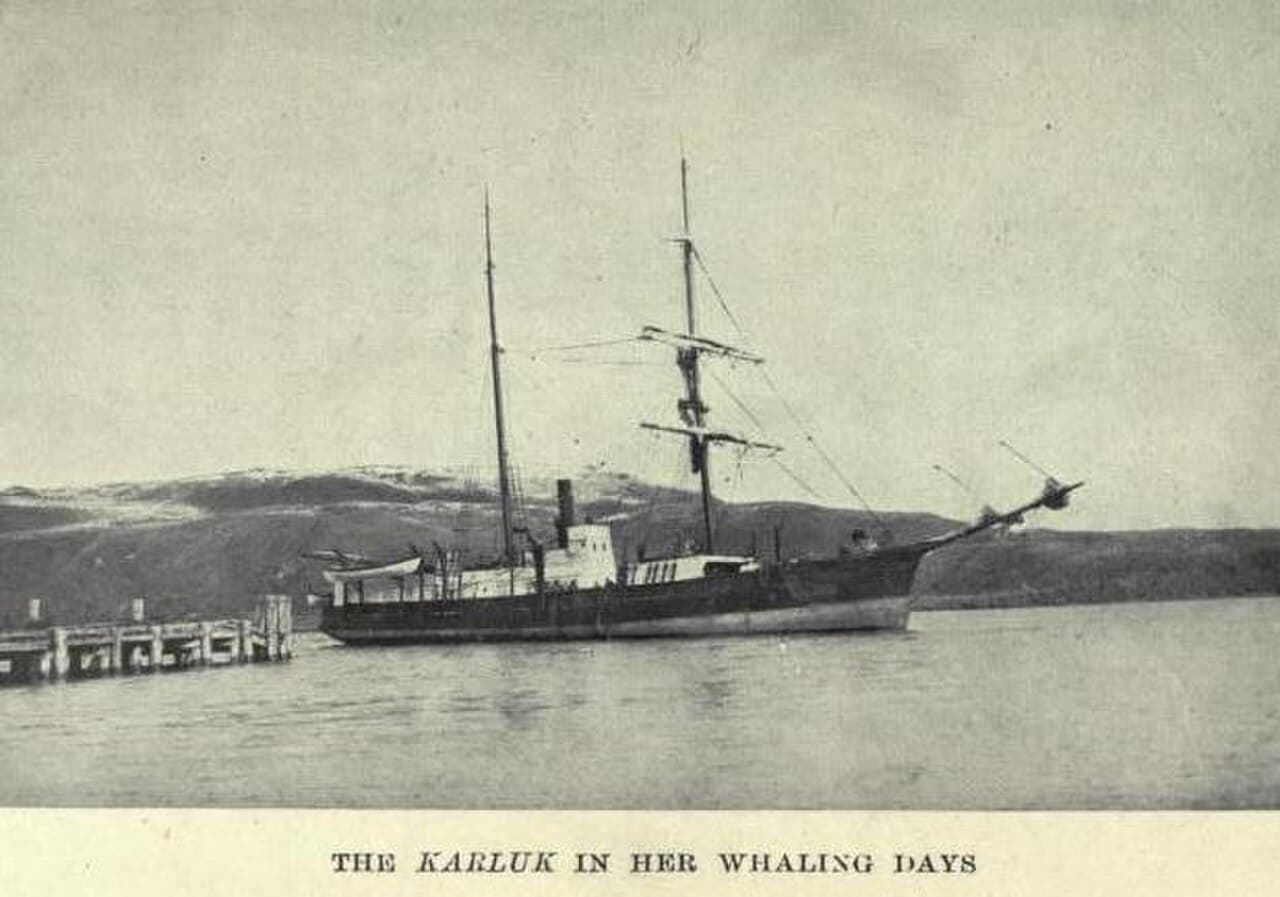
Chukchi pack, Stefansson's hunt, Bartlett's walk Location: Chukchi Sea, north of Wrangel Island · Coordinates: 73.30°N 176.50°W · Casualties: 11 · Survivors: 14 · Depth: crushed through ice · Cause: ice — Crushed by Chukchi Sea pack ice on 11 January 1914 after five months beset. Vilhjalmur Stefansson had left the ship in September 1913 on what he called a hunting party and never returned. Captain Bob Bartlett led the survivors south across the ice to Wrangel Island; he continued alone by sledge to Siberia to find a rescue. · Fate: lost · Type: exploration · former whaler · Tonnage: 321 tons · Crew: 25 · Flag: Canada · Canadian Arctic Expedition · Launched: 1884 Canadian Arctic Expedition flagship, a former whaler under Vilhjalmur Stefansson. Trapped in Chukchi Sea pack ice in August 1913; Stefansson left the ship two months later on what he called a hunting trip and never returned, and the ice crushed her on 11 January 1914. Captain Bob Bartlett marched the survivors south across the ice to Wrangel Island, then continued alone by sledge to Siberia to find a rescue. Of 25 aboard when she left the ice, 11 died before rescue arrived; Stefansson was reprimanded but never prosecuted. The Vessel The Karluk was a Canadian wooden-hulled brigantine auxiliary steamer, built at the Matthew Turner shipyard at Benicia, California in 1884 for the North Pacific whaling trade. She was 39 metres long, 247 gross tons, and powered by a combination of full brigantine sail rig (two-masted) and a 150-horsepower single-cylinder steam engine. Her hull construction reflected the specific demands of the North Pacific whaling trade: heavily reinforced oak timbers, iron sheathing at the waterline, and a hull form optimised for short-haul whaling operations in the confined waters of the Bering Sea. By 1912 she had been retired from the whaling trade due to the declining economic viability of North Pacific whaling in the early twentieth century. She was purchased by the Canadian government in 1913 for the Canadian Arctic Expedition of 1913-1918, a scientific and territorial expedition intended to survey and establish Canadian sovereignty over the western Canadian Arctic islands. Her suitability for Arctic operations was substantially disputed. Karluk had been built for temperate and sub-Arctic whaling, not for extended Arctic ice operations. Her hull was not specifically designed for ice pressure; her steam engine was underpowered for sustained ice-breaking operations; and her provisioning capacity was limited for long-duration Arctic expeditions. The expedition's scientific leader, Vilhjalmur Stefansson, had expressed reservations about Karluk's suitability but had been overruled by the Ca The Disaster From 20 September 1913 through January 1914, Karluk drifted westward in the pack ice along the Alaska and Chukotka coasts, transported approximately 900 kilometres west of her initial beset position. Captain Bartlett, now effectively commander of the beset expedition's main body (Stefansson being permanently separated), conducted systematic ice operations: daily soundings of the pack ice depth and movement, meteorological observations, and continued provisioning of the expedition complement against the possibility of extended over-winter beset conditions. On 11 January 1914, Karluk was approximately 150 kilometres north of the Siberian coast, at approximately 73 degrees north latitude. The pack ice in which she was beset had been progressively compressing through December 1913 and early January 1914; the specific ice pressure on her hull had been systematically increasing. At approximately 18:00 on 10 January 1914, the ice pressure on Karluk's port side exceeded the structural capacity of her hull timbers. The hull began to crush inward; the pressure continued overnight; by 06:00 on 11 January 1914, the ship was substantially holed along her port side and was beginning to flood as the ice pressure eventually released her. Bartlett's response was systematic. The ship's boats were unloaded, the expedition supplies were transferred to the adjacent pack ice, and an emergency camp was established on a substantial ice floe approximately 80 metres from the foundering ship. Karluk sa
Source: naufragia.app
Part of Shipwrecks · Watch in the documentary