MV Wakashio
2020
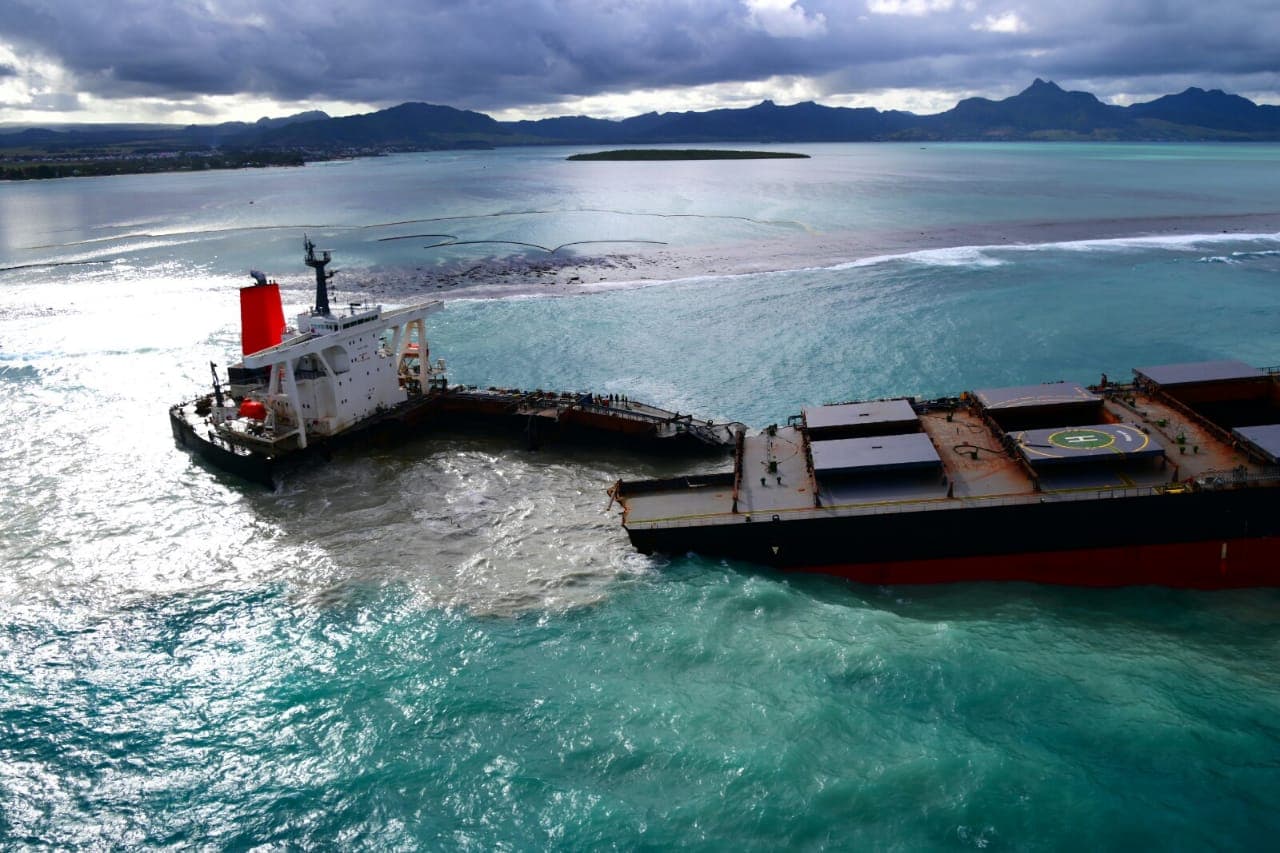
Mauritius, Wi-Fi signal, 1,000 tonnes of bunker Location: Pointe d'Esny, Mauritius · Coordinates: 20.48°S 57.75°E · Casualties: 0 · Survivors: 20 · Depth: 10 m (broken) · Cause: grounding — Struck a coral reef off Pointe d'Esny, Mauritius, at 19:25 on 25 July 2020 while her crew was steering close to shore to obtain mobile-phone Wi-Fi reception for a birthday celebration. Broke in two on 15 August; 1,000 tonnes of bunker fuel spilled onto a UNESCO biodiversity site. · Fate: broken · partially salvaged · Type: bulk carrier · Tonnage: 101,932 GRT · Crew: 20 · Flag: Panama · Nagashiki Shipping · Launched: 2007 Panamanian-flagged Japanese-operated bulk carrier in ballast, ran onto a coral reef off Mauritius on 25 July 2020. Her crew had steered toward shore to find mobile phone signal for a birthday celebration, an explanation confirmed by the Mauritian court. Broke in two three weeks later; 1,000 tonnes of bunker fuel saturated a UNESCO biosphere reserve. The captain and chief officer were convicted of endangering safe navigation; Mauritius received a $9 million settlement. The Vessel The MV Wakashio was a Panamanian-flagged Capesize-class bulk carrier operated by the Japanese Mitsui O.S.K. Lines (MOL) shipping company, built at the Universal Shipbuilding yard at Tsu, Japan in 2007 and commissioned on 21 March 2007. She was 299 metres long, 203,130 deadweight tons, and powered by a diesel engine producing approximately 23,000 horsepower. Her specific design was a Capesize bulk carrier: the largest vessel size in the dry-bulk shipping industry. She was owned by the Japanese Nagashiki Shipping company and operated under charter by MOL. Her specific operational role was the global Capesize bulk trade: predominantly iron ore and coal shipments between major mining regions and industrial centres. Her master on her final voyage was Captain Sunil Kumar Nandeshwar, 58, an Indian career merchant marine officer. Her complement on 25 July 2020 was 20 crew, predominantly Indian and Filipino merchant marine personnel. The Disaster The specific consequence of the grounding was catastrophic oil pollution. Wakashio's fuel oil tanks contained approximately 3,800 tonnes of heavy fuel oil and 200 tonnes of diesel oil for the ship's propulsion; the specific cargo tanks (empty of iron ore on the outbound voyage) did not contain oil. Over the subsequent 10 days (from 25 July through 6 August 2020), the specific ship remained grounded on the reef. The specific Mauritian authorities attempted to initiate salvage operations but were substantially unable to prevent the progressive deterioration of the ship's structural integrity in the continuing wave action. On 6 August 2020, Wakashio's hull failed catastrophically at her midships section; approximately 1,000 tonnes of heavy fuel oil was released into the ocean. The specific oil spill was one of the worst maritime pollution events in the history of Mauritius and the western Indian Ocean. The specific environmental impact was catastrophic. The specific oil spread across approximately 30 kilometres of Mauritian coastline; substantial damage was inflicted on coral reef ecosystems, mangrove forests, seabird populations, and the specific Blue Bay Marine Park (a protected marine area). The specific damage to Mauritian fisheries, tourism, and specific communities was substantial. The specific Mauritian population response was extraordinary. Thousands of Mauritian citizens volunteered for oil cleanup operations; the specific Mauritian government declared a state of enviro
Source: naufragia.app
Part of Shipwrecks · Watch in the documentary