Green Day - Basket Case
JUL 01 1994 · 12:00
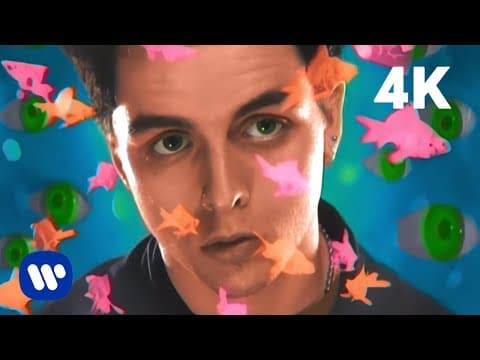
Green Day - Basket Case (1994) Director: Mark Kohr Era: MTV Alternative Nation / Pop-Punk Breakthrough (1994) - The year Green Day crossed from underground punk to mainstream dominance via Dookie, redefining the MTV alternative landscape mid-decade. An indispensable artifact of 1990s music video craft and pop-punk cultural history. The Basket Case video is exceptional for its technically inventive selective colorization, its documented location authenticity, its rich intertextual layering, and its measurable cultural impact, nine MTV VMA nominations, Billboard Alternative Songs #1, and enduring canonical status. Its quantitative metrics (102 scene changes, 1.90s avg shot length, saturation 138.13) provide precise benchmarks for comparative study of mid-90s alternative MTV aesthetics. Tier 1 archival priority. Context: Released August 1994 as the second single from Dookie, 'Basket Case' arrived during the post-Nirvana alt-rock gold rush when major labels were aggressively signing underground acts. The video's asylum setting and manic performance style translated Billie Joe Armstrong's anxiety disorder narrative into a visual language of institutionalized outsiderdom, resonating deeply with Generation X youth culture's rejection of mainstream conformity. The selective colorization technique distinguished it visually from contemporaneous grunge and alternative videos, drawing comparisons to the then-topical phenomenon of Ted Turner colorizing classic films. Its nine MTV VMA nominations in 1995 cemented it as a landmark artifact of the MTV Alternative Nation programming era, during which the channel's TRL and 120 Minutes formats made alternative rock a genuinely mass-market phenomenon. Director notes: Directed in 1994. Shot on location at the Agnews Developmental Center, an abandoned mental institution in Santa Clara County, California, at the band's request. The production team encountered remnants of the institution's history including patient case files, dental molds, and scratch marks on the walls. The video was filmed entirely in black and white and color was added in post-production, with band members rendered in vivid, oversaturated color while background figures and extras remain in black and white, a technique Kohr cited as inspired by MGM musicals and a desire for a decisive, unnatural color palette. The video makes explicit cinematic references to One Flew Over the Cuckoo's Nest and Brazil. It was nominated for nine MTV Video Music Awards in 1995, including Video of the Year, Breakthrough Video, Best Direction, Best Editing, and Best Cinematography, but did not win in any category. The video received heavy MTV rotation and is widely credited with helping propel Dookie to multi-platinum status.
Source: radarchive.org
Part of RAD Archive · Watch in the documentary