Righeira — No tengo dinero.Official Video.
JUL 01 1984 · 12:00
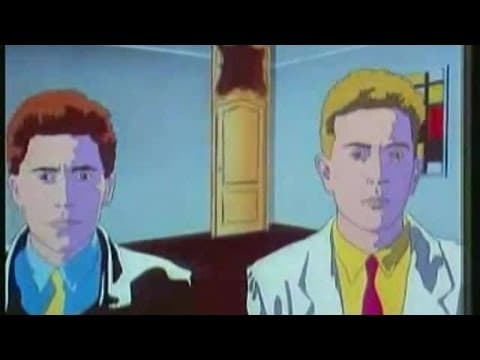
Righeira — No tengo dinero.Official Video. (1984) Director: Pierluigi De Mas Era: Italo Disco Golden Age (1983–1984) - Height of Italian electronic dance pop, when postmodern-futuristic aesthetics fused with animated promotion and Spanish-language novelty hooks for pan-European chart appeal. High curatorial value as one of the earliest and most documented examples of fully animated Italo disco music video promotion, directed by Pierluigi De Mas for Demas New Production SAS. The video's survival as an 'Official Video' on digital platforms preserves a rare instance of early-1980s animated pop promotion, offering a direct primary source for scholars of music video history, Italo disco aesthetics, and Italian popular culture. Its warm-toned, vibrant visual metrics and moderate pacing make it an ideal comparative specimen against live-action contemporaries of the same era. Context: Released in 1984 as a follow-up to the breakthrough hit 'Vamos a la playa', 'No tengo dinero' arrived at the apex of the Italo disco movement's European dominance. The song's use of Spanish lyrics — chosen, as producer Carmelo La Bionda noted, because the language was seen as an unusual pairing with electronic pop — reflected a deliberate transnational branding strategy. The animated video format further distinguished Righeira from their contemporaries, constructing a wholly synthetic postmodern image unconstrained by live-action performance logistics. The song achieved chart positions across Germany (No.12), the Netherlands (No.10), Switzerland (No.20), and Belgium (No.21), cementing Righeira's status as a pioneering force in European synth-pop and dance music at a moment when Italian producers were actively influencing the nascent Eurodance landscape. Director notes: The 'No tengo dinero' video is a fully animated promotional short, a format Wikipedia notes was 'considered an unusual technique to use to make music videos at the time.' Because the duo could not record conventional live-action videos independently, storyboards were sent to De Mas to produce animated versions, allowing Righeira to develop and market their postmodern-futuristic visual identity. The video was produced by Demas New Production SAS and Strum Edizioni Musicali, and was released in Italy in 1984 with a runtime of approximately 3 minutes. The animated format gave the production a timeless, platform-agnostic quality that aided its longevity on European television and later video compilation releases.
Source: radarchive.org
Part of RAD Archive · Watch in the documentary