Queen — Another One Bites the Dust
JUL 01 1980 · 12:00
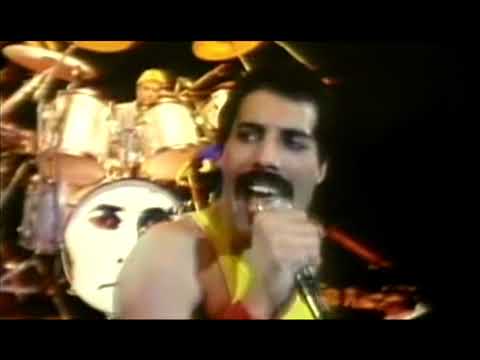
Queen — Another One Bites the Dust (1980) Director: Daniella Green Era: Early MTV Era (1980) - Pre-MTV promo clip from Queen's commercial peak, released the same year as The Game album and shot as a live-concert performance promo before the music video format had been codified as an art form. High. This is a primary source document of one of the best-selling singles of 1980, capturing Queen during their commercial zenith in an unmediated concert-promo format that preceded the music video art form's codification. Its quantitative profile — dark, warm, moderately paced — authenticates its period origins and offers rare contrast to the glossy, high-concept videos the band would produce in subsequent years. Essential for any archive of early 1980s rock visual culture. Context: Released in 1980 from Queen's eighth studio album The Game, 'Another One Bites the Dust' represented Queen's most successful crossover into funk, disco, and R&B-adjacent territory — a commercial gambit that proved spectacularly successful. The song spent 15 weeks in the Billboard Hot 100 top 10, the longest of any song in 1980, and became Queen's best-selling single with over 7 million copies sold. Its bass-driven groove — consciously inspired by Chic's 'Good Times' — positioned Queen at the intersection of rock and Black music traditions at the very moment those genres were converging in mainstream American radio. The video's raw arena-promo aesthetic captures Queen at the apex of their stadium-era power, just one year before MTV would transform how music videos were produced and consumed. Director notes: The video was filmed at Reunion Arena in Dallas, Texas, during Queen's 1980 touring cycle in support of The Game album. It functions as a concert promo clip — a format standard before the launch of MTV in August 1981 — captured with multiple cameras during a live performance. The dark, warm, high-saturation visual profile (brightness 36.83, color temp 2.92, saturation 85.40) is consistent with tungsten-lit arena filming on film or early video stock of the period. The 38 scene changes over 222 seconds yield a moderate avg shot length of ~5.86s, closely tracking the locked, repetitive rhythmic structure of the song itself.
Source: radarchive.org
Part of RAD Archive · Watch in the documentary