Beastie Boys — (You Gotta) Fight For Your Right (To Party)
JUL 01 1986 · 12:00
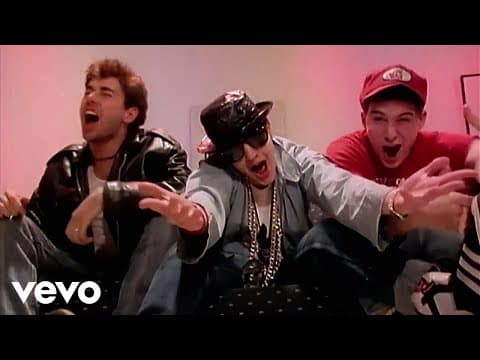
Beastie Boys — (You Gotta) Fight For Your Right (To Party) (1986) Director: Ric Menello & Adam Dubin Era: Golden Age Hip-Hop / MTV Boom (1986) - Peak early MTV era; rap-rock crossover enters mainstream consciousness via Def Jam Records and heavy rotation on cable music television. An essential Tier 1 artifact of the MTV Golden Age. This video is a primary source document for hip-hop's mainstream crossover, early Def Jam Records aesthetics, and the rap-rock fusion that defined mid-to-late 1980s youth culture. Its production conditions — $20,000, two days, a friend's apartment — are as historically significant as its cultural impact. The gap between intended satire and popular reception makes it one of the most academically rich music videos of its decade. Context: Released December 1986 as the fourth single from 'Licensed to Ill,' this video arrived at the precise moment hip-hop was breaching mainstream MTV culture. The song was intentionally written as a satirical parody of frat-boy party anthems, but its irony was largely lost on audiences — a dynamic the Beastie Boys themselves lamented. The video's low-budget, apartment-party aesthetic reflected the guerrilla energy of early Def Jam Records and New York's downtown scene. It became one of MTV's most-rotated clips of the era, directly propelling 'Licensed to Ill' to become the first rap album to reach #1 on the Billboard 200. The video sits at the intersection of hip-hop, punk, and hard rock subcultures, visually embodying a cross-genre moment with no direct precedent. Director notes: Budget of $20,000 with a two-day shoot. Filmed entirely in the New York apartment of Sunny Bak. Menello drew visual inspiration from the raucous party sequence in the 1961 film 'Breakfast at Tiffany's,' including casting a character with an eye patch as a direct homage. Menello's own mother played the role of the boys' returning mother in the video's climactic pie-in-the-face finale. Friends, Def Jam associates, and members of the punk band Murphy's Law were recruited as party guests/extras. The directors and Rick Rubin have acknowledged that the video's slapstick characterization proved so iconic it became an image the Beastie Boys spent years trying to escape. Menello described the video's intent as depicting 'infantile rebellion,' though its satirical dimension was largely missed by mainstream audiences.
Source: radarchive.org
Part of RAD Archive · Watch in the documentary