The Clash — London Calling
JUL 01 1979 · 12:00
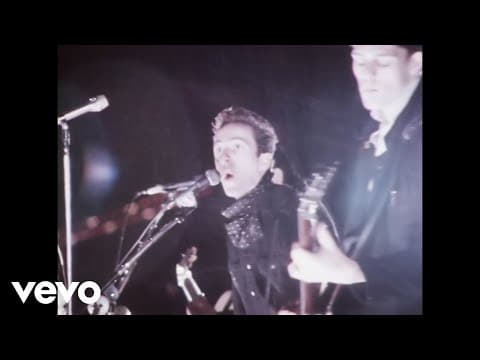
The Clash — London Calling (1979) Director: Don Letts Era: British Punk/Post-Punk Transition (1979) - Peak of The Clash's creative and political urgency, bridging raw punk energy with post-punk expansionism at the close of the 1970s; the single preceded the landmark double album by days. Exceptionally high. This is one of the most culturally significant music videos in the British rock canon — the debut directorial work of Don Letts, the visual launch of a landmark album, and a rare instance where production adversity (tidal miscalculation, rain, drifting camera) became the defining aesthetic signature. Its near-monochromatic palette, handheld instability, and Thames barge location make it a primary archival document of late-1970s British punk visual culture. Tier 1 preservation priority. Context: Released 7 December 1979 as the lead single from The Clash's third album, 'London Calling' arrived at a precise cultural inflection point: the first wave of British punk had crested and collapsed, the post-punk era was beginning to fragment into competing movements, and Britain under Thatcher faced rising unemployment, racial tension, and Cold War anxiety. The song's title invokes the BBC World Service's wartime broadcast identifier — 'This is London calling...' — recasting emergency broadcasting as an apocalyptic rock summons. Lyrically, it addresses the Three Mile Island nuclear incident, Thames flood fears, drug culture, and the band's own financial and managerial crisis. The music video's choice of the River Thames as backdrop literalizes the drowning metaphor embedded in the lyric, shot on a barge in rain and darkness — a setting that visually encodes both urgency and precarity. The clip's rough, uncontrolled production aesthetic was not a stylistic choice but an authentic product of punk DIY necessity and logistical chaos, yet it became one of the most iconic visual documents of the era. Director notes: The 'London Calling' video was, by Don Letts' own account, the first music video he ever directed — the entry point to a career of 300–400 videos. It was filmed on a wet night in early December 1979 at Cadogan Pier (also referenced as Festival Pier), next to Albert Bridge on the south side of the Thames near Battersea Park, with the band performing on a barge. Letts placed his camera in a separate floating boat, not accounting for the Thames tidal drop; at low tide the cameras sat approximately 15 feet below the pier sightline, and the camera boat continually drifted away from the bank. Rain began during the shoot. Letts, a self-described non-swimmer unfamiliar with tidal rivers, described the experience as being 'out of his depth' but credited the band's performance energy for making the adversity work. The resulting video's instability, partial obscured sightlines, and rain-drenched ambiance became defining aesthetic qualities of the clip rather than liabilities.
Source: radarchive.org
Part of RAD Archive · Watch in the documentary