Echo & The Bunnymen — Bedbugs And Ballyhoo
JUL 01 1987 · 12:00
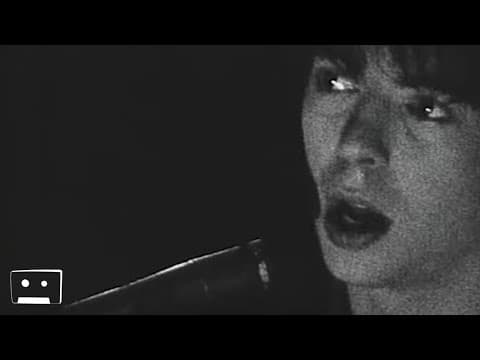
Echo & The Bunnymen — Bedbugs And Ballyhoo (1987) Director: Anton Corbijn Era: Late Post-Punk / Alternative Transition (1987) - Mid-period Echo & the Bunnymen single bridging post-punk atmosphere and mainstream 1980s alternative rock, released during the band's peak US commercial breakthrough on their self-titled LP. High curatorial value as a confirmed Anton Corbijn-directed artefact from a pivotal year in British alternative music. The video's quantitative metrics — near-monochromatic saturation, low luminance, warm thermal tone, and moderate deliberate pacing — perfectly embody and document the Corbijn aesthetic that defined an entire era of post-punk and alternative visual culture. An essential reference point for the intersection of photography-trained direction and music video art. Context: Released in 1987, 'Bedbugs and Ballyhoo' arrived during a pivotal moment for Echo & the Bunnymen, whose self-titled album became their best-performing US release, reaching #51 on the Billboard Top 200. The single was the third lifted from that LP and was released on WEA Records in the UK and Sire Records in the US. The track featured guest keyboards by Ray Manzarek of The Doors, signalling the band's ambitions toward a broader rock canon. The video, directed by long-time collaborator Anton Corbijn, slots into the mid-to-late 1980s tradition of prestige post-punk promo films: darkly lit, visually severe, and indifferent to pop spectacle, positioning the band firmly within the alternative rock continuum that would feed into the early 1990s indie and grunge explosions. Director notes: Confirmed by IMDb (tt6748954) as director of this 1987 music video promo. The video was produced in conjunction with the release of 'Bedbugs and Ballyhoo' as the third single from Echo & the Bunnymen's 1987 self-titled album on WEA/Sire Records. The video's extremely low saturation (3.19), low brightness (40.63/255), warm colour temperature, and restrained motion (6.86) are all consistent with Corbijn's documented aesthetic: dark, desaturated, film-based imagery emphasising mood over narrative action. Corbijn had an established working relationship with Echo & the Bunnymen prior to this video, which fits within his broader 1980s post-punk and new wave portfolio. The track was produced by Laurie Latham.
Source: radarchive.org
Part of RAD Archive · Watch in the documentary