LL COOL J — Going Back To Cali
JUL 01 1988 · 12:00
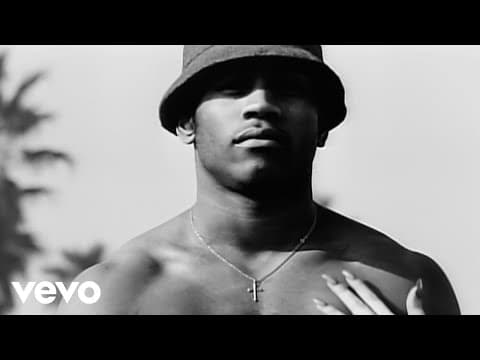
LL COOL J — Going Back To Cali (1988) Director: Ric Menello Era: Golden Age Hip-Hop (1988–1989) - Late Reagan-era East Coast rap crossing into mainstream MTV visibility, bridging Def Jam's street credibility with cinematic art-video ambition Tier-1 preservation priority. One of the most culturally and aesthetically significant rap music videos of the 1980s. Represents a unique convergence of Def Jam street credibility, European art cinema composition, and MTV mainstream ambition. Its monochrome visual language, landmark LA locations, and breakout rotation history make it an essential reference in any archive of hip-hop visual culture. Context: Released in 1988 as part of the 'Less than Zero' film soundtrack and later included on 'Walking with a Panther,' 'Going Back to Cali' arrived at a pivotal moment when hip-hop was aggressively pushing for mainstream MTV visibility. The video was among the highest-rotation rap clips on MTV for a Black artist to that date, representing a breakthrough for Def Jam's visual brand. Its East Coast/West Coast cultural tension — LL rejecting California's perceived vapidity from a Queens perspective — anticipated a geographic rivalry that would define hip-hop's next decade. Rick Rubin's concept drew on his own New York-to-LA ambivalence, giving the video an autobiographical subtext layered beneath its street-cool surface. Director notes: Menello shot 'Going Back to Cali' entirely in black and white, filming at two primary Los Angeles locations: the Venice Beach neighborhood and the Griffith Observatory. His cinematic references for the video included Welles' 'Touch of Evil' (1958) and Nicholas Ray's 'Rebel Without a Cause' (1954) — the reason the shoot was split between Venice and Griffith. He also drew on the European New Wave tradition of Antonioni, Chabrol, and Fellini. Pre-production involved detailed storyboarding. The video was produced under Def Pictures (Def Jam's motion picture arm) with an estimated budget of $40,000. Cinematography was credited to Adam Kimmel. The video received exceptional MTV rotation, noted as more than nearly any prior Black rap act.
Source: radarchive.org
Part of RAD Archive · Watch in the documentary