The Chills — Heavenly Pop Hit
JUL 01 1990 · 12:00
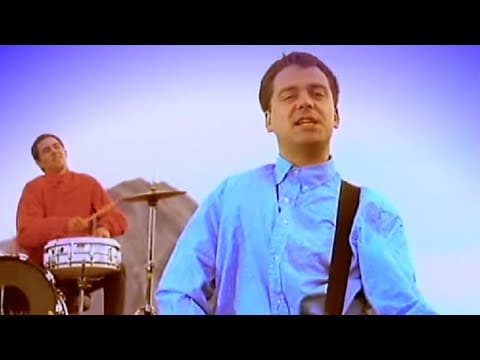
The Chills — Heavenly Pop Hit (1990) Director: Angela Conway Era: Dunedin Sound Peak / Early 4AD-Adjacent Indie (1990) - The commercial and critical apex of New Zealand's Flying Nun scene, coinciding with the Chills' major-label breakthrough on Slash/Warner Bros. High. This video is a primary visual document of the Dunedin Sound at its international peak, directed by a notable post-punk-adjacent filmmaker transitioning from the Wire/Mute orbit into mainstream indie video work. Its documented production circumstances — location substitution, prop construction, near-accident during filming — make it exceptionally well-sourced for archival annotation. It is catalogued by NZ On Screen and Te Ara (Encyclopedia of New Zealand), confirming its status as a work of national cultural significance. Context: Released in 1990 as the lead single from Submarine Bells — the Chills' first major-label album on Slash/Warner Bros. — 'Heavenly Pop Hit' represented both the commercial peak and international calling card of the Dunedin Sound, the loose aesthetic movement centred on Flying Nun Records in Dunedin, New Zealand. The song won Single of the Year at the 1990 New Zealand Music Awards and reached the US Billboard Modern Rock Tracks chart and the UK Singles Chart, making it one of the few Flying Nun releases to achieve genuine international radio exposure. The video, filmed on the Atlantic coast of Ireland in lieu of New Zealand, encapsulates the Chills' geographical dislocation — a touring band from the far southern hemisphere making their bid for northern-hemisphere audiences with landscape imagery that could pass for home. Director notes: The video was filmed in late February 1990 at the foot of Mount Errigal in Co. Donegal, Ireland, while the band was rehearsing for their Submarine Bells world tour at Kelly's in Portrush, Northern Ireland. The production had originally intended to film in New Zealand but opted for Irish landscapes chosen by location scouts as the most New Zealand-like alternative available. The video's signature visual device — large rocks rolling and bouncing across the frame — were constructed from polystyrene. Martin Phillipps has confirmed that he was nearly swept away by a rogue wave during filming while lip-syncing to a non-existent backing tape. The cliff-top and shoreline settings, combined with the warm, naturalistic photography, created an aesthetic widely noted as appearing authentically antipodean despite its Irish origins.
Source: radarchive.org
Part of RAD Archive · Watch in the documentary