Peter Gabriel — Sledgehammer
JUL 01 1986 · 12:00
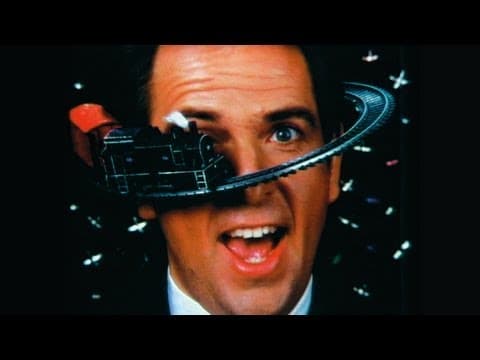
Peter Gabriel — Sledgehammer (1986) Director: Stephen R. Johnson Era: MTV Golden Age (1986) - Peak period of music video as high-concept art form; stop-motion and animation techniques redefine the medium's visual ambition An unambiguous Tier 1 artifact. 'Sledgehammer' is the single most-awarded music video in MTV history and by most accounts its most-played. It represents the high-water mark of analog stop-motion technique applied to the pop video format, and serves as a primary document of both 1980s art-pop visual culture and the foundational work of studios and animators (Aardman, Nick Park, Brothers Quay) who would reshape global animation in subsequent decades. The 4K remaster from original 35mm negatives provides archival-grade preservation fidelity. Context: Released in April 1986 as the lead single from Peter Gabriel's landmark album So, 'Sledgehammer' arrived at the apex of MTV's cultural dominance, when the music video had become the primary vehicle for pop stardom. The video transformed Gabriel from a cult progressive-rock figure into a mainstream international star, demonstrating how high-concept visual production could reposition an artist's entire commercial trajectory. Its collaboration between an American independent director and British animation studios (Aardman Animations, Brothers Quay) represents a transatlantic creative fusion emblematic of 1980s art-pop ambition. The video marked Aardman's first foray into music video production and provided an early platform for animator Nick Park, who would later create Wallace & Gromit. Director notes: Johnson was introduced to Gabriel through his stop-motion work on Talking Heads' 'Road to Nowhere' (1985). The video was commissioned by Tessa Watts at Virgin Records and produced by Adam Whittaker. Johnson and Gabriel spent several weeks generating ideas before enlisting Aardman Animations and the Brothers Quay. The live-action portions were filmed in approximately six days at Aardman's Wetherell Place studio and the University of Bristol's Wickham Theatre, with cinematographer Dave Alex Riddett operating a converted Newman-Sinclair 35mm camera. A single-frame Sony U-Matic video assist system (designed by Welsh company EOS, based on a Sony 5850 deck) was used to monitor animation progress in real time. Gabriel was required to maintain consistent head position across all sets, achieved via a master-frame reference cut into the camera viewfinder graticule. A total of 100 hours of production time yielded 25 unique Gabriel poses per second of finished video. Gabriel endured 16 hours lying beneath a sheet of glass for key compositing sequences. For a ten-second cloud sequence, clouds were hand-painted across Gabriel's face frame by frame. The video was remastered to 4K in 2018 by Aardman from the original 2,000 feet of 35mm negatives, released via Apple Music.
Source: radarchive.org
Part of RAD Archive · Watch in the documentary