RUN DMC — Sucker MC's
JUL 01 1983 · 12:00
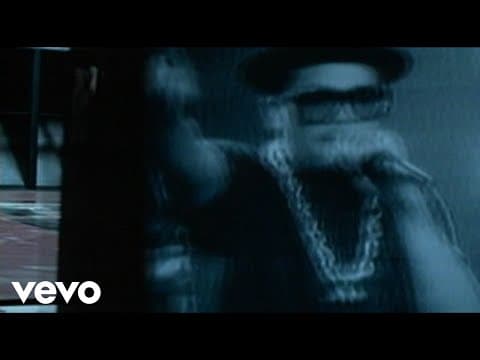
RUN DMC — Sucker MC's (1983) Era: Old School Hip-Hop Golden Dawn (1983–1984) - Pre-commercial rap era defined by street-level aesthetics, minimal production budgets, and the emergence of Hollis, Queens as a locus of hip-hop identity formation. Exceptionally high. 'Sucker MC's' is a primary document of hip-hop at the precise moment of its transition from street performance to recorded commercial artifact. The video's raw, unmediated visual style is a direct analogue to the sonic philosophy of the track itself. As an archival object it preserves not only a performance but an entire set of cultural codes — fashion, posture, spatial use, address to camera — that defined the genre's visual identity for the decade that followed. Tier 1 preservation priority. Context: Released in 1983 on Profile Records, 'Sucker MC's' is widely regarded as one of the foundational texts of recorded hip-hop, pioneering the use of a bare drum machine (the Roland TR-808) with no melodic sampling — a deliberate rejection of the funk-interpolation model dominant in early rap. The video's aesthetic directly embodies this anti-excess ideology: no dancers, no elaborate sets, no narrative conceit. RUN DMC's visual self-presentation — matching Adidas gear, fedoras, gold chains, sneakers without laces — codified what would become the dominant visual grammar of mid-1980s hip-hop, influencing fashion, music video production norms, and hip-hop's crossover into mainstream American youth culture. The Hollis, Queens geography underpinning the group's identity positioned hip-hop as a multi-borough cultural force extending beyond the South Bronx origin myth. Director notes: The video for 'Sucker MC's' is one of the earliest documented promotional clips for RUN DMC, recorded in association with their debut single on Profile Records (1983). The stripped aesthetic — bare room, performance-only, minimal crew — is consistent with the era's DIY promotional video format, often produced as performance documentation rather than narrative art. No production company credit is widely documented in accessible databases for this specific clip.
Source: radarchive.org
Part of RAD Archive · Watch in the documentary