Alcazar - Don't You Want Me (Video)
2002
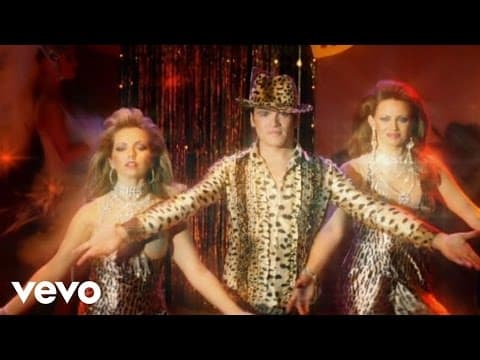
Alcazar - Don't You Want Me (Video) (2002) Director: Jesper Ganslandt Era: Early-2000s Eurodance Revival (2002) - Peak era of Swedish nu-disco and Eurodance crossover into pan-European pop markets, marked by high-concept, camp-theatrical music video production High curatorial value as a prime example of early-2000s Eurodance visual culture, documenting a distinctive mode of European pop spectacle that is underrepresented in English-language archives. The confirmed directorial attribution to Jesper Ganslandt, who went on to become one of Scandinavia's most acclaimed feature filmmakers, provides a rare link between the pop music video industry and prestige arthouse cinema, making this artefact significant for both pop culture studies and auteur cinema scholarship. Context: Released in 2002, this video arrives at the apex of Sweden's dominance in the global pop export market, a period bracketed by the Robyn, Ace of Base, and Europop boom. Alcazar's cover of the 1981 Human League classic recontextualises synth-pop heritage through the lens of early-2000s Eurodance, disco camp, and spectacle pop. The 'Circus Alcazar' world functions as a recurring brand mythology, positioning the group within a maximalist, self-referential pop universe common to European club acts of this era. The single achieved 15 weeks on the US Billboard Hot Dance Club Play chart, signalling Eurodance's continued transatlantic commercial viability in the early 2000s. Director notes: Filmed at Filmhuset in Stockholm, Sweden. The video is set within the recurring 'Alcazar world' universe, here instantiated as 'Circus Alcazar.' Production included live animals (horses, ducks, a parrot), acrobats, and a choreographed ballet ensemble. The entire video shoot lasted approximately 23 hours. The 'Circus Alcazar' concept-world was a consistent visual branding strategy across Alcazar's video catalogue under Ganslandt's direction.
Source: radarchive.org
Part of RAD Archive · Watch in the documentary