Scorpions — Wind Of Change
JUL 01 1991 · 12:00
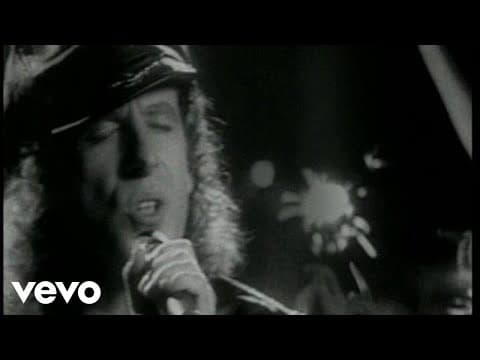
Scorpions — Wind Of Change (1991) Director: Wayne Isham Era: Post-Cold War Rock Ballad Era (1991) - Peak MTV epoch coinciding with the fall of the Berlin Wall and Soviet dissolution; German hard rock crossing into global pop consciousness via politically charged visual storytelling. Exceptionally high. This video is a primary audiovisual document of the post-Cold War moment, blending concert performance with genuine archival footage of world-historic events. Its billion-view YouTube milestone, record-setting sales, and continued cultural invocation—most recently in connection with the 2022 Russian invasion of Ukraine—make it irreplaceable for both music video history and 20th-century political culture research. Director Wayne Isham's politically bold editorial choices, documented in primary source oral history, give it additional provenance value. Context: Released on 21 January 1991, 'Wind of Change' arrived at the precise historical hinge between the fall of the Berlin Wall (November 1989), German Reunification (October 1990), and the impending dissolution of the Soviet Union. The song was inspired by Klaus Meine's experience at the Moscow Music Peace Festival in August 1989, where approximately 300,000 Soviet fans attended. The video's integration of Berlin Wall demolition footage, Tiananmen Square imagery, and Cold War archival material transformed a concert performance clip into a visual elegy for an entire geopolitical era. With an estimated 14 million copies sold worldwide, it became the best-selling single by a German artist of all time, and its official music video reached one billion YouTube views in February 2023—cementing its status as one of the most culturally durable artifacts of the MTV era. Director notes: Isham directed the 'Wind of Change' video in 1991 for Mercury/Vertigo Records, weaving together live Scorpions concert performance footage with archival documentary imagery including the construction and demolition of the Berlin Wall, the 1989 Tiananmen Square protests, and economic unrest imagery. The approach was described as deliberately political: band member Rudolf Schenker noted the Berlin Wall footage was the strongest material in the video. Isham himself, who had also filmed the Moscow Music Peace Festival in August 1989 where the song's inspiration took root, described the creative mandate as 'tell the story with this music and these awesome images.' Some figures at the record label reportedly felt the result was 'too political,' but the band fully endorsed the vision. The warm, muted, low-brightness visual palette (brightness 67.6/255, saturation 32.3) reinforces the archival, memorial tone Isham pursued.
Source: radarchive.org
Part of RAD Archive · Watch in the documentary