Guns N' Roses — Sweet Child O' Mine
JUL 01 1988 · 12:00
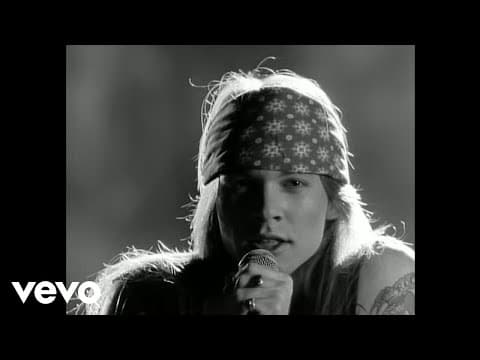
Guns N' Roses — Sweet Child O' Mine (1988) Director: Nigel Dick Era: Late 1980s Hard Rock & Hair Metal Peak (1987–1988) - Pre-grunge LA hard rock at commercial apex; Appetite for Destruction era Guns N' Roses transitioning from Sunset Strip club circuit to mainstream MTV dominance Exceptionally high. This video is one of the most-viewed and culturally durable music videos of the 1980s, representing a pivotal convergence of authentic hard rock performance aesthetics and mainstream MTV visibility. It serves as a primary visual document of Guns N' Roses' classic lineup, the Sunset Strip scene at its commercial peak, and the late-80s hard rock moment immediately preceding the grunge era's displacement of the genre. Its low-intervention, performance-first production philosophy gives it lasting documentary as well as aesthetic value. Context: Released as the third single from Appetite for Destruction in June 1988, 'Sweet Child O' Mine' marked the moment Guns N' Roses crossed from the Sunset Strip club scene into mass-market American consciousness. The music video — a deliberate, unadorned rehearsal-room document shot at Mendiola's Ballroom in Huntington Park, CA — visually codified the band's anti-glam authenticity at a moment when LA hair metal had grown increasingly theatrical and over-produced. By foregrounding the band's raw performance energy rather than elaborate sets or narratives, Nigel Dick's direction positioned GN'R as a credible hard rock act rather than a manufactured MTV product. The song hit #1 on the Billboard Hot 100 in September 1988, becoming the band's only US chart-topper and permanently embedding the opening guitar riff in popular culture. Director notes: Directed at Mendiola's Ballroom in Huntington Park, California. The production was a rehearsal-style single-location shoot featuring the full band performing the song in an intimate ballroom setting surrounded by crew members. Produced by Lisa Hollingshead; edited by Michael Heldman, who also foley-recorded the dog panting sound at the video's opening. An alternative black-and-white version of the video was also shot at the same location. The video became a defining MTV staple for the band and is widely credited with helping break the song to mainstream radio audiences. Axl Rose's original concept — involving a drug-trafficking narrative — was rejected by Geffen Records prior to production.
Source: radarchive.org
Part of RAD Archive · Watch in the documentary