CeCe Peniston — We Got A Love Thang
JUL 01 1992 · 12:00
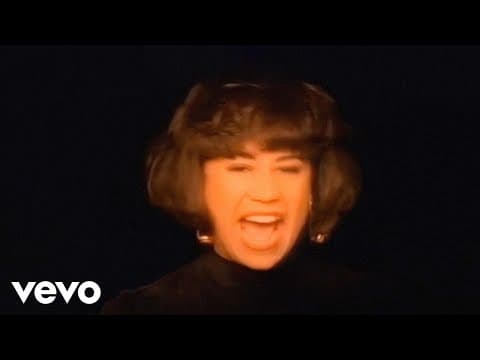
CeCe Peniston — We Got A Love Thang (1992) Era: Early 90s House-Pop Crossover (1991–1992) - The period when Chicago house music broke into mainstream pop and R&B, typified by high-energy club aesthetics and colorful, high-contrast studio-bound production on A&M and similar major labels. High. 'We Got a Love Thang' is a direct visual document of the 1991–1992 house-pop crossover moment at its commercial peak, paired with a chart-topping single that placed three times in Billboard's year-end Top 100. The video's rapid-edit performance aesthetic, warm studio palette, and ensemble choreography constitute a precise visual fingerprint of the era's major-label dance video grammar. Its 7.1 IMDb rating and continued YouTube presence confirm sustained archival and nostalgic relevance. Essential for any collection surveying the transition of club culture into mainstream pop media. Context: Released December 30, 1991 on A&M Records as the second single from CeCe Peniston's debut album Finally, 'We Got a Love Thang' arrived at the precise moment Chicago house music was crossing into mainstream pop radio. Produced by Steve 'Silk' Hurley and co-written by Chantay Savage, the track incorporated a sample from Michael Jackson's 'Rock with You' and rose to number one on the US Billboard Hot Dance Music/Club Play chart for two weeks, while reaching number twenty on the Hot 100 and number six in the UK. The video's theatrical, high-energy studio aesthetic — warm tones, rapid cuts, ensemble dancers — visually encoded the communal euphoria of the dancefloor for a mainstream television audience, extending the club experience into living rooms globally during a pivotal moment of house music's cultural mainstreaming. Director notes: IMVDb's entry for 'We Got a Love Thang' explicitly states no production credits are on record. The video was released in conjunction with the single's December 30, 1991 release and received heavy rotation on TV music channels in early 1992 per Wikipedia's CeCe Peniston article. The visual grammar — white cyclorama backgrounds, gold curtain set pieces, ensemble dancer staging — closely parallels the 'Finally' video aesthetic, consistent with a shared production team or director, but this cannot be confirmed without a direct source. The video is catalogued on IMDb (tt8713992) with a 1992 date but lists no crew credits.
Source: radarchive.org
Part of RAD Archive · Watch in the documentary