Cypress Hill - Illusions
JUL 01 1996 · 12:00
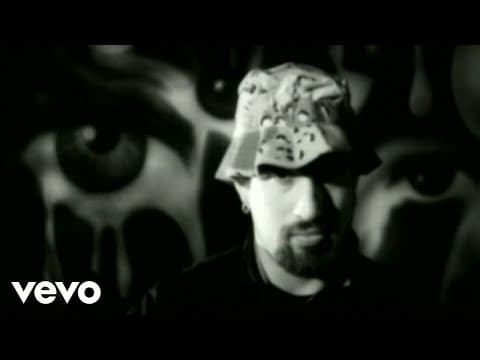
Cypress Hill - Illusions (1996) Director: McG (Joseph McGinty Nichol) Era: Mid-90s West Coast Hip-Hop Golden Era (1996) - Peak of Cypress Hill's psychedelic rap period, concurrent with the III: Temples of Boom album cycle and the height of gangsta/stoner rap's mainstream crossover High-tier preservation priority. This video documents a pivotal transitional moment in Cypress Hill's artistic trajectory, the directorial emergence of McG, and the broader mid-90s West Coast psychedelic hip-hop aesthetic. Its quantitative profile, extreme stillness, dark luminance, rich saturation, minimal edits, is rare within the genre canon and provides a strong counter-example to assumptions about 90s rap video production norms. Archival, educational, and cultural research value is significant. Context: Released in February 1996, 'Illusions' arrived at the peak of Cypress Hill's commercial and artistic influence following III: Temples of Boom (1995), which reached #3 on the Billboard 200. The single represented a marked stylistic divergence for the group, described by critic James Masterton as 'more laid back than anything they have ever released before, so much so that it is almost ambient in tone.' The video's dark, sepia-drenched, slow-moving aesthetic visually encodes the altered-state consciousness central to Cypress Hill's identity, while the production fingerprint (low brightness, minimal motion, warm temperature) reflects the mid-90s West Coast tendency toward introspective, cinematic hip-hop visuals as an alternative to the kinetic performance-clip norm. Director notes: Confirmed as director via IMDb (tt8924144), FilmAffinity, and Wikipedia. The video was released in February 1996 via Ruffhouse/Columbia Records as the promotional clip for 'Illusions', the second single from III: Temples of Boom. Per IMDB, the video was later edited into the 2001 compilation Cypress Hill: Still Smokin'. The song was produced by DJ Muggs and samples Gary Burton's 'Las Vegas Tango' among other sources. The quantitative metrics (slow pace, high saturation, dark brightness, low motion) align with a deliberate ambient-surrealist visual approach, consistent with the song's departure into near-ambient hip-hop territory noted by contemporary critics.
Source: radarchive.org
Part of RAD Archive · Watch in the documentary