Tracy Byrd - Big Love
JUL 01 1996 · 12:00
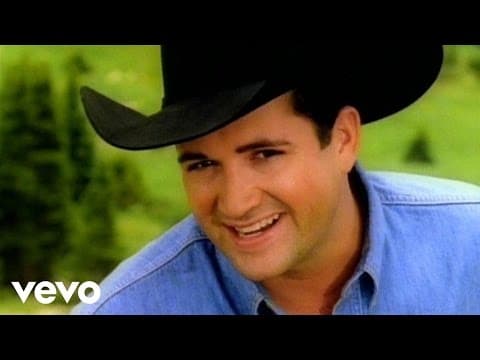
Tracy Byrd - Big Love (1996) Director: Gerry Wenner Era: Mid-90s New Traditionalist Country (1996) - Peak era of hat-act country, MCA Nashville's commercial country boom, outdoor location-driven video aesthetics displacing pure performance formats High curatorial value as a well-documented, director-confirmed mid-90s country video with unusually specific on-location production (Rollins Pass, CO) distinguishing it from period studio norms. Quantitative metrics corroborate the warm, high-energy outdoor aesthetic documented in production notes. Represents a transitional moment in Tracy Byrd's career, the point at which his artistry consolidated, and anchors Gerry Wenner's documented 1990s Nashville directorial canon. Context: Released in September 1996, 'Big Love' arrived during the commercial apex of the mid-90s country music boom, when MCA Nashville was among the dominant labels shaping the mainstream sound. Tracy Byrd occupied a contested space, a Texas-rooted traditionalist frequently pigeonholed as a 'hat act' or George Strait clone, yet demonstrating genuine artistic range. The single peaked at #3 on the Billboard Hot Country Singles & Tracks chart. Filming in Colorado's Rocky Mountain corridor (Denver, Winter Park, Rollins Pass) was a deliberate aesthetic choice that distanced the video from generic Nashville studio productions, reinforcing a rugged, wide-open American West identity consistent with the song's lyrical themes of expansive love and confidence. Director notes: Per Wikipedia, the 'Big Love' video was filmed on location in Denver, Colorado, Winter Park, Colorado, and just east of Winter Park on west Rollins Pass, an unusually specific and geographically rugged set of locations for a mid-90s country video, distinguishing it from the studio-heavy or generic Nashville productions of the period. The choice of Colorado mountain and high-plains terrain aligns with the song's expansive, confident lyrical tone. The quantitative data (130.77 saturation, 2.44 warm color temperature index, 107.74 brightness) is consistent with golden-hour outdoor cinematography in high-altitude Western landscape settings. The rapid editing pace (142 scene changes, 1.60s avg shot length) suggests active performance and lifestyle B-roll intercutting rather than a static single-location shoot, reflecting Wenner's established approach across his 1990s country video work.
Source: radarchive.org
Part of RAD Archive · Watch in the documentary