New Kids On The Block - Never Let You Go
JUL 01 1994 · 12:00
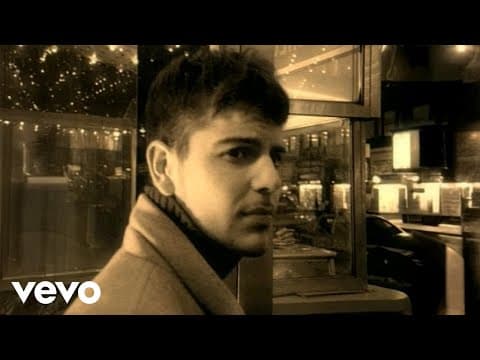
New Kids On The Block - Never Let You Go (1994) Director: Matthew Rolston Era: Post-Teen-Pop R&B Transition Era (1994) - NKOTB's final chapter before hiatus; a pivot from bubblegum pop toward mature New Jack Swing R&B credibility under Columbia Records High curatorial value as a closing document of NKOTB's original run and a rare intersection of teen-pop iconography with New Jack Swing production and Rolston's cinematic narrative direction. The video's warm amber palette, fast intercutting, and urban realist setting offer a visually distinct counterpoint to the group's earlier performance-spectacle videos, making it an important transition artifact in both the NKOTB catalog and the broader visual history of early-1990s pop-R&B crossover. Essential for any archive documenting genre fluidity in the post-Thriller, post-grunge commercial pop landscape. Context: Released in March 1994 as the third and final charting single from NKOTB's fifth album Face the Music, 'Never Let You Go' arrived at a critical moment in the group's trajectory. Having rebranded as NKOTB and shed their Maurice Starr-produced teen-pop origins, the group sought credibility via New Jack Swing producers Teddy Riley and Leon F. Sylvers III. The song failed to chart in the US but reached No. 42 in the UK and No. 18 in Canada. It would stand as the group's last single before their 2008 reunion, making this video a cultural artifact of the teen-pop genre's early-90s identity crisis and the broader industry pressure on pop acts to absorb hip-hop and R&B aesthetics to survive post-grunge. Director notes: Confirmed via IMDb (https://www.imdb.com/title/tt7188156/) as director of this 1994 Columbia Records music video. The video employs Rolston's characteristic approach of grounding pop imagery in emotionally realistic, location-driven cinematography. The warm color temperature (3.55K), high saturation (159.48), and fast editorial pace (avg shot 3.03s, 93 cuts) are consistent with his mid-90s R&B narrative work. The urban city-walk structure and romantic dispute-to-reconciliation arc reflect a cinematically mature, character-first approach atypical of NKOTB's earlier performance-heavy videos.
Source: radarchive.org
Part of RAD Archive · Watch in the documentary