EPMD — You Gots To Chill
JUL 01 1988 · 12:00
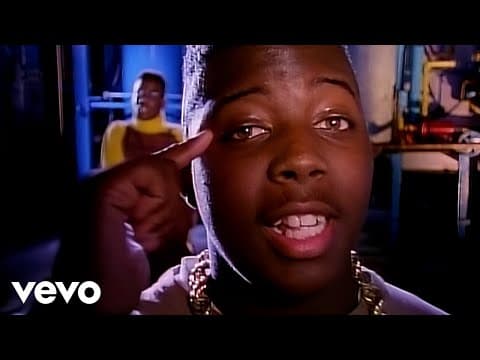
EPMD — You Gots To Chill (1988) Director: Adam Bernstein Era: Golden Age Hip-Hop (1988) - Nascent East Coast rap video era; low-budget performance-driven production coinciding with hip-hop's first wave of major-label MTV visibility and the emergence of Long Island/Brentwood as a rap incubator Exceptionally high. This is a confirmed canonical hip-hop artifact — ranked among VH1's 100 Greatest Hip Hop Songs, directed by a major cross-genre director, and representing a precise historical inflection point in both sonic and visual rap history. The video's industrial performance aesthetic, funk-sampling cultural politics, and documentation of the Stezo dance make it a multi-dimensional primary source for music video studies, hip-hop historiography, and late-1980s subcultural fashion research. Tier 1 preservation priority. Context: Released in 1988 from EPMD's debut album Strictly Business on Sleeping Bag/Fresh Records, 'You Gots To Chill' arrived at a pivotal moment when hip-hop was transitioning from regional underground culture to national mainstream visibility. The track's prominent use of Zapp's 'More Bounce to the Ounce' and Kool & the Gang's 'Jungle Boogie' was highly unusual for New York rap, which was dominated by James Brown samples; this funk-forward approach foreshadowed the G-Funk movement that would sweep the West Coast by 1992–1993. The video's low-budget, industrial-space performance format exemplifies the visual grammar of late-1980s rap video production, where authenticity of environment substituted for high production cost. The single reached #22 on the U.S. R&B chart and was later ranked #74 on VH1's 100 Greatest Hip Hop Songs, cementing its canonical status. Director notes: Confirmed directed by Adam Bernstein per IMDb (imdb.com/title/tt9702952/) and Wikipedia. Bernstein also directed EPMD's follow-up video 'So Wat Cha Sayin'' in 1989. The video was shot in a Brooklyn ice factory/freezer. Per a Rolling Stone interview with EPMD, the shoot took place the morning after a Manhattan performance, lending visible rawness to the clip. Dancer Stezo appears in the video performing his signature move 'the Stezo,' which became a widely imitated dance. The duration logged in metadata (220s / ~3:40) aligns with the officially documented video runtime.
Source: radarchive.org
Part of RAD Archive · Watch in the documentary