R.E.M. — Everybody Hurts
JUL 01 1993 · 12:00
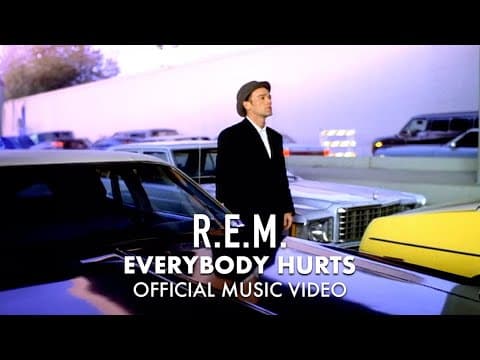
R.E.M. — Everybody Hurts (1993) Director: Jake Scott Era: Alternative Rock Golden Age (1993) - Peak MTV era; grunge and college rock crossover into mainstream consciousness; emotionally direct anthems dominating airwaves Tier-1 canonical music video of the MTV era. Combines verified directorial authorship, major award recognition, documented humanitarian cultural impact, confirmed arthouse-cinema lineage, and a measurable role in shaping the emotional vocabulary of 1990s popular culture. Essential reference for any archive of music video as an art form, mental health communication, or alternative rock history. Context: Released in April 1993 as the third single from R.E.M.'s landmark eighth album Automatic for the People (1992), 'Everybody Hurts' arrived at the apex of alternative rock's commercial breakthrough and peak MTV viewership. The song was written by drummer Bill Berry as an explicit anti-suicide anthem intended to reach teenagers in crisis. The video's humanitarian reach extended beyond music: in 1995, The Samaritans used its lyrics as the sole creative content in a UK press advertising campaign targeting young men at risk. The video's Fellini-referencing visual language — masses of anonymous people trapped in stasis, their interior pain made visible — crystallised a mid-decade mood of collective emotional vulnerability that resonated globally across pop culture, mental health advocacy, and arthouse cinema discourse simultaneously. Director notes: Filmed in November 1992 along the double-deck portions of Interstate 10 near the I-35 Interchange in downtown San Antonio, Texas; released as a single in April 1993. The location was chosen because its concrete freeway architecture was reminiscent of Los Angeles freeway structures. Scott personally interviewed each cast member — local actors and people recruited off the street — asking them what specifically 'hurts' to generate authentic subtitle content. The decision to shoot in colour (rather than black-and-white) was deliberate: Scott and his team favoured the palette of greys against blue sky and varied car tones for maximum realism. Cinematography by Harris Savides; editing by Patrick Sheffield. The video was heavily inspired by the opening dream-sequence traffic jam in Federico Fellini's 8½ (1963). It was nominated for a Grammy Award and won four MTV Video Music Awards in 1994: Breakthrough Video, Best Direction, Best Editing, and Best Cinematography. It also won Best Clip of the Year (Pop/AC) at the 1994 Billboard Music Video Awards.
Source: radarchive.org
Part of RAD Archive · Watch in the documentary