Fiona Apple - Criminal
JUL 01 1997 · 12:00
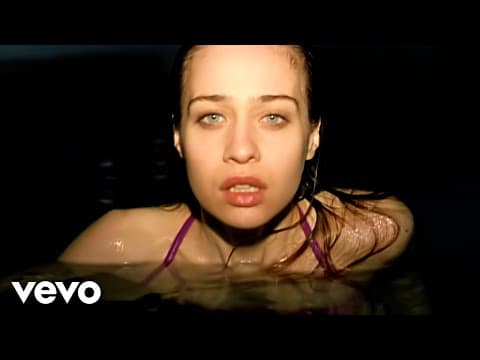
Fiona Apple - Criminal (1997) Director: Mark Romanek Era: Mid-90s Alt-Pop / Confessional Indie Era (1997) - Peak MTV alternative rotation, post-Lilith Fair female singer-songwriter breakout, heroin-chic visual culture at apex Tier-1 canonical artifact of 1990s MTV visual culture. One of the most formally accomplished and culturally contested music videos of its era, 'Criminal' functions simultaneously as auteur cinema (Romanek/Savides collaboration), cultural document (heroin-chic moment, Lilith Fair context, MTV alternative hegemony), and feminist media flashpoint. Its technical precision, particularly Savides's cinematography and Romanek's headless-framing technique, merits inclusion in any archival study of the music video form as art. The video's contested reception history makes it indispensable for scholars of gender, media, and popular culture. Context: Released in June 1997 as the third single from Fiona Apple's debut album Tidal (Work/Columbia Records, July 1996), 'Criminal' arrived during the peak commercial phase of MTV's alternative era and the height of 'heroin chic' fashion culture, directly echoing the visual language of controversial mid-1990s Calvin Klein advertising campaigns. Apple, 19 at time of filming, had stated the song was about 'feeling bad for getting something so easily by using your sexuality.' The video generated immediate controversy for its jailbait imagery and Apple's gaunt presentation, drawing criticism that conflicted with her anti-commercial ethos, a tension she acknowledged publicly. The song won the Grammy Award for Best Female Rock Vocal Performance at the 40th Grammy Awards. Its MTV VMA Best Cinematography win in 1998 recognized Harris Savides's mastery of analog warmth and voyeuristic framing. The video was ranked on VH1's '100 Greatest Songs of the 90s' and the song placed at No. 423 on Rolling Stone's 2021 '500 Greatest Songs of All Time.' Director notes: The 'Criminal' video was shot in May 1997 and released in June 1997, with cinematography by Harris Savides. Visual enhancements including the retroreflector effect in Apple's eyes were created by visualist Ash Beck. The set featured green carpet and 1970s-style wood paneling, evoking the visual language of banned Calvin Klein advertisements of the era. Romanek's signature technique of omitting the faces of secondary performers, presenting them as anonymous bodies, is used throughout. The video won the MTV Video Music Award for Best Cinematography at the 1998 VMAs. It was notably featured in the 1997 MTV special 'Beavis and Butt-Head Do Thanksgiving,' and has been cited as a defining artifact of the 'heroin chic' aesthetic of mid-1990s visual culture. The New Yorker described Apple in the video as 'looking like an underfed Calvin Klein model.'
Source: radarchive.org
Part of RAD Archive · Watch in the documentary