Aphex Twin - Come To Daddy (Director's Cut)
1997
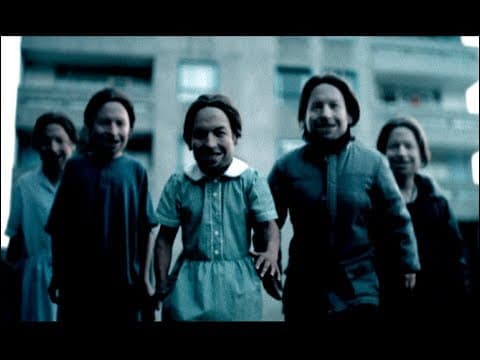
Aphex Twin - Come To Daddy (Director's Cut) (1997) Director: Chris Cunningham Era: Post-Rave Electronica / Mid-Late 1990s (1997) - Peak of UK IDM and drill-and-bass experimentation; industrial body-horror aesthetics enter the music video mainstream via Warp Records and the emergent auteur director model. Tier 1 archival priority. One of the most critically acclaimed and culturally durable music videos of the 20th century, 'Come to Daddy' (Director's Cut) functions simultaneously as promotional artifact, short horror film, and landmark work of visual art. Its accolades (Prix Ars Electronica Golden Nica, Pitchfork #1 video of the 1990s), documentary production context (Thamesmead / A Clockwork Orange location, Cunningham's debut), and measurable influence on subsequent horror-aesthetic music video production make it an irreplaceable primary source for multiple research disciplines. Context: Released in October 1997, 'Come to Daddy' emerged at the apex of the UK IDM and drill-and-bass movement centred on Warp Records. The video crystallised a broader cultural anxiety about urban decay, post-Thatcher council estate Britain, and the encroachment of media technology into everyday life, literalised by a derelict television as the vector of supernatural threat. Its Thamesmead location carried explicit intertextual weight via A Clockwork Orange, linking 1990s electronic music's transgressive edge to the British New Wave's earlier confrontations with state violence and youth delinquency. The video also arrived as music video auteurism was maturing as a legitimate art form, with Cunningham, Michel Gondry, and Spike Jonze establishing the director as co-author of the musical text. The Director's Cut format itself signals that ambition, positioning the work closer to short film than promotional material. Director notes: Directed in 1997 and released on 6 October 1997 via Warp Records; this was Cunningham's directorial debut. Produced through Black Dog Films, edited by Gary Knight. Shot on location at Thamesmead, a 1960s brutalist council estate in the London borough of Greenwich and Bexley, the same estate used by Stanley Kubrick for A Clockwork Orange. Specifically filmed around Tavy Bridge Shopping Centre, which was demolished in 2007. The Director's Cut runtime is approximately 6 minutes 6 seconds, extending the broadcast edit with additional narrative footage. The video won the Golden Nica (main award) in the Digital Musics category at the Prix Ars Electronica in 1999, and was named the number one music video of the 1990s by Pitchfork. It is included on the Directors Label compilation volume The Work of Director Chris Cunningham (2004). The video's imagery draws on Cunningham's special-effects background, using prosthetic masks bearing Richard D. James's face on child performers, and distorted CRT compositing for the television-screen sequences.
Source: radarchive.org
Part of RAD Archive · Watch in the documentary