Billy Joel — Leningrad
JUL 01 1989 · 12:00
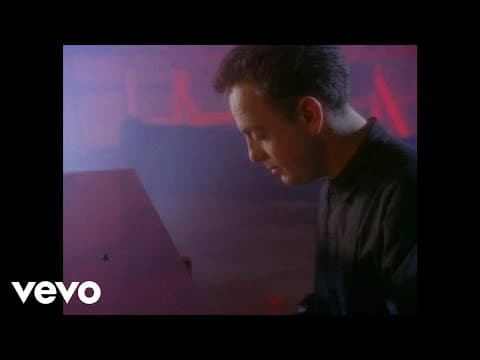
Billy Joel — Leningrad (1989) Director: Kathy Dougherty Era: Late Cold War / Perestroika Pop Era (1989) - Released at the twilight of the Cold War, capturing the cultural thaw between the US and USSR through documentary-inflected visual storytelling and archival montage High curatorial value as a rare intersection of mainstream pop and Cold War documentary aesthetics, produced at a historically decisive moment (fall 1989). The video functions simultaneously as personal memoir, political statement, and archival essay, making it an exemplary artifact for both music video studies and Cold War cultural history collections. Its director, Kathy Dougherty, brings documentary credibility to the project, and the video's formal strategy — using archival footage to anchor a pop ballad — distinguishes it within the late-1980s MTV canon. Context: Released in October 1989 — weeks before the fall of the Berlin Wall — 'Leningrad' embodies the cultural and geopolitical thaw of the late Glasnost era. Billy Joel had become one of the first major Western rock artists to tour the Soviet Union in 1987, playing six concerts in Moscow and Leningrad underwritten with his own funds. The song and its video constitute a rare mainstream American pop artifact that humanizes the Soviet 'other,' drawing on Joel's personal friendship with Viktor Razinov, a circus clown he met on that tour, to argue for shared humanity across ideological lines. The video's archival documentary aesthetic grounds this message in historical visual evidence, making it both a personal memoir and a political statement at a pivotal Cold War inflection point. Director notes: Directed for Columbia Records in 1989. The video opens with Billy Joel performing at a piano dressed in all black in front of cut-up fabric, and integrates numerous archival clips depicting Cold War imagery from both the United States and the former Soviet Union. The production was produced by Lee Rolontz. The video was not released as a US single but was included on Joel's Greatest Hits Vol. III (1997). The documentary montage approach reflects the song's dual autobiographical narrative structure, paralleling Joel's American Cold War childhood with that of Soviet circus clown Viktor Razinov.
Source: radarchive.org
Part of RAD Archive · Watch in the documentary