a-ha — Take On Me
JUL 01 1985 · 12:00
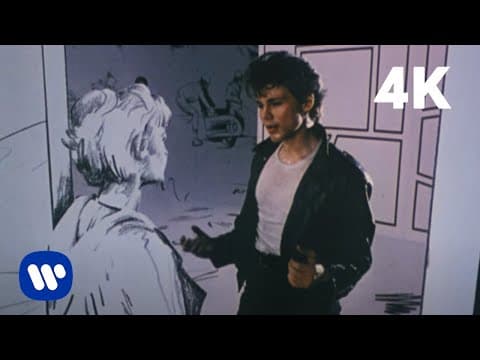
a-ha — Take On Me (1985) Director: Steve Barron Era: MTV Golden Era (1985) - Peak of the music video art form; post-New Wave synth-pop breakout moment defined by rotoscope animation innovation and cinematic storytelling ambition on a pop budget. Tier 1 canonical artifact of the MTV Golden Era. 'Take On Me' is one of a small number of music videos (alongside 'Thriller' and 'Money for Nothing') whose production innovations permanently altered the art form. Its rotoscope technique, cross-medium narrative structure, and six VMAs make it essential to any serious archive of 20th-century audiovisual pop culture. The 4K remaster (as indicated by the filename) extends its research utility into contemporary digital preservation contexts. Context: Released in 1985 by Norwegian synth-pop trio a-ha, 'Take On Me' arrived at the precise moment MTV was transforming music consumption in North America and Europe. The video's rotoscope animation — executed by Michael Patterson — fused the visual grammar of comic books with cinematic narrative filmmaking at a time when most pop videos were straightforward performance clips. Its six MTV VMA wins in 1986 cemented the music video as a legitimate art form and established high-concept visual storytelling as a commercial necessity. The fantasy-escapism theme resonated powerfully with a youth culture simultaneously consuming comic books, early video games, and blockbuster cinema. The video's cross-medium dimensional portal premise prefigured later postmodern media self-referentiality and is a defining artifact of 1980s pop cultural optimism. Director notes: The 'Take On Me' video was produced by Pål Waaktaar's concept, realized through a collaboration between director Steve Barron and animator Michael Patterson, who developed and executed the rotoscope pencil-sketch technique. The video was shot on 16mm film for its live-action segments. The rotoscoping process required approximately 16 weeks of hand-drawing by Patterson and his team to complete the roughly 3-minute video. An earlier, simpler version of the video was produced in 1984 but failed commercially; this 1985 reshot and fully animated version won six MTV Video Music Awards in 1986, including Video of the Year and Best Direction. The production is frequently cited in animation and music video studies as the definitive example of rotoscope technique applied to a pop context.
Source: radarchive.org
Part of RAD Archive · Watch in the documentary