Elton John — Sad Songs (Say So Much)
JUL 01 1984 · 12:00
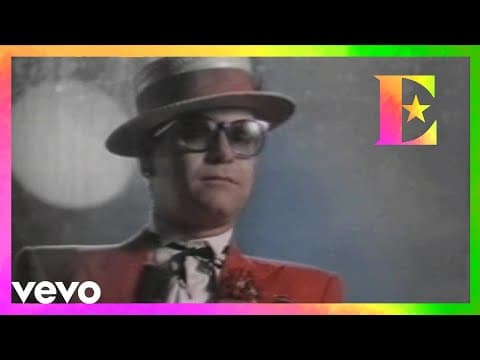
Elton John — Sad Songs (Say So Much) (1984) Director: Russell Mulcahy Era: MTV Golden Age (1984) - Peak of music video as mainstream art form; glossy, high-production promotional clips dominate pop culture in tandem with the Breaking Hearts album cycle High curatorial value as a confirmed Russell Mulcahy-directed video from his most productive and historically significant period. Documents a key moment in Elton John's commercial resurgence, a major director's stylistic versatility, and the maturation of location-based music video production in 1984. The Sydney shooting location adds geographic and cultural specificity rarely associated with this artist's visual catalogue. Strong candidate for preservation as an exemplar of emotionally grounded, non-spectacle MTV-era video production. Context: Released in May 1984 at the zenith of the MTV era, 'Sad Songs (Say So Much)' arrived as music videos had become indispensable vehicles for chart success. Directed by Russell Mulcahy — the Australian director who shot the very first video MTV broadcast — this clip represents the mature, location-grounded phase of his Elton John collaboration. Shot in Rushcutters Bay, Sydney, the video grounds an emotionally introspective lyric about the consoling power of music in an unpretentious street-level realism, a counterpoint to the more flamboyant spectacle of contemporaneous Mulcahy works. The warm, muted visual register mirrors the song's bittersweet emotional tone, while the fast-cut MTV pacing ensures broadcast viability. The song reached No. 5 on the US Billboard Hot 100 and No. 7 in the UK, cementing Elton John's commercial resurgence in the mid-1980s. Director notes: Confirmed by Wikipedia (en.wikipedia.org/wiki/Sad_Songs_(Say_So_Much)) as director. Shot on location on a street in Rushcutters Bay, Sydney, Australia. Notable production detail: Elton John appears without his familiar trademark glasses in some scenes, a deliberate stylistic departure. The Sydney location connects to Mulcahy's Australian roots. This video sits within Mulcahy's prolific 1983-1984 Elton John collaboration period, which also included 'I'm Still Standing' (1983) and 'I Guess That's Why They Call It the Blues' (1983). Mulcahy's signature aesthetic — fast editorial rhythm, tracking camera, warm practical lighting — is consistent with the quantitative metrics observed: avg shot length 3.30s, motion score 6.72, warm color temperature bias.
Source: radarchive.org
Part of RAD Archive · Watch in the documentary