Akon - Locked Up ft. Styles P
2004
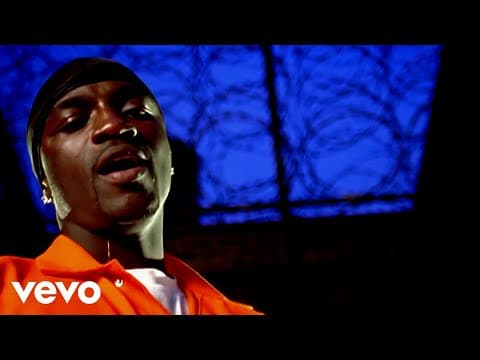
Akon - Locked Up ft. Styles P (2004) Director: Kai Crawford Era: Mid-2000s Urban R&B/Hip-Hop Emergence (2004) - The post-millennium street-to-mainstream crossover era, defined by gritty narrative realism, incarceration themes in Black American music, and the commercial rise of Afrobeats-inflected R&B via SRC/Universal Records. A high-value artifact of the 2004 urban R&B/hip-hop crossover era, this video serves as Akon's commercial and cultural origin point. Its realist aesthetic, carceral thematic content, and rapid-cut editing grammar make it essential for researchers studying incarceration representation, Afrodiaspora pop emergence, and early-digital music video production. The dual-edit structure (album and remix) also makes it a rare technical case study. Context: Released on April 5, 2004, 'Locked Up' was the lead single from Akon's debut album Trouble and marked the emergence of a distinctly hybrid sonic identity, West African-diaspora vocals layered over East Coast and Southern hip-hop production. The video arrived at a moment of intense cultural and political scrutiny around mass incarceration in the United States, lending the carceral imagery a documentary weight that resonated across urban communities. Featuring Styles P of the Lox, the collaboration bridged Akon's Afrobeats-inflected R&B register with D-Block street credibility, enabling a calculated street-first commercial strategy chosen by SRC A&R before a mainstream crossover push. The song peaked at #8 on the Billboard Hot 100 and reached the top 5 in the UK, signaling transatlantic reach. Director notes: The video was directed by Kai Crawford (as FlyyKai) and edited to serve both the original album version and the remix featuring Styles P. Per Wikipedia and IMDb, the production dates to 2004 in conjunction with the single release on April 5, 2004, under SRC/Universal Records. The video's quantitative profile, rapid editing (139 cuts, 1.72s avg shot length), subdued brightness (53.6/255), and high contrast (69.8), is consistent with a street-realism aesthetic popular in early-2000s urban video production. The muted saturation (69.96) and mixed color temperature (2.21) suggest practical location lighting with minimal post-grading, a production-budget hallmark of the era. The video received at least 1 award nomination per IMDb.
Source: radarchive.org
Part of RAD Archive · Watch in the documentary