The Jesus And Mary Chain — Just Like Honey
JUL 01 1985 · 12:00
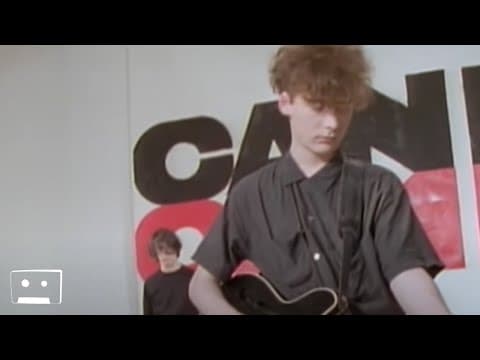
The Jesus And Mary Chain — Just Like Honey (1985) Director: Tim Broad Era: Post-Punk / Noise Pop Genesis (1985) - The moment UK alternative rock confronted mid-80s MTV gloss with deliberate anti-spectacle minimalism, coinciding with the release of Psychocandy on Blanco y Negro Records. This video holds Tier 1 curatorial significance as one of the defining visual documents of UK noise pop. Directed by Tim Broad — a pivotal and underrecognised figure in 1980s British music video history — it captures The Jesus and Mary Chain at the precise moment of their cultural emergence, embodying the tension between pop desire and noise-driven refusal that would define an entire strand of alternative rock. Its stark minimalism, anti-fashion iconography, and resistance to MTV production norms make it an essential archival object for scholars of post-punk, independent label culture, and the visual history of alternative music. Context: Released in September 1985 as the third single from the Jesus and Mary Chain's debut album Psychocandy, 'Just Like Honey' arrived at a pivotal moment for UK alternative music. The band's confrontational live performances — short sets often played with backs to the audience — had earned them tabloid notoriety and NME acclaim simultaneously. The video's starkly minimal aesthetic ran counter to the dominant mid-80s MTV model of elaborate concept videos, aligning instead with the UK independent label ethos championed by labels like Blanco y Negro and Factory Records. The song's famous drum intro, quoting Hal Blaine's pattern from The Ronettes' 'Be My Baby,' explicitly invoked Phil Spector's Wall of Sound tradition, which the Reid brothers then dismantled with sheets of guitar feedback. The track later achieved a second cultural life as the closing song in Sofia Coppola's Lost in Translation (2003), cementing its status as a touchstone of melancholic longing across generations. Director notes: Directed in 1985 to accompany the third single from Psychocandy (Blanco y Negro Records). The video is shot on a minimal set featuring a large 'CANDY' backdrop, with the band performing in near-darkness punctuated by a handheld flashlight. The production deliberately eschews the glossy, high-concept aesthetic dominant in 1985 MTV programming, functioning instead as an anti-video that foregrounds the band's noise-pop sound and studied indifference. Broad's restrained visual language — sparse lighting, a static set, fast but contained editing — proved an ideal complement to the band's anti-showmanship ethos.
Source: radarchive.org
Part of RAD Archive · Watch in the documentary