Ya Tseen — Digital Winter
JUL 01 2026 · 12:00
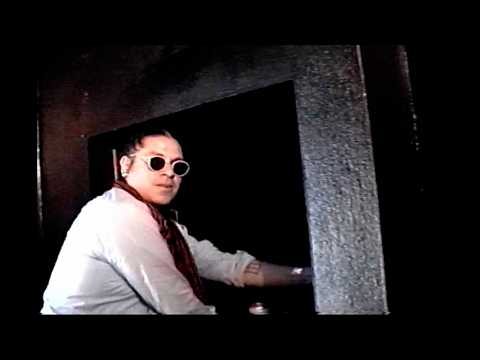
Ya Tseen — Digital Winter (2026) Era: Post-Genre Indigenous Futurism (2026) - Mid-2020s era of Indigenous-led experimental pop marked by cyberpunk aesthetics, decolonial sound design, and Sub Pop-distributed avant-garde; closing track of Ya Tseen's second album 'Stand On My Shoulders' High curatorial value as a rare 2026 music video document from a Tlingit-led artist with an established biennial-level fine art practice. The video represents the intersection of Indigenous Futurism, Sub Pop's alternative rock heritage, and the cyberpunk-inflected experimental pop emerging from the Pacific Northwest. As the closing track of 'Stand On My Shoulders,' it carries particular narrative weight as both artistic statement and cultural testimony. The quantitative data — high saturation, low brightness, fast editing — aligns with an aesthetic of digital intensity and compressed emotional density that amplifies the thematic resonance of a song literally titled 'Digital Winter.' Context: Ya Tseen, led by Nicholas Galanin — a Tlingit and Unangax̂ artist from Sheet'ka (Sitka, Alaska) — represents a vital strand of 2020s Indigenous Futurism that fuses customary Tlingit cultural identity with experimental electronic music, hip-hop, and interdisciplinary visual art. 'Digital Winter' closes 'Stand On My Shoulders' (Sub Pop, January 16, 2026), an album described as a celebration of love and connection to Land. Galanin's practice spans sculpture, jewelry, installation, video, and music, with work shown at the Whitney Biennial, Sydney Biennial, and Desert X. The Ya Tseen project name itself — meaning 'to be alive' — derives from a Tlingit name given to Galanin by his father following a near-fatal 2013 boat accident, and was formally adopted after his father's 2021 passing as an act of ancestral connection and cultural continuity. Director notes: The video was released on January 16, 2026, the same date as the album 'Stand On My Shoulders' on Sub Pop Records. It is the closing track (track 11) of the album. Production credits on Qobuz list Nicholas Galanin and Tunia as producers, with Dan Duszynski as mixer, Benjamin Verdoes and Otis Calvin III as lyricists/composers, and Derek Haukaas as engineer — but these are audio credits only and do not establish video directorship.
Source: radarchive.org
Part of RAD Archive · Watch in the documentary