Hallelujah: Home Ground in Jerusalem
MAY 15 1979 · 12:10
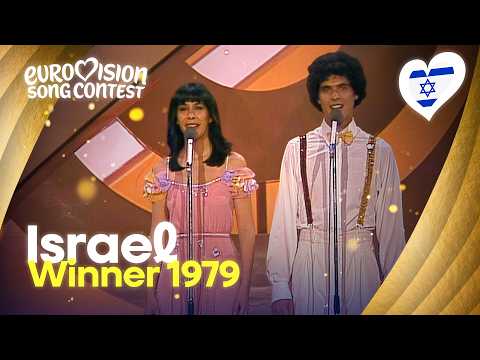
Milk and Honey · "Hallelujah" · Israel · 1979 Placement: 1st · Score: 125 · Language: Hebrew · Composers: Kobi Oshrat, Shimrit Orr · Venue: Jerusalem International Convention Center · Host: Jerusalem, Israel · Type: winner · Broadcast: color crt On March 31, 1979, at the Jerusalem International Convention Center — Israel hosting its first Eurovision after Izhar Cohen's 1978 win — a four-member Israeli group called Milk and Honey, fronted by 19-year-old singer Gali Atari, delivered 'Hallelujah,' a soft-pop anthem whose chorus was built around the Hebrew word's biblical resonance. The song was gentler than the 1978 winner's disco-bounce — a reflective pop-ballad emphasizing vocal harmony over production theatrics. The hosting carried heavy symbolic weight: Israel had become the first non-founding-member country to host Eurovision, and 'Hallelujah' winning on home ground made it the first back-to-back Israeli Eurovision victory. The song finished with 125 points, narrowly edging Spain. Within months, 'Hallelujah' had been recorded in multiple languages by international artists and had entered pan-European pop-standard repertoire; it remains one of the most-covered Eurovision winners, frequently reprised at Eurovision anniversary events and recorded by artists from Celine Dion to contemporary children's choirs. Context Eurovision 1979 was hosted by Israel for the first time, a logistical and security undertaking that required substantial EBU coordination. The contest occurred in the aftermath of the Camp David Accords (September 1978) and the March 1979 Egypt-Israel peace treaty — both signed weeks before the Eurovision broadcast — and the 1979 contest coincided with a brief window of Middle East diplomatic optimism that would narrow significantly in later years. Several Arab-region broadcasters did not carry the Jerusalem broadcast. Milk and Honey had been formed in Israeli pop circles in the late 1970s. The song's theological-lyrical register was unusual for Eurovision's commercial-pop era and was received by some European juries as meaningfully different from the disco-era trend. Legacy 'Hallelujah' remains one of the most-covered Eurovision winners in global pop — performed at every Eurovision anniversary event, recorded in multiple languages, embedded in interfaith-cultural programming across decades. Gali Atari continued a significant Israeli-pop career and performed 'Hallelujah' at Israel's 2019 Eurovision hosting as a pan-generational opening moment. For Israel, the 1978-1979 back-to-back wins established the country's Eurovision identity as a consistent top-tier competitor. The 1979 hosting itself became a reference point in subsequent discussions of Eurovision's capacity to host in politically complex locations. Mythology 'Hallelujah' is sometimes confused with Leonard Cohen's unrelated 1984 song of the same name — the two songs share no musical, lyrical, or authorial relationship. Milk and Honey is occasionally described as Gali Atari's solo act; she was one of four members. The claim that Eurovision has never been hosted in the Middle East is sometimes made; Israel's 1979 and 1999 hostings were Eurovision's only Middle East productions through 2026.
Source: eurovisionoracle.com
Part of Eurovision · Watch in the documentary