1944: Jamala Sings the Deportation of a People
MAY 15 2016 · 12:20
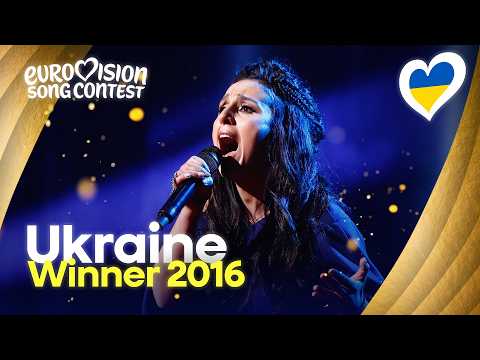
Jamala · "1944" · Ukraine · 2016 Placement: 1st · Score: 534 · Language: Crimean Tatar / English · Composers: Jamala · Venue: Globen · Host: Stockholm, Sweden · Type: political statement · Broadcast: streaming On May 14, 2016, at the Globen arena in Stockholm, Ukrainian singer Susana Jamaladinova — performing as Jamala — delivered a song titled simply '1944.' The lyric was about her Crimean Tatar great-grandmother's deportation to Central Asia under Stalin's May 1944 forced removal of the entire Crimean Tatar population. The chorus was in Crimean Tatar. The performance was stark — a single singer, sparse staging, no dancers, vocal range moving from whisper to keening wail. In 2016, with Russia's 2014 annexation of Crimea two years fresh and ongoing, the song was legible as a statement about historical forced displacement AND about the ongoing present. Russia lodged a formal complaint that the song violated Eurovision's no-political-lyrics rule. The EBU rejected the complaint, ruling the song was historical in nature. Jamala won the contest with 534 points in the first year of the new split jury/televote scoring system — narrowly over Australia's Dami Im and Russia's Sergey Lazarev, with Russia leading the televote but losing the combined total. Context Eurovision 2016 was the first to use a fully split scoring system in which national juries and televotes were announced separately and combined. Russia had been runner-up in 2015 and widely expected to win in 2016; the entry was a high-production Sergey Lazarev performance. Ukraine had been in active conflict with Russia since the 2014 annexation of Crimea and the war in Donbas. Jamala had submitted '1944' through Ukraine's public broadcaster STB and the selection had been deliberate — the song was completed in 2015 in direct response to the annexation. Eurovision rules prohibit lyrics with explicit contemporary political content; the 1944 historical frame satisfied the rule while transparently addressing 2014. Legacy Jamala's victory is the Eurovision political-statement win against which all others are measured. It crystallized the contest's capacity to host historical-memory politics while technically complying with neutrality rules. The performance accelerated international awareness of the 1944 Crimean Tatar deportation — a historical atrocity that had received limited Western attention. Ukraine won a second time in 2022 (Kalush Orchestra, 'Stefania') during Russia's full-scale invasion, a result widely interpreted as a continuation of the 2016 statement. Russia was expelled from Eurovision in 2022. The 2016 split scoring system, debuted in the contest Jamala won, has remained the canonical Eurovision scoring method through 2026. Mythology The song is sometimes characterized as having been written in response to the 2014 annexation; Jamala has been explicit that the lyric draws from multi-generational family memory of the original 1944 deportation, with the contemporary resonance being her audience's interpretation rather than her explicit intent. The televote/jury split is sometimes reported as decisive by larger margins than the actual figures. The EBU rejection of Russia's complaint is occasionally framed as a political decision; the EBU's ruling was a technical application of the historical-lyric exception already present in the rulebook.
Source: eurovisionoracle.com
Part of Eurovision · Watch in the documentary
More from Eurovision
- Iceland's Pre-Contest Favourite Fails to Qualify
- Malta's Ira Losco Competes Six Months Pregnant
- Armenia's Singer Unfurls the Karabakh Flag in the Green Room
- Eurovision's Only On-Stage Self-Parody Interval Act
- Romania Expelled Three Weeks Before Stockholm Over EBU Debt
- Bulgaria's Breakthrough With Bilingual Pop