The Glorious Revolution
NOV 05 1688 · 12:00
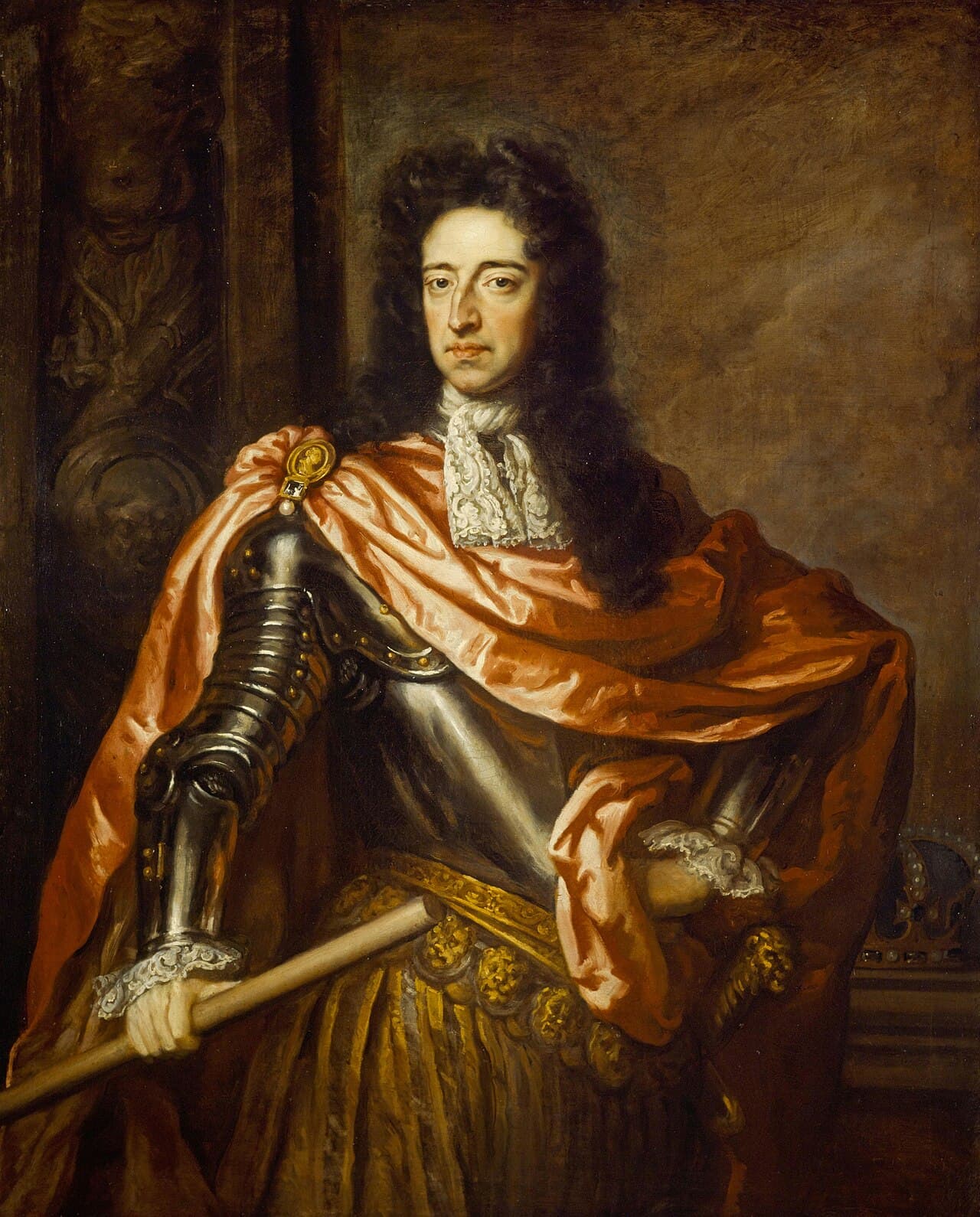
William III of England, by Sir Godfrey Kneller, the Dutch stadtholder who landed at Torbay in November 1688. Place: Brixham, Torbay; London; Westminster Figures: William of Orange, Stadtholder of the United Provinces, arriving with 463 ships · James II, fleeing twice · Mary II, joint sovereign · the Convention Parliament The Invitation and the Invasion James II is a Catholic king of a Protestant kingdom, busy by 1688 with the prerogative suspension of penal laws against Catholics and dissenters, a standing army he refuses to disband, and (in June) a male heir who guarantees a Catholic succession. Seven peers, drawn from both Whig and Tory ranks, sign an invitation to William of Orange, husband of James's Protestant daughter Mary, to come and defend English liberties and the Protestant religion. William lands at Brixham on 5 November 1688 with about 21,000 troops, the largest invasion of England since 1066. He marches on London without a battle. James's army melts; his daughter Anne defects; his nose bleeds at Salisbury. On the night of 11 December James throws the Great Seal into the Thames and flees. He is briefly recaptured by fishermen who mistake him for a Jesuit, allowed to escape a second time, and reaches France on 23 December. William has the throne by default. The Bill of Rights The Convention Parliament meets in January 1689. Its solution is procedural and constitutional: James has abdicated by his flight; the throne is vacant; it is offered jointly to William and Mary on conditions. The conditions are written down as the Declaration of Rights and enacted in December as the Bill of Rights. The Crown shall not suspend laws, levy taxes, maintain a standing army in peacetime, or interfere with parliamentary elections, free speech in Parliament, or the right of Protestant subjects to bear arms, without parliamentary consent. The post-Westphalian sovereign is now plural. Where the Bourbon model fuses sovereignty in a single person, the English settlement distributes it between Crown and Parliament, with the bulk of the substance migrating to the latter over the eighteenth century. The two versions (Versailles absolutism, Westminster constitutionalism) will compete throughout the next 130 years for the definition of what Westphalian sovereignty actually contains, and the American revolutionaries of 1776 will explicitly conscript the second version against the first. Video: Lucy Worsley's BBC episode arguing that the 'Glorious Revolution' of 1688 was in fact a Dutch invasion sanitised by later Whig historians.
Source: westphalia-oracle.vercel.app