The Battle of Rocroi
MAY 19 1643 · 12:00
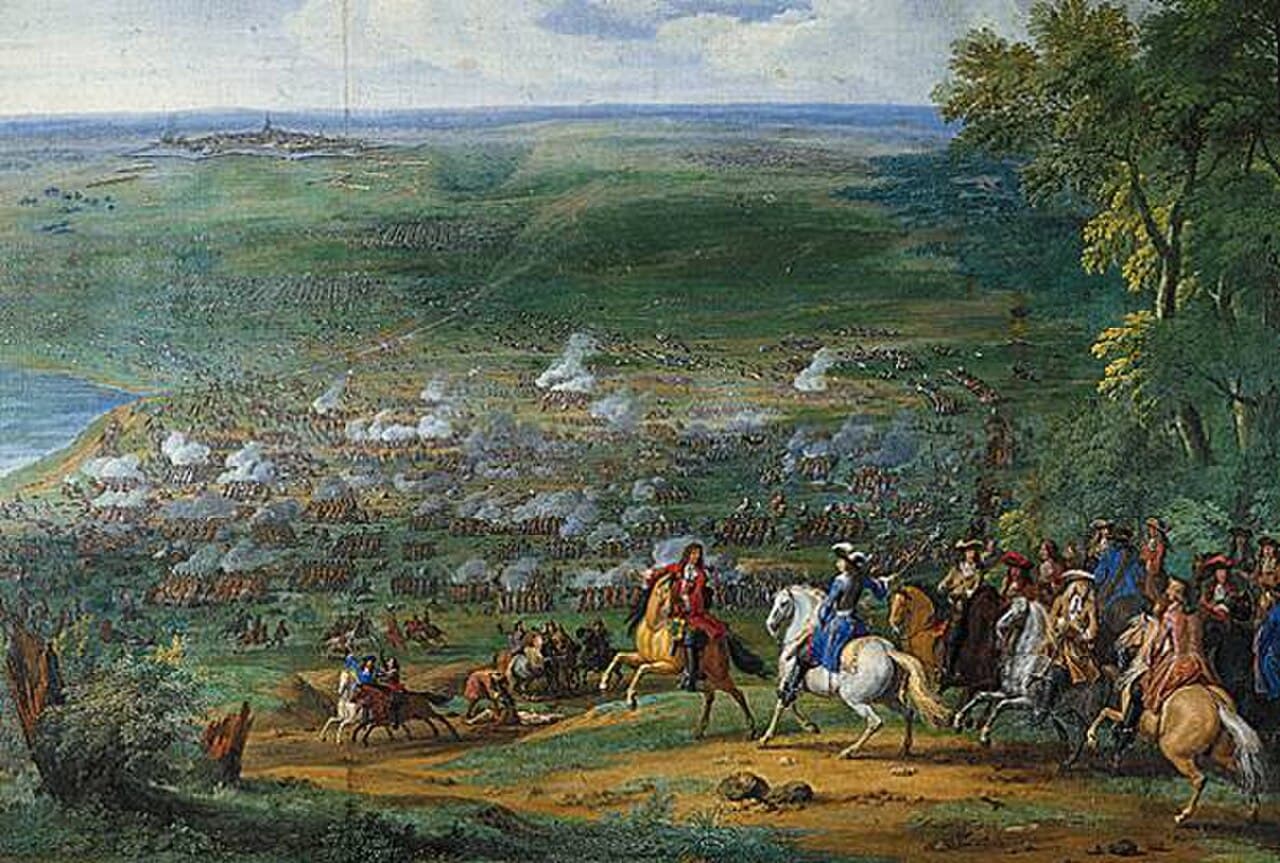
The young Duc d'Enghien breaks the Spanish tercios at Rocroi, 19 May 1643. Place: Rocroi, Ardennes, northern France Figures: Louis II de Bourbon, Duke of Enghien (the future Grand Condé), 21 years old · Francisco de Melo, Spanish governor of the Netherlands · the Spanish Army of Flanders · the tercios of Alburquerque, Garcíez, Castelvi, Villalba and Visé A Twenty-One-Year-Old in Command Louis XIII has died five days before the battle. The Duke of Enghien, 21, in his first independent command of a French army, marches to relieve the besieged frontier town of Rocroi against the explicit advice of his veteran second, Marshal L'Hôpital. Francisco de Melo, with the Spanish Army of Flanders, accepts battle on 19 May in open country south of the town. The Spanish line is built around five veteran tercios in the center, perhaps 8,000 of the best infantry in Europe. Enghien opens with a cavalry charge on the right that breaks the Spanish horse, then wheels behind the Spanish line, then breaks the Spanish horse on the other wing, then turns the captured Spanish artillery on the tercios from the rear. The center holds, in the open, on three sides, against everything Enghien sends at it. Three assaults are repulsed. Enghien is reported to have offered the same terms a fourth time as he had offered the first. The tercios accept on the fourth offer. The End of an Era of European Warfare The Army of Flanders is destroyed as a field force. Perhaps 8,000 Spanish dead, 7,000 captured. The tercios that had broken Horn at Nördlingen nine years earlier (see [[battle-of-nordlingen-1634]]) are buried where they stood. Spain will fight on for another sixteen years, until the Peace of the Pyrenees in 1659, but never again will Spain dictate the European tempo. France's military century begins here; the Spanish century, which had begun at Pavia in 1525, ends. Five years and five months later, the Peace of Westphalia (see [[peace-of-westphalia-1648]]) will codify the European order that Rocroi has just made legible: France ascendant, Spain receding, the Habsburg cousins separated in fact if not in title, the Dutch independent, Sweden a Baltic power, the Empire reduced to constitutional fiction. The political-military map the Westphalian negotiators will spend five years drawing already exists, in outline, on the field south of Rocroi on the evening of 19 May 1643. Video: The young Condé breaks the Spanish tercios at Rocroi. France ascendant, Spain in eclipse.
Source: westphalia-oracle.vercel.app