Temples & Pyramids
The oldest surviving monumental building. Giza and Teotihuacan, Angkor Wat, the Parthenon, Borobudur and the Nabataean tombs at Petra, structures raised for gods and the dead, and still standing.
Part of Architectural Wonders
14 moments in this segment.
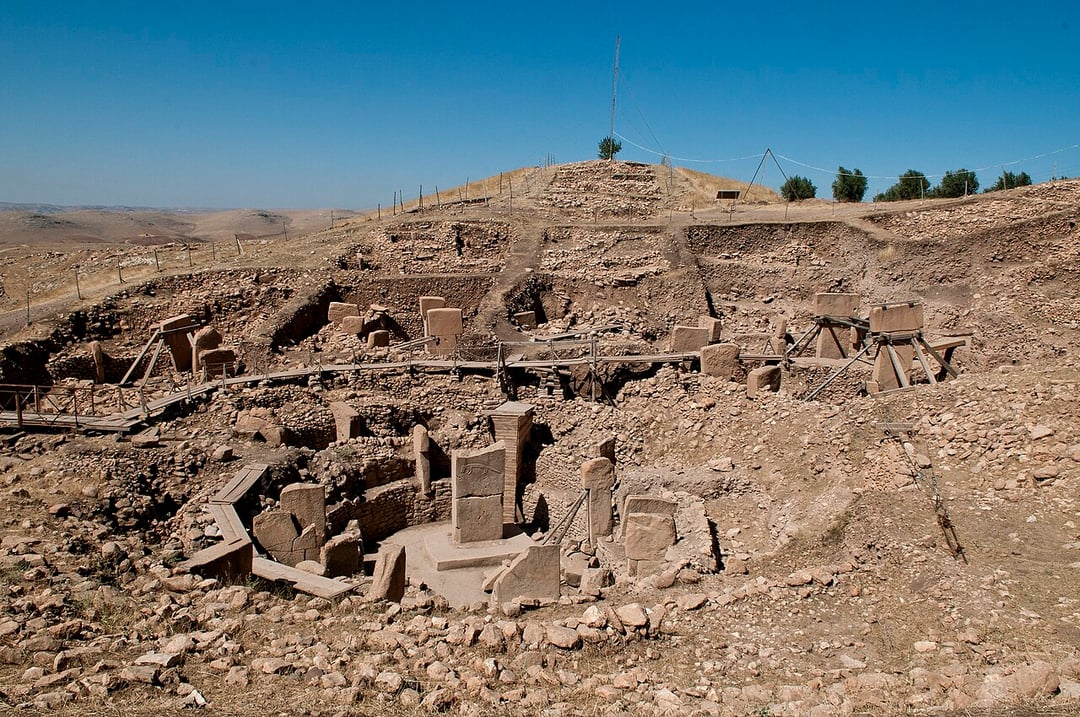
- - Göbekli Tepe. Stone circles in southeast Turkey, 7,000 years older than Stonehenge. Built by hunter-gatherers before agriculture, before pottery, before writing. Rewrote the chronology of monumental architecture.
- - Great Pyramid of Giza. 147m tall, the tallest man-made structure on Earth for 3,800 years. 2.3 million limestone blocks. Khufu's tomb; the only surviving Ancient Wonder of the World.
- - Stonehenge. Wessex; the trilithons hauled from 250km away in Wales. Aligned with the solstices, function still debated. The most recognisable Neolithic ruin in the world.
- - Mohenjo-daro. Indus Valley city in modern Pakistan. Gridded streets, sewers, public baths, granaries. Built and abandoned long before classical antiquity; Indus script still undeciphered.
- - Karnak Temple Complex. Pharaohs added to Karnak for 2,000 years. The Hypostyle Hall has 134 columns; the central twelve are 21m tall. The largest religious building ever constructed.
- - The Parthenon. Iktinos and Kallikrates; Phidias's sculptures. The entasis (the columns curve outward in the middle) and the floor curvature correct for optical distortion. The reference text for Western architecture for 2,500 years.
- - The Great Wall of China. Multiple walls built over 1,800 years. The total length, including all branches and rebuilt sections, is over 21,000km. The Ming-dynasty stone-and-brick sections most tourists see are 600 years old.
- - The Colosseum. Held 50,000 spectators. Could be flooded for mock naval battles; had a retractable awning (the velarium) operated by 1,000 sailors. The template for every stadium since.
- - Petra (Al-Khazneh). Nabataean rock-cut city in Jordan. Al-Khazneh, the Treasury, is carved directly into a sandstone cliff face, 40m tall. Was lost to the Western world until rediscovered by Burckhardt in 1812.
- - The Pantheon. Hadrian's temple. Its 43.3m dome held the world record for unreinforced concrete dome until 1881. The oculus, 9m wide, open to the sky, is the only light source.
- - Teotihuacan. Pyramids of the Sun and Moon, the Avenue of the Dead. Was the largest city in the Americas at its peak (125,000 people). The Aztecs found it already abandoned and gave it its name, "place where the gods were born."
- - Borobudur. 9th-century Mahayana Buddhist temple in Java, the largest Buddhist temple in the world. Nine stacked platforms with 504 Buddha statues. Abandoned for centuries; rediscovered in 1814.
- - Angkor Wat. Suryavarman II's Khmer temple, originally Hindu, later Buddhist. The largest religious monument in the world by total area. Featured on Cambodia's flag.
- - Machu Picchu. Inca royal estate, 2,430m above sea level. Built in dry-stone polygonal masonry that survives major earthquakes. Abandoned during the Spanish conquest and not seen by outsiders until 1911.