Modernism
Sagrada Família, the Bauhaus, Falling Water, Villa Savoye, the Empire State, the Chrysler. Le Corbusier, Mies, Wright, Aalto, Gropius redraw the rulebook.
Part of Architectural Wonders
12 moments in this segment.
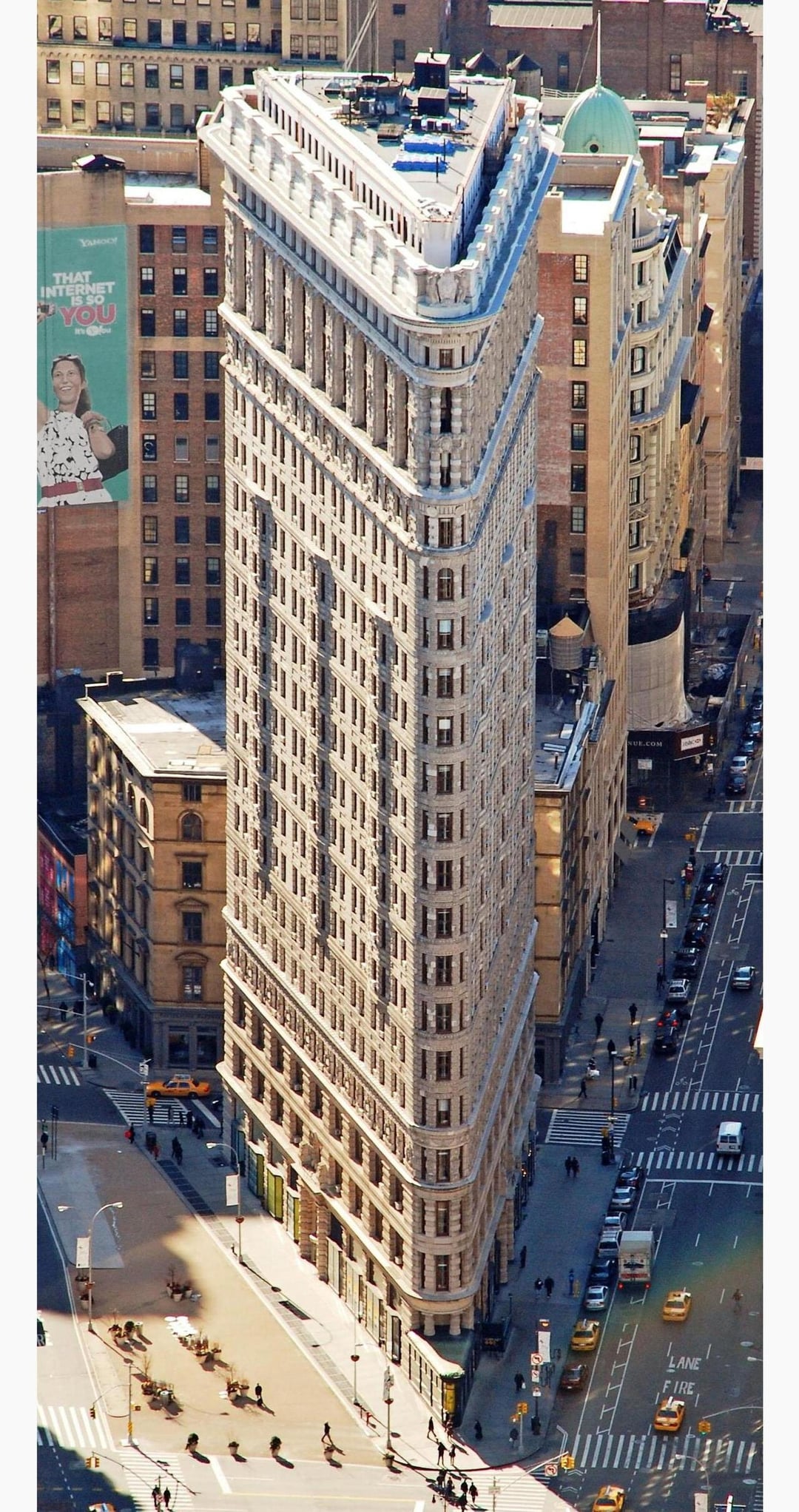
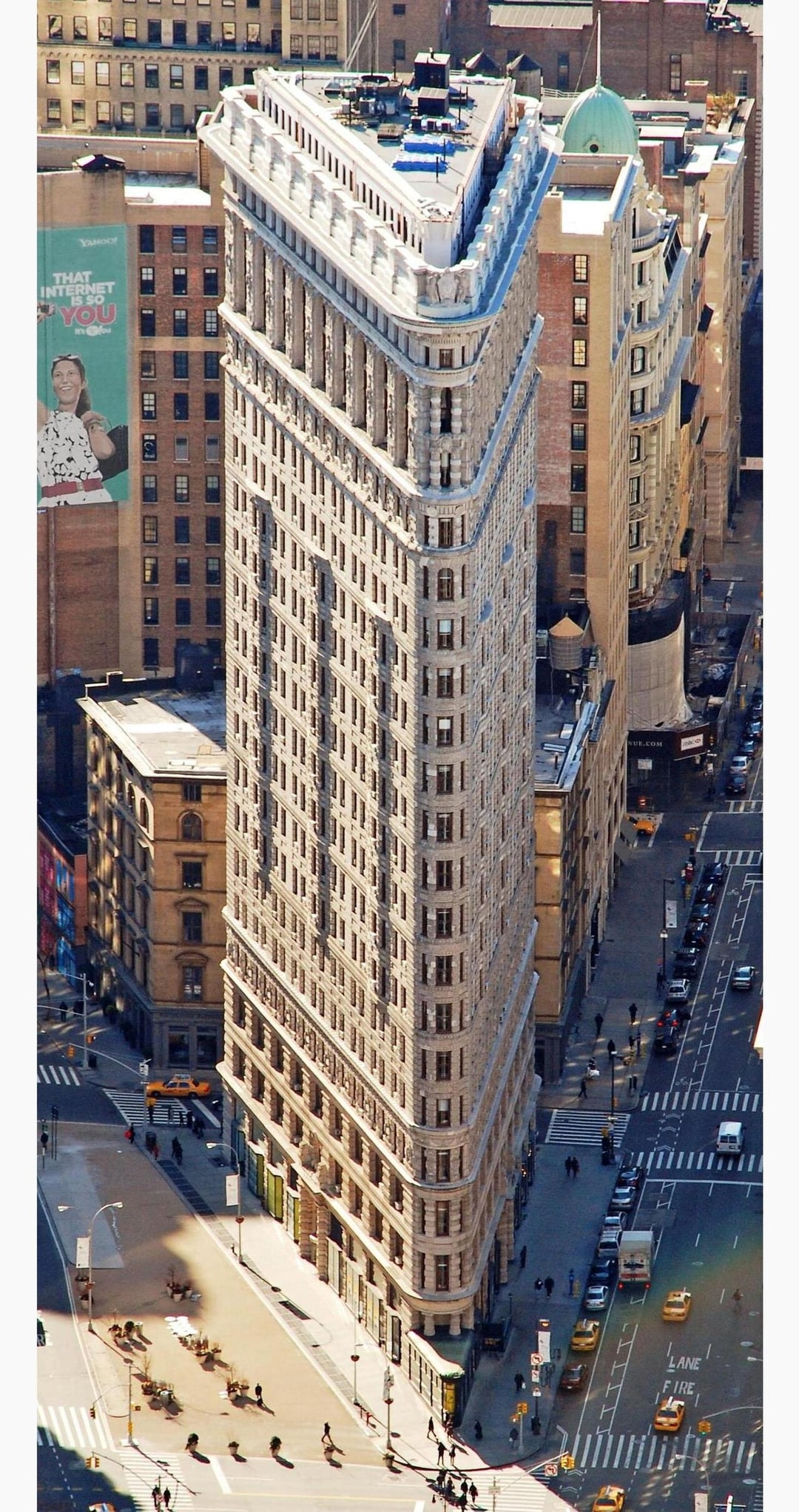
- — Flatiron Building. Daniel Burnham's 22-storey wedge in Manhattan. One of the first steel-framed buildings in New York. Its acute corner is one of the most photographed in architecture.
- — Casa Milà (La Pedrera). Gaudí. No straight lines, no load-bearing walls. The roof has Star Wars-stormtrooper-style chimneys that George Lucas literally copied. The model for organic architecture.
- — Fagus Factory. Walter Gropius + Adolf Meyer. Curtain wall — glass walls hung from the building's structural frame — invented here. The starting point of modernist architecture.
- — Bauhaus Dessau. Gropius's purpose-built school. Glass curtain walls, asymmetrical layout, sans-serif signage. The architecture school whose graduates would design half of 20th-century everything.
- — Empire State Building. Built in 410 days. Held the world height record for 41 years. Mostly empty for its first decade (the "Empty State Building"). King Kong's perch.
- — Villa Savoye. Le Corbusier's "machine for living in." Demonstrated his "Five Points" — pilotis, roof garden, open floor plan, ribbon windows, free façade. The reference example of high modernism.
- — Fallingwater. Frank Lloyd Wright over Bear Run, Pennsylvania — cantilevered balconies over a waterfall. The house is engineered into the landscape, not on top of it. Almost collapsed before structural reinforcement in 2002.
- — Rockefeller Center. A whole modernist downtown built in the Depression. Diego Rivera's mural Man at the Crossroads was destroyed because it included Lenin's face. Now home to 30 Rock and the Christmas tree.
- — Lever House. Gordon Bunshaft (SOM). The first glass-curtain-wall skyscraper in Manhattan. Replaced the masonry-wall tradition; the International Style took over commercial architecture from this building forward.
- — Unité d'Habitation, Marseille. Le Corbusier's vertical-city housing experiment — 337 apartments stacked in a single concrete slab on pilotis. The blueprint for the post-WWII social-housing tower; the source of both its triumphs and its disasters.
- — Seagram Building. Mies van der Rohe + Philip Johnson. Bronze-framed glass tower, set back from Park Avenue with a plaza. The most-copied office building in history. Its plaza led to New York's 1961 zoning code rewards for setbacks.
- — Guggenheim Museum (NY). Frank Lloyd Wright's spiral. Opened six months after his death. The visitor walks up the ramp; the artworks line the inside helix. Wright vs. the artists who hated the curved walls is still an ongoing debate.