Fabrics and Dyes
The material itself. Silk, wool, cotton and linen, synthetics from rayon to nylon, dyeing and printing, the mills, and the environmental cost of making cloth.
Part of Fashion
13 moments in this segment.
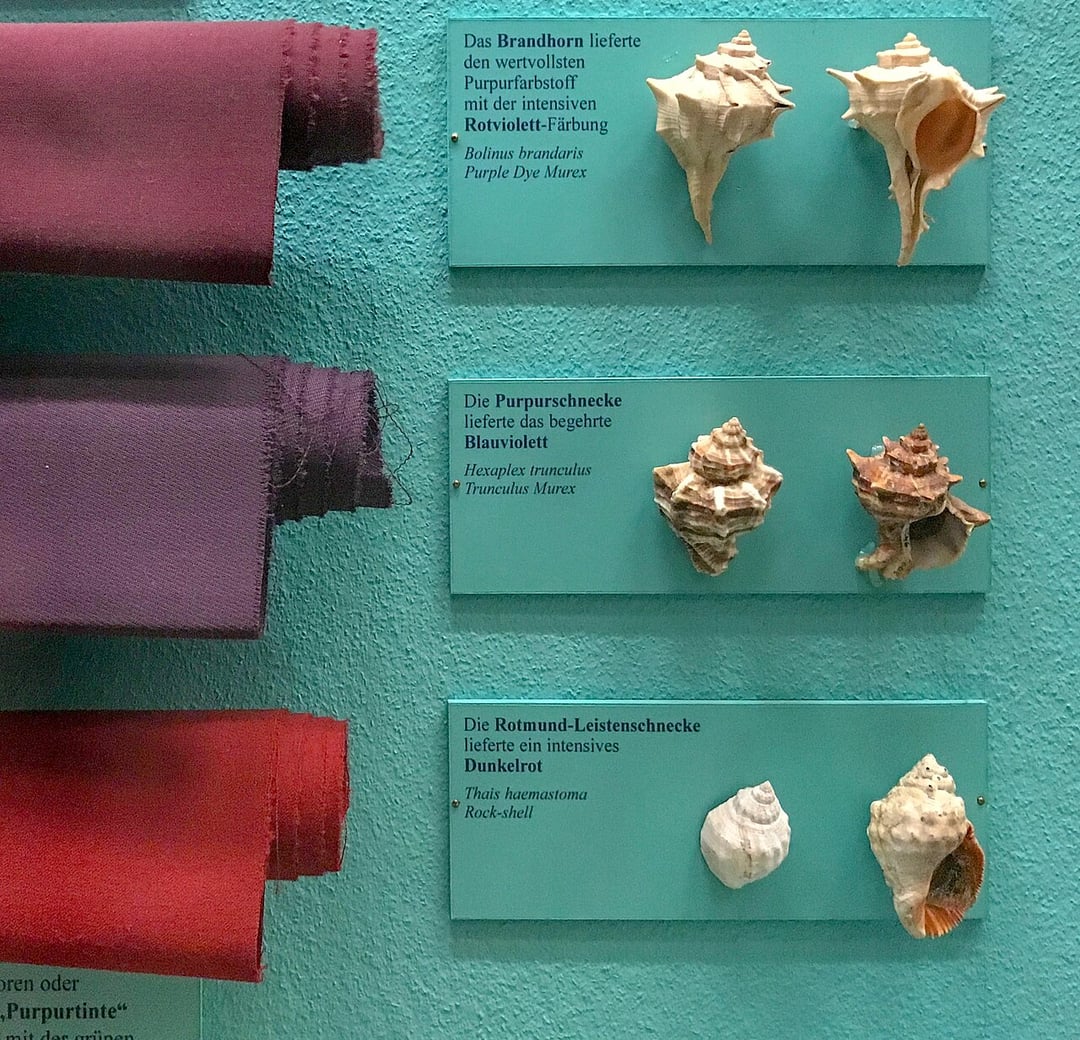
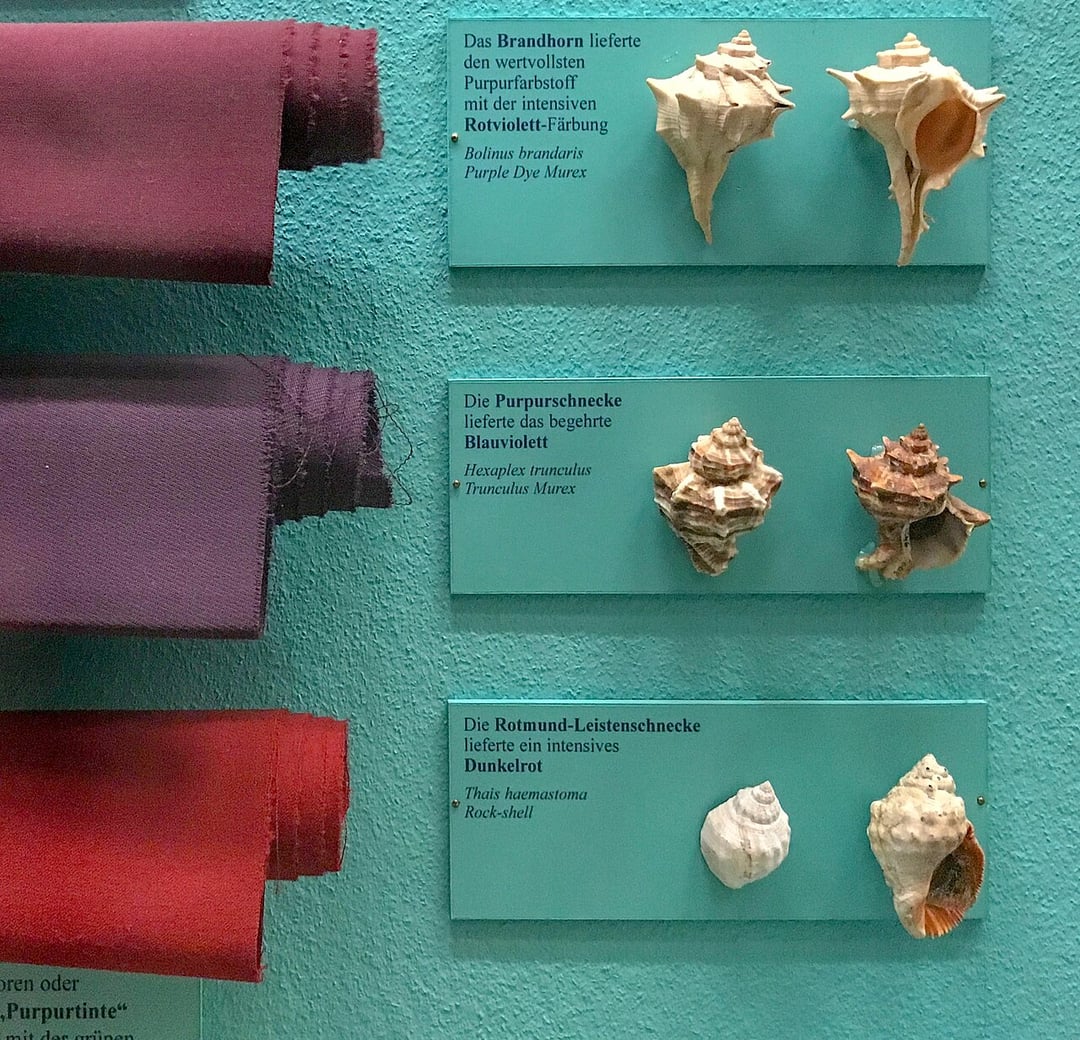
- - Tyrian Purple. Murex-snail dye from Phoenician Tyre. Pound-for-pound more expensive than gold; required 12,000 sea snails per gram. Reserved for emperors by Byzantine sumptuary law; the original luxury monopoly.
- - The Silk Road Opens. Chinese silk reaches Rome via the trans-Asian trade routes. Pliny the Elder complains it drains the empire of gold. Silk worm cultivation remained a Chinese state secret for 3,000 years until two monks smuggled eggs to Justinian in 552.
- - Italian Renaissance Velvet. Florentine and Venetian velvet-weavers, by 1490 the world's most expensive fabric. Pomegranate motifs, gold thread. Worn by Medicis, Borgias, the dukes painted by Titian and Bronzino. Italy dominates European textile prestige for 200 years.
- - Singer Sewing Machine. 1851. Isaac Singer patents his sewing machine, first practical home machine. Within 30 years, every middle-class household has one. Demolished the cottage-tailor industry; created the ready-made clothing market.
- - Chanel Jersey Garment. Soft, drapey, machine-knitted jersey, a men's undergarment fabric Chanel made elegant. The garment that began 20th-century ease.
- - The Bias-Cut Gown. Vionnet's 1920s-30s bias-cut silk evening gowns, fabric cut diagonally so it drapes in fluid curves. Madonna's 1991 Met Gala dress, Galliano's 90s revivals, all descend from here.
- - Halston Ultrasuede Shirtdress. Halston's 1972 Ultrasuede shirtdress, synthetic suede-like fabric, machine-washable, fluid. The defining American sportswear-couture hybrid of the 1970s; sold 60,000+ units.
- - Issey Miyake Pleats. Issey Miyake's 1988-1993 permanent-pleat polyester, featherlight, machine-washable, sculptural. The Pleats Please line (1993) defined late-20th-century technical-fashion. Designed Steve Jobs' lifelong black turtleneck.
- - Issey Miyake Pleats Please. 1988-1993. Issey Miyake develops permanent-pleat polyester through a single-pleat heat-set process. The Pleats Please line (1993), featherlight, machine-washable, sculpturally precise. Designed Steve Jobs's lifelong black turtleneck. The subject dates from 1988; this photograph was taken in 2009.
- - Fortuny Delphos Gown. 1907. Mariano Fortuny patents the Delphos pleated silk gown, fine accordion-pleat silk, ancient-Greek inspired. Worn by Sarah Bernhardt, Isadora Duncan, Eleonora Duse. Still hand-made by the Fortuny atelier in Venice. The subject dates from 1907; this photograph was taken in 2011.
- - Chanel Tweed Suit. 1925-onward. Chanel's collarless tweed suit, borrowed from her lover the Duke of Westminster's sporting wardrobe. Worn by Jackie Kennedy on November 22, 1963 (the pink Chanel-style Cassini bouclé suit). The most enduring single garment Chanel designed. The subject dates from 1929; this photograph was taken in 2012.
- - Madeleine Vionnet - The Bias Cut. Early 1920s. Madeleine Vionnet perfects the bias cut, fabric cut diagonally across the weave, draping in fluid curves over the body. The defining 1930s evening-gown technique; Vionnet is widely considered the greatest pure dressmaker of the century. The subject dates from 1922; this photograph was taken in 2015.
- - Chanel's Jersey Sportswear. 1916. Chanel debuts her wartime jersey-knit sportswear, soft, comfortable, designed for movement. Jersey was a men's undergarment fabric; Chanel made it elegant. The first sign that 20th-century fashion would be about ease, not constraint.