The Birth of Couture (1789-1900)
French Revolution undoes court dress. Beau Brummell invents the modern suit. The 1850s crinoline, the bustle, the corset wars. Charles Frederick Worth opens 7 rue de la Paix (1858) — the first haute couture house.
Part of Fashion
10 moments in this segment.
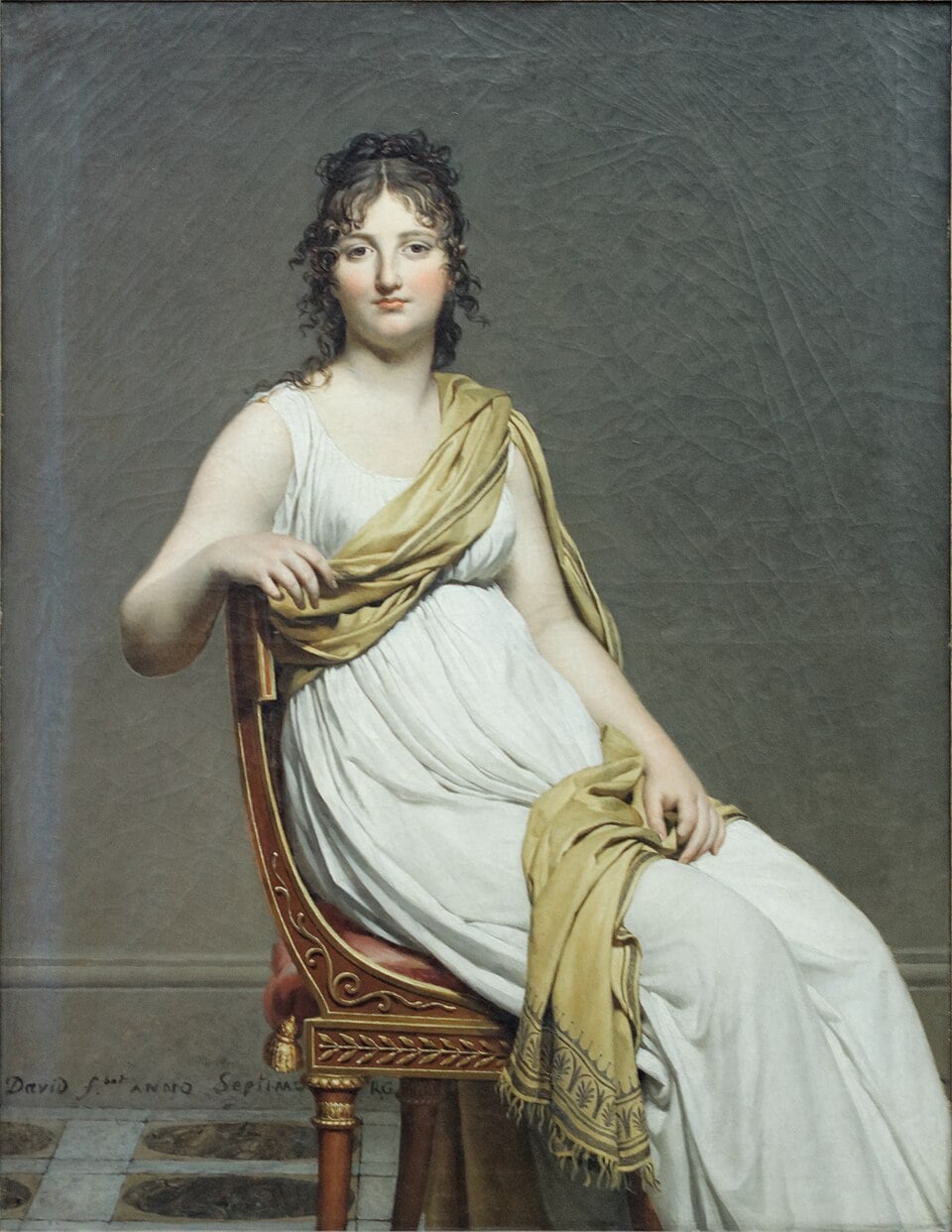
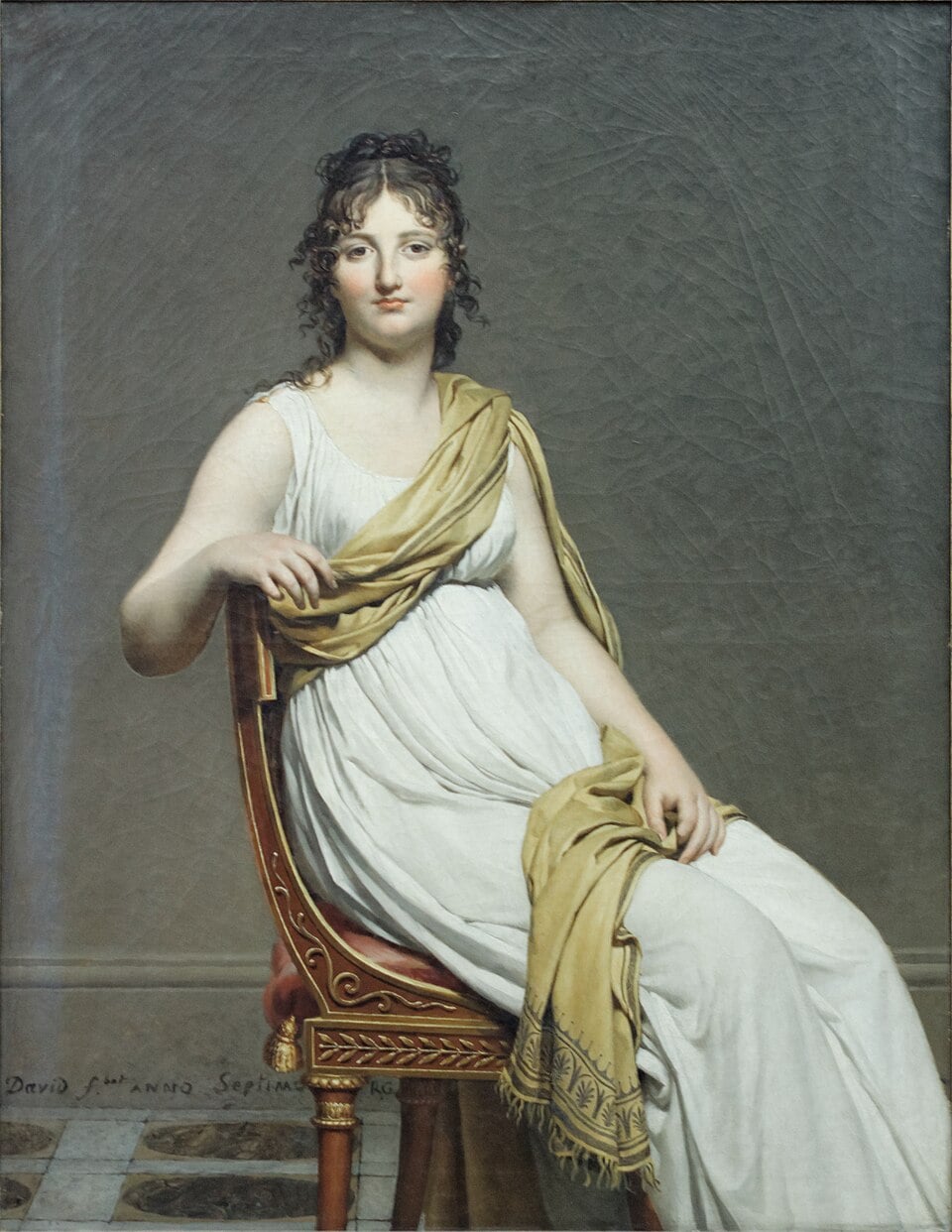
- — Directoire Empire Waist. Post-Revolution French dress: white muslin, high empire waist, Greek-revival simplicity. Madame Récamier and Joséphine de Beauharnais set the template. 200 years of court dress upended in five years.
- — Beau Brummell. George Bryan "Beau" Brummell — the Regency dandy who invented the modern men's suit. Dark tailored coat, fitted breeches, immaculate linen, no jewellery, polished boots. The end of male peacockery; the beginning of the navy-blue-suit template that still rules men's formal dress.
- — Singer Sewing Machine. 1851. Isaac Singer patents his sewing machine — first practical home machine. Within 30 years, every middle-class household has one. Demolished the cottage-tailor industry; created the ready-made clothing market.
- — The Crinoline Cage. 1856. Patent for the steel-hoop crinoline cage. Skirts inflate to 1.8m diameter overnight; the most extreme silhouette of the 19th century. Lasted barely 12 years before the back-focused bustle replaced it.
- — Charles Frederick Worth Opens. 1858. Charles Frederick Worth opens at 7 rue de la Paix, Paris. Established the haute couture system: live models, seasonal collections, designer-as-artist, signature labels in the garment. The first couturier in the modern sense; every Paris house since traces back to Worth.
- — The Bustle Silhouette. 1870-1889. The bustle — a wire-cage cushion strapped to the rear. The silhouette goes from front-volume (crinoline) to back-volume. Dominates two decades; abandoned in the 1890s for the smooth Belle Époque hourglass.
- — Levi Strauss Patents Riveted Jeans. May 20, 1873. Levi Strauss and Jacob Davis patent rivet-reinforced denim work pants. Originally for goldminers and labourers. By the 1950s — through James Dean and Marlon Brando — the universal symbol of American youth.
- — Levi's 501 Jeans. May 20, 1873. Levi Strauss + Jacob Davis patent the rivet for blue-jean reinforcement. The 501 fly-button design dates from c. 1890. The most-worn garment in human history.
- — Burberry Trench Coat. 1879. Thomas Burberry invents gabardine — water-resistant cotton. The Burberry trench becomes British WWI officer uniform; transitions to civilian fashion in the 1920s. The single most-imitated coat design in history.
- — Sears Catalog. 1894. Sears, Roebuck mails its first general catalog. Brought factory-made clothes to rural America by mail. By 1900 — 1100 pages, 600,000 items. The first mass-market democratisation of fashion.