Fans
Terrace culture, ultras, chants and stadiums, the part of football that happens off the pitch. It includes the hooliganism of the 1970s and 80s and the long argument about how English grounds were policed.
Part of Football
14 moments in this segment.
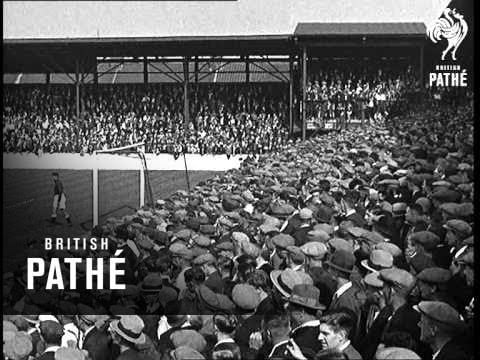
- - Football season opens, 1930. British Pathe film of crowds pouring into a London ground at the start of the 1930 season, with a goal caught on camera and West Ham supporters audible in the intertitles. An everyday picture of the pre-war English game and the size of the crowds it drew.
- - The Manchester United Calypso. Edric Connor's 1957 calypso about Manchester United, a chart record written about a football club at a time when that was almost unheard of. It survives as a piece of supporter culture from the season before the Munich crash.
- - Undercover with the Chelsea Headhunters. The investigation in which reporter Donal MacIntyre spent months inside an organised hooligan group, filming with a concealed camera. It was one of the most widely seen pieces of reporting on football violence in Britain.
- - Three decades on the Arsenal terraces. Supporter-shot and collected footage of Arsenal crowds across three decades, from packed standing terraces at Highbury to the all-seated era. It is a first-hand record of how English match-going changed after the ground reforms of the 1990s.
- - Casuals. Copa90 traces the casual movement that emerged among English match-goers in the late 1970s, built on imported sportswear and a deliberate break with earlier terrace styles. Participants explain how the look spread and why it still shapes how supporters dress.
- - Inside the Italian ultras. A long-form documentary on the Italian ultras told through the voices of the groups themselves, tracing how the movement grew on the terraces and what it means to those inside it. It treats the subculture as a social phenomenon rather than a policing problem.
- - Chelsea supporters and the Super League withdrawal. News footage from outside Stamford Bridge as protesting supporters learned their club was pulling out of the proposed Super League. It captures a rare instance of organised fan pressure visibly changing a club's decision.
- - Terrace fashion remembered. A museum piece in which an author and a spoken word artist recall the clothes and the codes of the terraces from the 1970s to the 1990s. It accompanies an exhibition that treated football style as a subject worth curating.
- - Football casuals as a subculture. An account of the casual movement that emerged around English clubs in the late 1970s, defined by expensive sportswear and by dressing to be recognised rather than by colours. It distinguishes the fashion from the violence it is usually filed under.
- - The Real Football Factories: England. A television documentary presented by Danny Dyer in which he meets members of English hooligan firms and hears their accounts of the violence attached to club football. It is a first-hand record of terrace culture at its most destructive rather than a celebration of it.
- - What Stood on Premier League Stadium Sites Before. A survey of what occupied the land beneath English top-flight grounds before the stadiums were built, from industrial sites to earlier pitches. It is a reminder that grounds are shaped by the cities around them rather than dropped into place.
- - Italia 90 and the Hooligan Question. The first episode of a broadcast documentary series on English football at the 1990 World Cup, when the team's progress in Italy ran alongside serious concern about the behaviour of travelling supporters. It sets out how the tournament became a turning point for the game's reputation at home.
- - From the Terrace to the All-Seater Stadium. A history of football stadium architecture, from the standing terraces of the early twentieth century to the enclosed, revenue-driven bowls of the present day. It weighs what the safety reforms gained against the atmosphere that was lost.
- - Archibald Leitch, the Architect Who Built British Football Grounds. The story of the Scottish engineer whose stands and pavilions shaped grounds across Britain, from Glasgow to Manchester and London, and set the template for what a football stadium looked like for most of the twentieth century. Much of his work has now been demolished.