Built for the Voice of the GDR
On the bank of the Spree in Oberschöneweide, East Germany builds itself a broadcasting palace. The Bauhaus architect and Buchenwald survivor Franz Ehrlich designs a complex around Saal 1 — a recording hall of near-perfect acoustics.
Part of Funkhaus Berlin
7 moments in this segment.
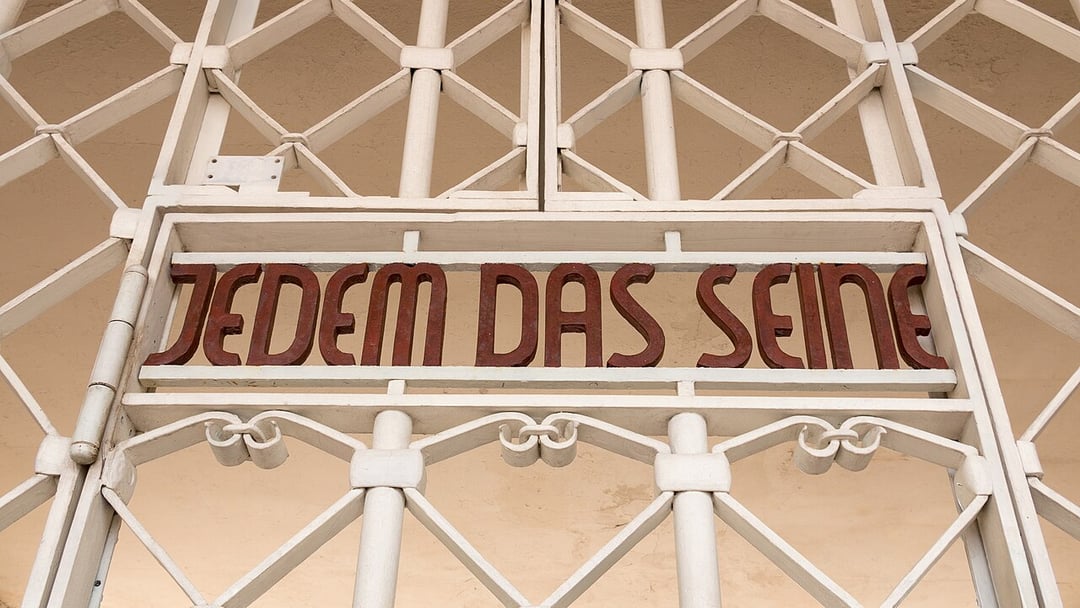
- — Franz Ehrlich — the Bauhaus architect. Franz Ehrlich, trained at the Bauhaus in Dessau and imprisoned in Buchenwald — where he was forced to design the camp gate lettering — became the architect of the new East German broadcasting house. His modernist hand shapes the entire complex.
- — A site on the Spree at Oberschöneweide. The Funkhaus rises on Nalepastraße in Oberschöneweide, on the south-east bank of the Spree, partly reusing an existing plywood factory. The river and the industrial quarter frame what will become the GDR's sonic centre.
- — Building the broadcasting complex. Construction of the new Funkhaus begins in 1951 under Ehrlich's plans — a sprawling brick-and-stone complex of studios, offices and technical blocks designed expressly for the production and broadcast of radio.
- — Saal 1 — a hall tuned like an instrument. Block B's Saal 1 is engineered as one of the finest recording halls ever built: floating construction, tuned wood and a reverberation tail praised by engineers worldwide. The room itself is the Funkhaus's masterpiece.
- — A hall for chamber concerts. Beyond the great Saal 1, Ehrlich's complex includes smaller halls — among them the Sendesaal für Kammerkonzerte, a dedicated chamber-music recording room, each space tuned for a different kind of sound.
- — The Wandelgang — Ehrlich's modernist promenade. The sweeping foyers and promenades of the Funkhaus show Ehrlich's Bauhaus training: clean lines, daylight and terrazzo, a piece of high modernism hidden inside the GDR's broadcasting machine.
- — The Funkhaus goes on air. By 1956 the central blocks are complete and East German radio moves in. Nalepastraße becomes the production home of the GDR's radio networks — the place where the voice of the East is recorded and transmitted.