Music Box
Chicago, and the disco backlash that was supposed to end all this. On 12 July 1979 a baseball crowd blew up a crate of disco records between games and rioted; the industry read it as a verdict and dance music lost its major-label home. What grew back grew in a members-only warehouse on South Jefferson Street where Frankie Knuckles played to a mostly Black, mostly gay crowd, people who needed the room to exist. The name of the club became the name of the music. This facet is that room, the first records made by the kids who danced in it, and the founders who never got paid properly for any of it.
Part of House Music
110 moments in this segment.
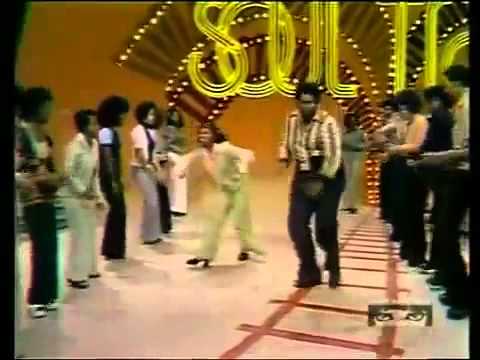
- - Soul Train line dance to Jungle Boogie. The Soul Train line to Kool and the Gang's 1973 record: Black social dancing broadcast weekly on American television a decade before house had a name. This is the floor culture and the record vocabulary that Chicago and New York DJs inherited and rebuilt.
- - The Disco Sucks shirt, 1977. Rich Carey wearing an original 'Disco Sucks' T-shirt in 1977, two years before the Disco Demolition Night crowd burned records in a Chicago ballpark. The backlash this shirt belongs to pushed disco's audience, largely Black, Latino and gay, back underground, and house is what came out the other side.
- - McFadden & Whitehead - Ain't No Stopping Us Now on Soul Train. Philadelphia International's 1979 anthem performed on Soul Train at the height of the disco years, months before Disco Demolition Night in Chicago turned the backlash into a public bonfire. The Philly vocal record is the direct ancestor of what New York and Chicago DJs kept playing after the industry declared disco dead.
- - The field at Comiskey Park. Fans pour onto the field at Comiskey Park during Disco Demolition Night on 12 July 1979, forcing the second game of the doubleheader to be abandoned. The claim that the stunt killed disco is contested; what is not contested is what the crowd was told to burn, and whose records those were.
- - United Press International at the riot. A United Press International photograph of the anti-disco demonstration at Comiskey Park on 12 July 1979. Accounts of the injuries range from none to more than thirty; the wire copy of the night is the most reliable record of it.
- - Disco Demolition Night, Comiskey Park, 12 July 1979. Footage of the White Sox promotion in which a crate of disco records was blown up between games of a doubleheader, the crowd stormed the field and the second game was forfeited. Contemporary critics including Dave Marsh and Nile Rodgers read the ritual as an attack on music made by Black, Latino and gay people; Steve Dahl, who staged it, has always denied that. Disco was already declining, so the night symbolised and accelerated a collapse rather than causing it - and it is the collapse that pushed the music underground into the Chicago and New York clubs where house was made.
- - Frankie Knuckles live at the Warehouse, Chicago, September 1981. A cassette recording of Frankie Knuckles playing the Warehouse, the South Side members' club where a Black gay crowd danced to records a New York DJ reshaped for them, and whose name the music was eventually given. The Warehouse ran 1977 to 1982, so a September 1981 tape catches Knuckles in the room's last full year. Audio only, from a private tape collection.
- - Jesse Saunders and Vince Lawrence - On and On. The Jes Say Records 12-inch usually cited as the first house record put out commercially, built on a stolen-record loop and a drum machine in a South Side bedroom. This copy credits Vince Lawrence alongside Saunders and gives the label and catalogue number.
- - Jamie Principle - Your Love (unreleased early version). An early unissued take of Your Love, recorded around 1984 and finally pressed in 2009. It is direct evidence of the tape-before-vinyl problem that wrecks every 'first house record' claim: this existed on cassette in Chicago clubs years before anyone could afford to press it.
- - Jesse Saunders - On and On. The Jes Say Records pressing, catalogue JS-9999, routinely called the first house record. It was a remake of a disco bootleg Saunders had been playing, which is the honest version of the story: house began as Chicago DJs rebuilding disco records they could no longer buy.
- - Ron Hardy live at the Music Box, 19 June 1984. Ninety minutes from 1984, the earliest dated Hardy tape here and only about eighteen months into his Music Box residency. The programming is still mostly disco and Italo being pushed past what it was built for, which is exactly what house came out of.
- - Ron Hardy at the Muzic Box, 8 June 1985. A precisely dated night from the Muzic Box, one of the very few Hardy tapes where the actual date survives. This is the room where 'Acid Tracks' was first played to a floor that emptied, and where bootleg cassettes labelled 'Ron Hardy's Acid Track' gave the record its name.
- - Chip E. - Time to Jack. From Chip E.'s Jack Trax EP, the record that gave the dance its name and put 'jack' into the language of house. Chip E. built the sound partly out of what he saw people buying at the Importes Etc. counter where he worked, which is as close as the genre gets to a documented feedback loop between shop and dancefloor.
- - Mr. Fingers - Mystery of Love (original version). Larry Heard's original on his own Alleviated label, and effectively the birth certificate of deep house: chords borrowed from jazz and soul laid over a drum machine, warm where the rest of Chicago was brutal. Heard built it at home, which is one of the accounts of where the word 'house' came from at all.
- - Ron Hardy at the Muzic Box, Chicago, December 1985. A 47-minute edit of Hardy's December 1985 nights at the Muzic Box, the club Robert Williams renamed after Frankie Knuckles left the Warehouse. It captures the year house stopped being disco played differently and started being its own repertoire.
- - Chip E. Inc. feat. K. Joy - Like This (House Mix). DJ International DJ890, from the year Chip E. was also cutting the Jack Trax EP. Chip E. worked the bins at Importes Etc., where the crate labelled 'As Heard at the Warehouse' is one of the credible origins of the word house, and this is him making the thing the label was pointing at.
- - The first Chicago TV news report on house music. Local Chicago television discovering house, with Farley Jackmaster Funk, Steve Silk Hurley, Keith Nunnally and Danny Sweet-D Wilson on camera as young men explaining their own music. The scene it is reporting on was built by Black and Latino Chicagoans, many of them gay, in rooms the city's news had never had a reason to film before.
- - Marshall Jefferson - Move Your Body (The House Music Anthem). The Trax Records 12-inch that gave house its piano and its slogan, written by a Chicago post office worker on borrowed equipment. It is the record that made the genre legible to people who had never been in the clubs.
- - Jamie Principle - Your Love (Persona Records original). The first commercially pressed version of Your Love, on Persona Records, catalogue JP-222, with Principle playing every synth and programming the drums himself. Rawer and longer than the later Trax cut, it is the record as its author made it before the label system got hold of it.
- - Mr. Fingers - Can You Feel It. Larry Heard's Can You Feel It on Trax, catalogue TX127 - a Juno-60 bassline and a TR-909, and effectively the blueprint for deep house. Heard was a drummer raised on his parents' jazz and gospel records, and it shows in how little the track needs to work.
- - Steve Silk Hurley - Jack Your Body (original 12-inch). The original US pressing on Underground Records, catalogue UN-101: almost no words, a sparse machine groove, and an instruction. Hurley cut it as a working Chicago DJ, and it is the clearest example of house as functional dancefloor tooling rather than song.
- - Farley Jackmaster Funk - Love Can't Turn Around on Top of the Pops. Darryl Pandy performing Love Can't Turn Around on British primetime television in 1986 - a large, Black, gay gospel singer throwing himself around a Top of the Pops stage in front of an audience that had no reference point for any of it. This broadcast did more to sell house music in Britain than any record shop.
- - Farley Jackmaster Funk - Love Can't Turn Around. The House Records 12-inch, catalogue FU-11, built by Farley Keith and Jesse Saunders over Darryl Pandy's enormous gospel vocal. It was the first Chicago house record to break the UK top ten and the moment house stopped being a local Chicago format.
- - Love Can't Turn Around on Dutch TV show Countdown. Farley Jackmaster Funk and Darryl Pandy performing on the Dutch pop show Countdown in 1986, a separate broadcast from the Top of the Pops appearance and evidence of how fast the record moved across European television. Pandy's full-voiced gospel delivery is the whole performance.
- - Adonis - No Way Back. Trax Records TX112, one of the records that fixed what a Chicago house track sounded like: a stalking bassline, almost no melody, and a vocal reduced to a warning. Adonis cut it on borrowed gear for a label that paid its artists next to nothing, and it still became one of the most-played records of the Muzic Box era.
- - Ron Hardy live at the Muzic Box, Chicago (1986). Around eighty minutes of Ron Hardy working the Muzic Box, in the best-sounding tape of him in circulation. Hardy played harder and more violently than Knuckles, ran records at the wrong speed on purpose, and premiered tracks that Marshall Jefferson and Larry Heard brought him straight off the machine. The room was Black, largely gay, and existed because nowhere else would have it.
- - Frankie Knuckles at the Power House, opening night 1986. Phil Ranstrom's short film of the opening night of Knuckles' own club, the Power House, shot in 1986 and unseen until the Media Burn Archive released it in 2014. Actual moving footage of Knuckles at work in a Chicago club in the 1980s barely exists; free-licensed still photography of him from this era does not exist at all.
- - Frankie Knuckles & Jamie Principle - Your Love. The Trax Records pressing of the record Frankie Knuckles had already been playing off reel-to-reel at the Warehouse for years, sung by Jamie Principle. Its slow synth pulse and unguarded male vocal set the template for what house could sound like when it was tender rather than hard. Made by two Black gay men in Chicago for a dancefloor that existed because nowhere else would have it.
- - Ron Hardy at the Muzic Box, Chicago (1987). Forty-five minutes of Hardy in 1987, by which point the tracks he was breaking were being made specifically for his floor. Hardy died of AIDS-related illness in March 1992 at 33, and these tapes are close to the whole of what is left of him.
- - Joe Smooth feat. Anthony Thomas - Promised Land. DJ International's gospel-house sermon, and the record that proved house could carry an explicitly utopian message without embarrassment. Written out of the same Black church tradition the genre's vocalists came from, it became a closing record on both sides of the Atlantic and the Style Council covered it within a year.
- - Sterling Void & Paris Brightledge - It's Alright. A Chicago record on DJ International, produced by Sterling Void with Marshall Jefferson, carrying Paris Brightledge's plainly hopeful vocal over a house track built for a long night. It crossed to Britain during the 1988 Summer of Love and was covered by the Pet Shop Boys, which is how most of the world heard it. This is the original mix.
- - Can You Feel It with the In the Beginning There Was Jack sermon. Larry Heard's track carrying Chuck Roberts' spoken sermon - 'In the beginning there was Jack, and Jack had a groove' - the most quoted piece of text house music ever produced. It names the dancefloor as a place where race, class and sexuality were left at the door, which is what the Chicago and New York rooms actually were.
- - Fingers Inc. - A Love of My Own. Larry Heard and Robert Owens together on the Another Side album, the record that proved house could sustain a full-length statement rather than a 12-inch. Owens sings it as testimony, and the arrangement leaves him room the dancefloor records never did.
- - Fingers Inc. - Picking Up the Pieces. Another Side album cut, Larry Heard's production under Robert Owens' vocal at its most restrained. It shows deep house as a songwriter's form rather than a DJ tool, which is the thread that later runs out to New York and to Europe.
- - Ten City - That's the Way Love Is (Pop Formule TV performance). Byron Stingily and Ten City performing their Marshall Jefferson-produced Chicago house record on the Dutch variety show Pop Formule. Rare broadcast footage of a Chicago house group performing live rather than a record sleeve over audio, and a clear line from Sylvester's falsetto through to house's vocal side. The single topped the US Dance chart and reached #12 R&B.
- - Ten City - That's the Way Love Is (Extended Mix). The full-length 1989 Atlantic 12-inch, produced by Marshall Jefferson with Byron Stingily's falsetto lead. It is the moment Chicago house went fully song-shaped and crossed onto radio without giving up the church in the vocal.
- - Joe Smooth - Promised Land (promo video). The period promo film for Promised Land, kept because it is one of the few pieces of purpose-shot visual material the Chicago labels ever commissioned. It shows how DJ International tried to present house to television at the point it was crossing into the UK charts.
- - Frankie Knuckles - Tears. Knuckles with Satoshi Tomiie and Robert Owens on vocals, the record that carried the Chicago vocal tradition into a New York studio and onto British radio. One of the few records that both founding cities claim without argument.
- - What Is House? An Insider's Look at Dance Music (WMAQ-TV, 1991). A 46-minute Chicago local-television programme explaining house to a mainstream city audience, six years after the records that made it. Contemporaneous broadcast journalism about the scene from inside the city that produced it, which is far rarer than retrospective documentary.
- - Larry Heard interviewed by Colin Faver on Kiss FM. Colin Faver interviews Larry Heard on Kiss FM around the release of the Introduction album, with Heard discussing tracks including 'Distant Planet'. This is Heard speaking at the time rather than in retrospect, and it captures the moment Chicago deep house was being taken seriously by British radio.
- - Derrick Carter at Slick's Lounge, Chicago. An undated tape of Derrick Carter playing Slick's Lounge, a small Chicago bar, rescued from a private trade and posted for preservation. Recordings like this are how the second generation of Chicago house survives at all, no label, no promoter archive, just a DAT that changed hands. A copyright claim mutes 49:02 to 52:34.
- - Roy Davis Jr. - HouseWares record shop, Haight Street. Roy Davis Jr. playing in the HouseWares record shop at 1322 Haight Street in San Francisco, with a tracklist that runs from Stardust's 'Music Sounds Better with You' to Chicago and Detroit records. In-store sets like this were how the American house network actually operated, through shops, not promoters, and very few were recorded.
- - Roy Davis Jr. live at Oxygen, Austin. Roy Davis Jr. recorded live at Oxygen in Austin, Texas, two years after 'Gabriel' with Peven Everett turned a Chicago gospel-house record into the founding text of UK garage. The tape catches him working across funky, disco and early tech-house records in a single long set, at the point when Chicago's second generation was touring the United States constantly.
- - Jesse Saunders - House Music: The Real Story. Saunders' own documentary, made to accompany his book House Music... The Real Story, arguing his case as the man who put the first house record on vinyl. It is a partisan account and should be read as one, but it is a founder's own telling, and the footage and interviews it gathers do not exist elsewhere.
- - Pump Up the Volume: A History of House Music. The full two-and-a-half hour Channel 4 series, still the most complete broadcast history of the genre, running from New York disco through Chicago and on to the European rave boom. It carries interviews with founding figures who have since died.
- - DJ Sneak at Crobar, Chicago. Two hours of DJ Sneak at Crobar in Chicago, recorded on the night and preserved by a live-set archive group. It is a rare full document of an American superclub floor at the point when house had become an established weekend circuit rather than an underground one.
- - Disco Demolition Night: the 25th anniversary documentary. An hour-long retrospective on the 12 July 1979 riot at Comiskey Park, when a radio stunt blowing up disco records ended a White Sox doubleheader. The backlash it symbolised drove Black, Latino and gay dancers back underground in Chicago - which is where house was made.
- - Larry Heard on Robert Owens and being sampled. Larry Heard, who as Mr. Fingers effectively invented deep house, on working with Robert Owens in Fingers Inc. and on watching his records get sampled by everyone who came after. He also gives his own account of where the word "house" came from, DJs making music at home.
- - CeCe Rogers in Manchester. The American house vocalist CeCe Rogers, photographed in Manchester in 2009. He is best known for 'Someday', one of the vocal standards of the Chicago era, and was still singing it more than twenty years later.
- - Robert Owens on Larry Heard, Chicago and the Muzic Box. Christopher Tubbs talks to Robert Owens about Larry Heard, the Chicago clubs and Ron Hardy's Muzic Box, where Jefferson and Heard first tested records on a dancefloor. Owens is the most recognisable male voice in house and talks here about what a singer owes the room rather than the record.
- - Honey Dijon interviewed in San Francisco, 2011. An early interview with Honey Dijon at the EndUp in San Francisco, years before her mainstream profile, recalling her Chicago house grounding and her New York years around Danny Tenaglia. Brief, and valuable mainly for how early it is.
- - Frankie Knuckles on the Warehouse, Def Mix and a life in music. A ninety-minute Red Bull Music Academy lecture in which Knuckles talks through the Bronx, the Loft, moving to Chicago, the Warehouse, and founding Def Mix with David Morales in New York. First-person testimony from the person the whole origins chapter turns on.
- - Frankie Knuckles interviewed by Simon Dunmore. A half-hour career interview with the Godfather of House, from the Bronx and the Continental Baths through the Warehouse and after. Knuckles talks about the music as work rather than legend, which is rarer than it should be. He died in March 2014, so late long-form interviews with him are finite.
- - DJ Sneak - DJsounds Show interview and mix. An hour with DJ Sneak that pairs a mix with an interview about founding Magnetic Recordings and about the bumpy, filtered sound he is credited with. The talk matters as much as the music: Sneak is one of the few Chicago figures who speaks bluntly on record about credit and money in house.
- - Jesse Saunders in conversation, part one. Jesse Saunders, whose 'On and On' in 1984 is the record most often called the first house release, talks through the pre-history: the Playground, the disco bootleg he was rebuilding, and what Chicago sounded like before there was a name for it. His claim to being first is contested, and hearing him make it is part of the record.
- - Frankie Knuckles and David Harness. Frankie Knuckles playing alongside the San Francisco DJ David Harness at The Mighty in 2012. Knuckles was still working weekly club dates two years before his death in 2014.
- - Frankie Knuckles at the decks. Frankie Knuckles DJing at The Mighty in San Francisco in 2012. He moved from the Bronx to Chicago in 1977 to open the Warehouse, a club whose crowd was largely Black and gay, and the music that came out of that room took the building's name.
- - Frankie Knuckles interview, part one. Frankie Knuckles on his beginnings in New York, DJing disco and soul alongside Larry Levan, and the move to Chicago in 1977 that produced the Warehouse. Both men were young, Black and gay, and the rooms they built existed because they were not welcome in the ones that already did.
- - Frankie Knuckles interview, part two. The second half of FACT's interview with the Godfather of House, made two years before his death. Knuckles talks about the practice of the job, records, edits, reading a room, from the man whose residency at the Warehouse gave the genre its name.
- - Derrick Carter - Boiler Room London. An early Boiler Room booking for Derrick Carter, playing a Sunday-evening set in the London studio two years into the platform's existence. It documents both a Chicago original abroad and the moment when a webcam show started to function as the world's main window onto DJ sets.
- - Frankie Knuckles - Boiler Room New York. Frankie Knuckles, the DJ who built house at the Warehouse in Chicago out of disco records for a largely Black and gay crowd, playing a Boiler Room session in New York less than a year before his death. Filmed footage of Knuckles at work is scarce, which makes this one of the archive's most important rows. He died on 31 March 2014.
- - Frankie Knuckles - Boiler Room London. A daytime Boiler Room session by Frankie Knuckles in London, filmed months before he died. It is a second surviving piece of moving-image footage of him mixing, from a career that is otherwise documented almost entirely in audio and photographs. Knuckles was still touring constantly at this point.
- - Frankie Knuckles and the origins of house. A Mixmag mini-documentary on Knuckles and the birth of the genre, published three weeks before he died. It is one of the last pieces of press made while he was alive to speak for the scene himself.
- - Roy Davis Jr. - Boiler Room London, 2014. Forty-five minutes from Roy Davis Jr. in the London Boiler Room, described by the platform as carrying the torch for Chicago. He came up around Trax and the second wave of the city's producers, and his gospel-inflected records are the direct link between Chicago house and the vocal garage sound Britain built on top of it.
- - Frankie Knuckles on first hearing the phrase house music. Knuckles recounts seeing a sign advertising house music and only then learning the crowd had named the sound after his club. First-person testimony from the person the whole origin story runs through.
- - CBS Chicago reports the death of Frankie Knuckles. Local news report on the death of the Warehouse resident who turned re-edited disco into house music, with friends and DJs reacting on camera. It is the rare mainstream broadcast that treats a Black gay club DJ as a figure of civic importance in his own city.
- - Roy Davis Jr. - Boiler Room: Chicago. Roy Davis Jr., a second-wave Chicago producer who worked with Phuture and later wrote 'Gabriel', playing on home turf. His records sit exactly on the seam between Chicago's machine tracks and New York's gospel-vocal house, and the set moves between both.
- - Frankie Knuckles - In Session, his last recorded mix. The mix presented as Frankie Knuckles' last recorded session, made for Mixmag's In Session series. It is the closing entry in the working life of the man who gave house its name and its first audience in Chicago. Two hours of records chosen by the person who invented the form.
- - DJ Sneak - 90s vinyl mix for the DJsounds Show. DJ Sneak plays nothing but his own 1990s records, all on vinyl, for Pioneer's DJsounds series. It doubles as a guided tour of the Chicago jacking canon by the man who cut much of it, and as a demonstration of how the music was actually mixed before digital libraries.
- - Derrick Carter - Boiler Room Chicago. Derrick Carter playing a hometown Chicago Boiler Room, in a venue where he holds long-running residencies. His mixing, three decks, heavy on edits and drop-outs, is the clearest video record of the technical style that came out of Chicago after the first wave of records.
- - Gene Farris - Boiler Room: Chicago. Gene Farris closing a six-hour Boiler Room session in Chicago, playing the second-wave house he helped define through Relief and Cajual in the 1990s. He is one of the local figures who kept the city's sound working commercially after the founding generation had been stripped of its royalties.
- - Roy Davis Jr. - Boiler Room London, 2015. A 68-minute set from one of Chicago's second-generation house producers, the man behind "Gabriel" and a Prescription Records regular. It is a working demonstration of how the Chicago record bag travelled: disco edits, gospel-inflected vocals and jacking drum tracks played to a London room three decades after the Warehouse.
- - DJ Heather - Boiler Room: Chicago. DJ Heather's first Boiler Room, recorded in Chicago. One of the few women to hold a front-rank position through the city's second wave, she plays the deep, unshowy Chicago style that the house records of the 1990s were built on.
- - Frankie Knuckles: what house music is. Knuckles answering the only question everyone asks him, in a bonus-feature clip from the Liquid Vinyl documentary. His definition is the one the archive should carry, because he is the person with standing to give it. Under a minute and worth more than most hour-long explainers.
- - DJ Sneak - I Am A House Gangster, Chicago. A full hour of DJ Sneak at his own I Am A House Gangster party in Chicago. Sneak, Puerto Rican and raised in the city, built the filtered, looped, sample-driven jacking sound that carried Chicago house through the 1990s, and the IAHG nights are where he keeps it as a working club format rather than a legacy act.
- - DJ Sneak b2b Mark Farina at the MID, Chicago. A half-hour film of DJ Sneak and Mark Farina playing back to back at the MID in Chicago, shot as a document of the night rather than as a static booth camera. The two of them together are effectively the city's 1990s club sound, Sneak's jacking loops against Farina's slower, jazzier mushroom-jazz reading of house.
- - Ron Trent - Boiler Room Chicago at Smartbar. Ron Trent warming up at Smartbar, the Chicago club that has carried the city's house programming since 1982. Boiler Room note how rarely he takes an opening slot, and the set is built accordingly, slow, deep and patient rather than a showcase. Trent made 'Altered States' as a teenager in 1990 and co-founded Prescription; this is him at home.
- - Chicago Music History 101: The Warehouse. WBEZ's short history of the three-storey former factory on South Jefferson Street where Frankie Knuckles held residency from 1977 to 1982. The club existed because its crowd, overwhelmingly Black and gay, had nowhere else in the city that wanted them.
- - How House Music Was Born. A twenty-three minute Channel 4 documentary on how Chicago's underground gay clubs, and the collapse of disco that pushed Black and Latino dancers out of the mainstream, produced a new music. It runs from the Warehouse through the first records to the genre's spread abroad.
- - DJ Sneak live at Focus, Orange County. Two hours of DJ Sneak streamed live from Focus in Orange County, an unglamorous mid-week club booking captured in full. Sets like this are the working reality behind the touring careers of the Chicago generation, and almost none of them get recorded.
- - How Larry Heard made house music deep. A short essay on Larry Heard, the Chicago producer who as Mr. Fingers gave house its melancholy and its chords, and on how the term 'deep house' drifted away from what he actually made. Heard's records are the point at which house stopped being purely a dancefloor tool and became music to sit inside.
- - Ron Trent on Chez Damier, sound systems and making music. Ron Trent made "Altered States" at fourteen and went on to run Prescription Records with Chez Damier, one of the labels that kept deep house serious through the 1990s. He talks here about sound systems, Chicago's clubs and how the partnership worked.
- - Chip E.. The Chicago DJ and producer Chip E. in 2018. He worked at the Importes Etc. record shop in the early 1980s and is one of four people with a competing account of how house got its name; his version has the shop's bins labelled 'As Heard at the Warehouse', shortened by customers to House. None of the four accounts is documented, and no one should pick between them.
- - Marshall Jefferson on house and the LGBTQ club scene. A short piece in which Jefferson describes making music for rooms that were overwhelmingly Black, Latino and gay, the ballroom and club world later filmed in Paris Is Burning. House was not adopted by queer nightlife, it was made inside it, and this states that directly rather than treating it as background.
- - Jesse Saunders on making On and On. Saunders tells the story of building the first commercially released house record after his copy of Mach's On and On was stolen from his DJ bag. Short but it is the maker's own account of the record usually named as the genre's first.
- - Larry Heard interview with Charlie Bones on NTS. Larry Heard in conversation on Charlie Bones' Do!! You!!! Breakfast Show, talking about the making of the Mr Fingers records and his long withdrawal from the industry that built itself on them. Heard gives very few interviews, which makes any extended one worth keeping.
- - Marshall Jefferson - True House Stories interview. A two-hour Lenny Fontana interview with Marshall Jefferson covering his whole working life: the Chicago clubs, the Trax sessions, 'Move Your Body', the acid records he produced and what happened when the money went elsewhere. Length is the value here, it is the closest thing to a full oral history with one of house's founding producers.
- - Jesse Saunders on making the first house record. A long interview with Jesse Saunders on the earliest days of Chicago club culture, the making of 'On and On' in 1984, and how the DJ went from a man behind a booth to a touring commodity. He also talks about playing for the Obamas, which is as good a marker as any of how far the music travelled.
- - Robert Owens - the stories behind the records. A two-hour Waat FM episode built around the stories behind individual Robert Owens tracks, with Jimbo Mack pushing for detail on the sessions themselves. Owens is one of the originators of the Chicago sound and the vocal thread connecting it to the New York gospel-house lineage.
- - Jesse Saunders on the Back In The Day Show. Chicago industry veteran Sal Amato spends an hour and three quarters with Jesse Saunders on the city's old-school scene, the parties, the record pools and the people who were around before house had a market. Local Chicago radio talking to a local Chicago originator, without the reverence of the international interviews.
- - Chicago Created House Music: Marshall Jefferson and Vince Lawrence. The Silver Room hosts Marshall Jefferson and Vince Lawrence in conversation with Duane Powell, arguing the case for Chicago's authorship of house against every later claim on it. Two originators from different sides of the story, the producer and the label man, in the same room, hosted by a Black South Side institution.
- - Honey Dijon on Chicago's Vintage House radio show. A Pride-week live set and conversation on WNUR's Vintage House with Lori Branch, one of Chicago's own first-generation DJs. Two Black queer Chicagoans talking about the city that made this music and what it cost to be in those rooms.
- - The Archives of Frankie Knuckles at Gagosian. Footage from Social Works at Gagosian, where Theaster Gates installed the Frankie Knuckles record archive and people danced to it in a gallery. It is a rare look at what survives of Knuckles physically, the collection itself, at a moment when the art world was finally treating a South Side DJ's crates as a historical holding.
- - Frankie Knuckles Way. The honorary street sign for Frankie Knuckles Way in Chicago, photographed in 2022. The city renamed the stretch of Jefferson Street and declared a Frankie Knuckles Day in August 2004, a decade before he died.
- - Larry Heard interview on Dreaming Live. An hour with Larry Heard on the Dreaming Live podcast, covering the Mr Fingers records, his working methods and his view of what deep house became after him. A second substantial interview with a producer who has spent decades avoiding them.
- - The Warehouse building named among Chicago's most endangered. CBS 2 reports that the West Loop building where house music was born faces demolition after Preservation Chicago listed it as endangered. The report shows how close the genre's founding site came to being erased without a marker.
- - Who created house music? Chicago pioneers answer. The Vintage House Show crew put the genre's most contested question to the pioneers themselves, backstage at the Chicago House Music Conference. The answers do not agree, which is the point: the founding of house is a live dispute between Jesse Saunders, Chip E., Vince Lawrence, Frankie Knuckles' Warehouse crowd and the DJs who were simply there. A rare document of the originators contradicting each other on camera.
- - Marshall Jefferson on Move Your Body and Chicago house. A masterclass at the International Music Summit in Ibiza in which Jefferson breaks down 'Move Your Body' and the wider Chicago story for a room of producers. He is unusually blunt about how little the originators were paid and how much the genre's shape was set by what gear was affordable. Talk and demonstration rather than interview.
- - Robert Owens of Fingers Inc. - interview. A thirty-minute interview in which Owens goes through his grandmother's records in Chicago, the formation of Fingers Inc. with Larry Heard, and what the business did to the people who made the music. Owens and Heard sued Trax in June 2020 over exactly that, so this is a first-hand account from a live dispute.
- - Marshall Jefferson on the making of Chicago house. A long podcast interview with Marshall Jefferson, who wrote 'Move Your Body' and gave house its anthem. He explains that 'house music' began as a put-down aimed at what the DJs at the Warehouse were playing, and walks through the clubs, the cheap gear and the record-store economy that produced the first records. One of the fuller first-person accounts of the Chicago scene on video.
- - Honey Dijon on house music's Black queer legacy. Honey Dijon states plainly that house was made by Black and queer people who built their own rooms because they were not welcome anywhere else, and that they remade European electronic music into something of their own. Short, filmed at the Southbank Centre, and completely unambiguous.
- - Marshall Jefferson live at Mint Warehouse, Leeds. Marshall Jefferson, who wrote 'Move Your Body (The House Music Anthem)' for Trax in 1986 and slowed the Chicago tempo from around 130 to 120 BPM, playing a full ninety-minute club set in Leeds. Forty years on, one of the founding figures is still working the same rooms, a small warehouse floor rather than a festival stage.
- - The Bastard Child: Exploring Chicago House Music. A 37-minute documentary short in which University of Chicago students go looking for the collective memory of Chicago house, and find how thinly the city has commemorated a music made by its Black and gay South Side. The interviews are recent oral history from people who were in those rooms.
- - Marshall Jefferson - Move Your Body: the making of. DJ Mag's short film on how 'Move Your Body (The House Music Anthem)' was written in 1985 by a Chicago post-office worker who could not really play piano. Jefferson tells how the piano line arrived whole and how the record, released on Trax in 1986, put keyboards into a music built on drum machines. The song that gave the genre its slogan, explained by the man who wrote it.
- - House Music: A Cultural Revolution. WTTW's Chicago Stories documentary on how house was made in the early 1980s by mostly Black, largely gay Chicagoans in rooms that existed because they were not welcome elsewhere. It traces the line from those closed doors to the festival stages that now headline the music worldwide.
- - Chip E. on inventing the Chicago house record. Chip E. traces his path from sneaking into mid-1970s disco matinees as a child to working the bins at Importes Etc. the store whose 'house music' section may have named the genre, and on to 'Time to Jack' and the Jack Trax EP. He is one of the handful of people with a genuine claim to defining the form on record in 1985. A first-hand account from inside the argument about who made house first.
- - Theo Parrish on house music, Chicago and his legacy. Theo Parrish, raised in Chicago and long based in Detroit, on how brutally competitive the Chicago scene was, how he found his own sound, and what it took to stop protecting his ego. One of the most considered interviews with a DJ who treats the form as a discipline.
- - Robert Owens on a life in house music. A long conversation with Robert Owens, the voice on 'Can You Feel It', 'Tears' and 'Bring Down the Walls', recorded from his adopted home in Berlin. He covers Chicago, the Fingers Inc years with Larry Heard, and the long argument over what the originators were actually paid. The most complete Owens interview in this batch.
- - Lori Branch and Vitigrrl on House Music Chicago Testimony. DJ and historian Lori Branch, who was in the Chicago rooms from the start, talks about the oral-history project in which she sits down with the people who actually built the genre. Branch is one of the few women given the microphone in house's origin story, and the project's premise is that the founders should tell it themselves before they are gone. A public-radio conversation about how the record gets kept.
- - Giles Smith on Larry Heard, the alpha and omega of deep house. A listening session and talk at 180 Studios devoted to Larry Heard, the Chicago producer who as Mr Fingers effectively invented deep house from 1985 onwards. Smith plays the records through a high-end system and argues for Heard as the genre's most complete musician rather than one more pioneer name. A close reading of the catalogue rather than a biography.