Gaelg
The Manx language, the largest segment in this archive because it is the island's most distinctive thing and because Manx speakers have put a great deal of it online themselves. Gaelg is a Goidelic language, sister to Irish and Scottish Gaelic, written with a spelling system based on Elizabethan English rather than classical Gaelic orthography, which is why it looks so unlike its relatives on the page. Ned Maddrell, the last native speaker from a Manx-speaking community, died on 27 December 1974. In 2009 UNESCO classified the language as extinct while hundreds of people spoke it, the linguist Jennifer Kewley Draskau objected publicly, and the classification was later revised to critically endangered. Around 2,223 people reported conversational ability in 2021, and the Bunscoill Ghaelgagh at St John's teaches children through the medium of Manx.
Part of Isle of Man
112 moments in this segment.
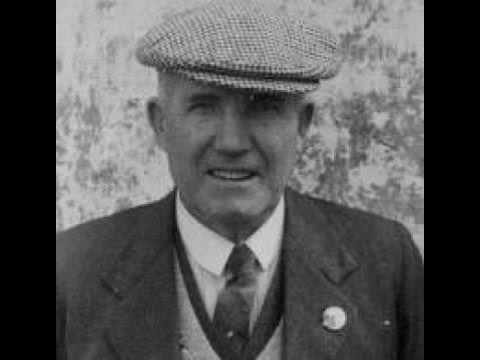
- - Manx Gaelic recording - Ned Maddrell (Last native Manx Speaker). Archive audio of Ned Maddrell speaking Manx Gaelic. Maddrell, a fisherman from Cregneash (Creneash), was the last native speaker from a Manx-speaking community and died on 27 December 1974. He learned Gaelg from his great-aunt Margaret Taubman, who had no English.
- - Manx language and dialect archive recordings: Skeealyn Vannin, Disk 2 Track 7iii. An archive recording from Skeealyn Vannin, Manx National Heritage's published collection of Manx language and dialect recordings made of the island's last native speakers.
- - Manx language and dialect archive recordings: Skeealyn Vannin, Disk 2 Track 7ii. A Skeealyn Vannin archive track. Recording equipment was sent to the island in 1948 at the direction of Eamon de Valera, then Taoiseach, specifically to capture the last native speakers of Manx Gaelic before the generation was gone.
- - Manx language and dialect archive recordings: Skeealyn Vannin, Disk 2 Track 6ii. An archive recording of spoken Manx from the Skeealyn Vannin collection held by Manx National Heritage. Actual audio of native Gaelg speakers survives because the Irish state intervened in 1948.
- - Cregneash - View of village from south. Cregneash (Creneash) seen from the south. The village is run as a living museum by Manx National Heritage and presents traditional croft life alongside Loaghtan sheep.
- - Cregneash - Folk Museum tearoom interior. The tearoom interior at Cregneash Folk Museum. By 1848 J. G. Cumming already observed that few islanders, and perhaps none of the young, spoke no English at all.
- - Cregneash Village - Village Sign. The village sign at Cregneash (Creneash), the folk village run by Manx National Heritage. This was Ned Maddrell's village; he was born here in 1877 and is described as the last speaker who grew up in a Manx-speaking community.
- - Cregneash - Village lane past The Weaver's House. A village lane at Cregneash past the Weaver's House. Culture Vannin, the trading name of the Manx Heritage Foundation, was established by the Isle of Man Government in 1982 and employs a Manx Language Development Officer.
- - Cregneash Village - Lane, thatched cottage, Museum. A thatched cottage and lane at Cregneash Village. Thatch, whitewash and low stone walls are the surviving fabric of Manx crofting, preserved here as a working museum rather than a reconstruction.
- - Cregneash Village - Village lane off A31. A village lane off the A31 at Cregneash, used as a funeral procession route in the film 'Waking Ned Devine'. The village's unaltered fabric is what makes it filmable, and it is the reason Manx National Heritage keeps it in working condition.
- - Cregneash Village - The Smithy taking a break. The smithy at Cregneash Village taking a break. Every current speaker of Manx is what scholars call a new speaker, having acquired the language other than by transmission in the home.
- - Bunscoill Gaelgagh. An early report on the Bunscoill Ghaelgagh. The school opened at St John's in September 2001 and moved into the island's mainstream education structure in 2020.
- - Learn Manx Gaelic with Adrian Cain. Learning Manx with Adrian Cain, the island's Manx Language Development Officer. The post is employed by Culture Vannin, established by the Isle of Man Government in 1982 as the Manx Heritage Foundation.
- - Bwaane-Ned-Beg-Hom-Ruy. The cottage of Ned Beg Hom Ruy, the poet and Manx-language writer Edward Faragher, at Cregneash. Faragher was one of the last people to write literature in Manx from within a Manx-speaking community.
- - Irish and Manx gaelic speakers discuss the Manx Gaelic revival. Irish and Manx Gaelic speakers discuss the revival of Gaelg. Manx is a Goidelic language descended from Primitive Irish and remains mutually intelligible in speech with Irish and Scottish Gaelic to a degree its unusual spelling conceals.
- - Panoramic view from near Cregneash Folk Museum. The view from near Cregneash Folk Museum, at the island's southern end. Manx belongs to the Goidelic branch of Celtic, descended from Primitive Irish through Old and Middle Irish, and is sister to Irish and Scottish Gaelic.
- - Cooish: Manx Language Week. The Cooish, the island's Manx language week. The festival has run for around three decades and is one of the main annual gatherings of the Gaelg-speaking community.
- - Manx Radio's support for Manx Gaelic. Manx Radio's support for Gaelg. Manx language broadcasting has run on the station since the 1960s and remains one of the few outlets carrying the language to a general audience.
- - Cregneash village. 's southern end. Ned Maddrell, born here in 1877, died on 27 December 1974, ending the chain of unbroken household transmission of Manx.
- - A day in the life of the Bunscoill Ghaelgagh. A day inside the Bunscoill Ghaelgagh at St John's, the only school in the world where children are taught all subjects through Manx Gaelic.
- - First Minister visits Manx language school. Scotland's First Minister visits the Manx language school. The Bunscoill Ghaelgagh at St John's is the only school in the world where children are taught all subjects through Manx.
- - From St Patrick to the Bunscoill - The story of a cartoon. The story of a cartoon made from St Patrick to the Bunscoill. Children's media in Manx is produced deliberately, since the language now has child speakers who acquire it at school rather than at home.
- - Trollagyn (conversation in Manx Gaelic). 'Trollagyn', a conversation in Manx Gaelic. Sustained conversation in Gaelg is what distinguishes a speaker from a learner, and 2,223 people reported that ability at the 2021 census.
- - The Manx coming back from the dead. A report using the press framing of a language brought back from the dead. Scholars describe current Manx speakers as new speakers who acquired the language other than by transmission in the home; the language's own community prefers revival and revitalisation to the resurrection metaphor.
- - Isle of Man - panoramio (70). A thatched cottage at Cregneash (Creneash), the Manx National Folk Museum. Manx never fully fell out of use, and a minority retained it as a heritage language across the whole of the twentieth century.
- - Learning Manx. An introduction to learning Manx. Manx is a Goidelic Celtic language descended from Primitive Irish, sister to Irish and Scottish Gaelic, but written in a spelling system based on Elizabethan English rather than Classical Gaelic.
- - Wren used for Hunt the Wren. A taxidermied wren used for Hunt the Wren by the dance group Bock Yuan Fannee. The custom belongs to St Stephen's Day, 26 December, and is one of the Manx traditions carried through the twentieth century by a small number of enthusiasts.
- - Padjer Columb Killey: A Manx song performed by Caarjyn Cooidjagh. 'Padjer Columb Killey' performed by Caarjyn Cooidjagh. Religious material forms a large share of the surviving written Manx, the language's standard orthography having been fixed by the Manx Bible completed in 1775.
- - MTTV archive: Bunscoill Ghaelgagh Manx school celebrates. An archive report on the Bunscoill Ghaelgagh celebrating an anniversary. The school opened in September 2001 and entered the island's mainstream education structure in 2020.
- - Michael Players - unknown date. The Michael Players performing Manx dialect theatre, undated. Anglo-Manx dialect drama flourished as Gaelg itself receded, and it preserved vocabulary and idiom that would otherwise have gone unrecorded.
- - St. Runius, Marown old church, Isle of Man. St Runius, the old Marown parish church, built in the 12th century and enlarged in 1754. Bishop Thomas Wilson, appointed in 1698, published the first book printed in Manx and began the Bible translation that his successor Mark Hildesley completed in 1775.
- - Crosh Cuirn - A Manx tradition for Oie Voaldyn. A crosh cuirn, a small cross of rowan twigs bound with wool and untouched by metal, made for Oie Voaldyn, May Eve. The custom survives with its Manx name intact, which is common on the island even where the language itself receded.
- - St. Runius, Marown, Isle of Man. St Runius church at Marown, 12th century in origin and altered in 1754. The Manx Bible of 1775 effectively fixed the modern written orthography of the language, a Celtic tongue whose standard spelling was set by Anglican bishops using English conventions.
- - WIKITONGUES: Owen speaking Manx. Owen speaking Manx, recorded by Wikitongues. Every current speaker of Manx is what scholars call a new speaker, having learned the language other than by transmission in the home.
- - M. L. Wood gravestone, Onchan cemetery. The gravestone of M. L. Wood in Onchan cemetery, inscribed 'Mother of music in Manxland'. Mary Louisa Wood was a founder of the Manx Music Festival and central to the collection and performance of Manx song.
- - Gaelg son paarantyn: Greetings. Manx greetings for parents, from the Learn Manx project. Around 2,223 people reported conversational ability in Manx at the 2021 census, up from 1,650 in 2011 and 1,500 in 2001.
- - Cadlag: A Manx song performed by Caarjyn Cooidjagh. 'Cadlag' performed by Caarjyn Cooidjagh. The choir is one of the longest running Manx language singing groups on the island.
- - The history in Manx field names. The history held in Manx field names. Field and place names are the largest surviving body of everyday Manx, recording land use, ownership and topography from before the language's decline.
- - New Manx phrase book: English version. A new Manx phrase book, reported in English. Manx has been taught in island schools since the Manx Language Unit was formed in 1992 under Brian Stowell.
- - Slieu Maggle ("Hill of Testicles"), Kirk Michael, Isle of Man. A Manx place name near Kirk Michael, Slieu Maggle. Manx place names are the densest surviving layer of Gaelg in daily use on the island, read every day by people who do not speak the language.
- - Flitters - A Manx custom for Good Friday. Flitters, limpets gathered on Good Friday morning and cooked in their shells over a fire on the shore. The custom keeps its Anglo-Manx name and is still observed on the island.
- - EdwardForbes IsleOfMan. A bust of Edward Forbes in Douglas (Doolish), the town of his birth. Forbes was a naturalist of international standing and one of the island's most significant scientific figures.
- - Hop tu Naa turnips (Isla Callister 2019). A turnip carved for Hop tu Naa in 2019. Hop tu Naa is the Manx end-of-October festival, distinct from imported Halloween, and it is carved in turnip rather than pumpkin with its own song.
- - Cooish Manx language festival. The Cooish, the island's Manx language festival, which by 2026 had been running thirty years.
- - S'feayr yn Oie - A Manx gaelic song performed by Manx Voices. 'S'feayr yn Oie' performed by Manx Voices. Singing groups have been central to keeping Gaelg in public use through the twentieth century.
- - The creation & success of the Bunscoill Ghaelgagh: The Hon Steve Rodan OBE MLC, President of Tynwald. Steve Rodan, President of Tynwald, on the creation of the Bunscoill Ghaelgagh. The school opened at St John's in September 2001, the first in the world to teach every subject through Manx.
- - O Holy Night - Performed in Manx Gaelic & English by Alexandra Slater. 'O Holy Night' performed in Manx Gaelic and English by Alexandra Slater. The Manx Bible of 1775, translated under Bishops Wilson and Hildesley, gave the language its standard written form and much of its religious vocabulary.
- - The Doctor: The White Boys (Ny Guillyn Baney), 2019. The Doctor in The White Boys (Ny Guillyn Baney), 2019. The mummers' play is performed in the Manx tradition around Christmas and is one of the customs that keeps Manx-language names in ordinary circulation.
- - The Doctor- The White Boys (Ny Guillyn Baney), Laxey, 2020. The Doctor in The White Boys (Ny Guillyn Baney) at Laxey (Laksaa), 2020. Culture Vannin photographs the island's living customs year by year, which is why a two-hundred-year-old play has a modern photographic record.
- - St. George & St. Maughold: The White Boys, Peel, 2019. St George and St Maughold in The White Boys at Peel (Purt ny hInshey), 2019. St Maughold, Manx Maghal, gives his name to the parish that holds the island's most significant collection of early Christian cross slabs.
- - The White Boys (Ny Guillyn Baney), 2019. 's schools in 1992 under the Manx Language Unit, formed by Brian Stowell, and the Bunscoill Ghaelgagh at St John's opened in September 2001.
- - Interview with Adrian Cain, Manx Language Development Officer, 2013. Adrian Cain, the island's Manx Language Development Officer, on the work of promoting Gaelg. The post is employed by Culture Vannin, trading name of the Manx Heritage Foundation, established by the Isle of Man Government in 1982.
- - The Bunscoill Ghaelgagh: a potted history (part 2/2). A history of the Bunscoill Ghaelgagh, part two, covering the school's growth into full immersion teaching.
- - The Bunscoill Ghaelgagh: a potted history (part 1/2). A history of the Bunscoill Ghaelgagh, part one. Manx entered island schools in 1992 under the Manx Language Unit, formed under Brian Stowell.
- - Ruth Keggin Gell Manx Language Development Officer (Manx version). Ruth Keggin Gell speaking in Manx Gaelic on her role as Manx Language Development Officer.
- - The White Boys, Peel, 2021 - 52552149262. The White Boys, the Manx mummers' play, performed at Peel in 2021. The play is about 200 years old, involves saints fighting, dying and being resurrected to sing and dance, and is one of the living calendar customs Culture Vannin documents.
- - St. George kills St. Maughold - The White Boys, Ramsey, 2021. St George kills St Maughold in The White Boys at Ramsey (Rhumsaa), 2021. The play's saints fight, die and are resurrected, and it has been performed on the island for around two hundred years.
- - The White Boys, Ramsey, 2021 - 52552902309. The White Boys at Ramsey (Rhumsaa), 2021. UNESCO's 2009 classification of Manx was contested on the island by linguist Jennifer Kewley Draskau, who argued that a language people hold productive conversations in is 'very much alive and well'; UNESCO later reclassified it as critically endangered.
- - The White Boys, Ramsey, 2021 - 52553147483. The White Boys at Ramsey (Rhumsaa), 2021. 2026 is being marked as the Year of the Manx Language, thirty-five years after Manx entered schools, thirty years of the Cooish festival and twenty-five years of the Bunscoill Ghaelgagh.
- - Chengey ny Mayrey - Foillan Films (Manx Language Film - Mother Tongue). 'Chengey ny Mayrey' (Mother Tongue), a feature-length Manx-language film by Foillan Films, released through Manx National Heritage.
- - The Manx language, casually spoken | Owen speaking Manx | Wikitongues. Manx Gaelic spoken casually by Owen, recorded by Wikitongues. The 2021 census recorded 2,223 people reporting conversational ability in Gaelg, 2.64 per cent of the island's population of 84,069.
- - Manx language report: Bunscoill Ghaelgagh. A report on the Bunscoill Ghaelgagh. The school at St John's opened in September 2001 and teaches all subjects through Manx Gaelic by immersion, the only school in the world to do so.
- - Manannan Song: A traditional Manx Gaelic song. The traditional Manx Gaelic song about Manannan. Manannan mac Lir is the island's legendary sea figure, said to hide the island under mist known as Manannan's cloak.
- - Bunscoill Aboo: Colbagh Breck [Manx Folk Awards 2022]. The Bunscoill Ghaelgagh performing 'Colbagh Breck' at the Manx Folk Awards 2022. The Folk Awards are the island's annual competition in Manx song, music and dance for schoolchildren.
- - Queeyl Ghaelgagh. 1982, and employs the island's Manx Language Development Officer.
- - Cregneash Cottages Loaghtan 2. Manx Loaghtan sheep at the cottages in Cregneash (Creneash). The village is the centre of the island's presentation of croft life and it is also where Ned Maddrell was born, which ties the land facet and the language facet to one place.
- - Cregneash Cottages 05. Cottages at Cregneash (Creneash), the Manx National Heritage folk village. In 1874 around 16,200 people, roughly 30 per cent of the population, still spoke Manx; by 1921 the figure was 915.
- - Cregneash Cottages 02. Cottages at Cregneash (Creneash). Ned Maddrell learned his Manx here from his great-aunt Margaret Taubman, who spoke no English.
- - Cregneash Cottages Loaghtan 9. Manx Loaghtan sheep by the cottages at Cregneash. The Loaghtan takes its name from the Manx lugh dhoan, mouse brown, and by the 1950s only 43 animals survived.
- - Bunscoill Ghaelgagh 20 years in. The Bunscoill Ghaelgagh twenty years after opening in September 2001. The school moved into the island's mainstream education structure in 2020.
- - Shirveish y Nollick: The full Manx language church service, 2022. A complete Manx Gaelic church service, Shirveish y Nollick, recorded in 2022. Bishop Thomas Wilson published the first book in Manx and his successor Mark Hildesley completed the Manx Bible in 1775, which effectively fixed the modern written orthography.
- - No time to die: the resurrection of Manx Gaelic. A documentary report on the revival of Manx Gaelic. In 2009 UNESCO's Atlas of the World's Languages in Danger classified Manx as extinct while hundreds of people spoke it; the linguist Jennifer Kewley Draskau objected publicly, and UNESCO later reclassified the language as critically endangered.
- - The Manx Gaelic language, Gaeleg Manaweg. An overview of Manx Gaelic. Its written form is largely opaque to readers of Irish and Scottish Gaelic despite the spoken languages being closely related, because the Manx orthography follows Elizabethan English and Middle Welsh conventions.
- - Cooish Manx Language festival: English version. The Cooish Manx language festival, in English. The Cooish had been running thirty years by 2026, and is one of the anniversaries marked by the Year of the Manx Language.
- - Shirveish y Nollick: Manx language church service, 2022. The Manx language church service Shirveish y Nollick of 2022. Bishop Thomas Wilson published the first book in Manx and his successor Mark Hildesley completed the Manx Bible in 1775, which fixed the modern written form of the language.
- - Carvalyn Gaelgagh: Coloayrtys marish Dr Marie Clague. 'Carvalyn Gaelgagh', a conversation in Manx with Dr Marie Clague. Carvals are Manx religious carols, a distinctive body of vernacular verse preserved in manuscript.
- - The Isle of Man: a Celtic Island Nation | Manx Language & Culture. An introduction to the island as a Celtic nation, its language and culture. Manx is one of the six Celtic languages and the island takes part in inter-Celtic bodies alongside Ireland, Scotland, Wales, Cornwall and Brittany.
- - Cooish, Cappan as Croo 2022. Cooish, Cappan as Croo of 2022, a Manx language social event. Informal gatherings in Gaelg are how the language is sustained between the classroom and the broadcast.
- - St Peter, Cregneash: October 2023. St Peter's church at Cregneash, October 2023. The village sits at the southern tip of the island above the Sound and the Calf of Man.
- - Parked cars at Cregneash
- - A dull day at Cregneash. (Creneash). Yn Çheshaght Ghailckagh, the Manx Language Society, was founded in 1899, while the language was still being spoken in villages like this one.
- - Shelg yn Ghrian: Bunscoill Ghaelgagh Summer Play, 2022. 'Shelg yn Ghrian', the 2022 Bunscoill Ghaelgagh summer play, performed in Manx Gaelic by primary-age children. Manx entered island schools in 1992 under the Manx Language Unit.
- - Lioar y Doofyr: Bunscoill Ghaelgagh Summer Play, 2023. 'Lioar y Doofyr', the 2023 Bunscoill Ghaelgagh summer play, in Manx Gaelic. The school at St John's moved into the island's mainstream education structure in 2020.
- - Cooinaghtyn Manninagh: Co-loayrtys marish Juan y Crellin. 'Cooinaghtyn Manninagh', a long conversation in Manx Gaelic with Juan y Crellin. Sustained unscripted conversation in Gaelg is exactly the material that the 1948 Irish Folklore Commission recordings were sent to capture.
- - Manx song lesson: Shiaull Ersooyl. A lesson in the Manx song 'Shiaull Ersooyl'. Song is a principal teaching route into Gaelg for both children and adult learners.
- - Manx, the language that came back to life. A report on the revival of Manx. In 2009 UNESCO's Atlas of the World's Languages in Danger classified Manx as extinct while hundreds of people spoke it; the linguist Jennifer Kewley Draskau objected publicly and the language was later reclassified as critically endangered.
- - MANX GAELIC LANGUAGE. An overview of the Manx Gaelic language. Manx diverged from Irish and Scottish Gaelic across roughly 1400 to 1900, isolated by the Plantation of Ulster and the decline of Irish in Leinster.
- - Niarbyl - Fisherman's Hut. An old fisherman's hut at Niarbyl on the west coast. Herring was the historic mainstay of the island, locally called the king of the sea, and the vocabulary of that fishery carried its own taboo words that fishermen used at sea.
- - North Barrule, Maughold. North Barrule in the parish of Maughold, seen from the ridge connecting it to Clagh Ouyr. The island's hill names are almost entirely Manx and record what people saw before they recorded anything else.
- - Sniaghtey Bane: Bunscoill Ghaelgagh Summer Play, 2024. 'Sniaghtey Bane', the 2024 Bunscoill Ghaelgagh summer play, performed in Manx Gaelic (Gaelg) by the school's pupils. Every current speaker of Manx is what scholars call a new speaker, having learned the language other than by transmission in the home.
- - Goll as Gaccan 5.10.25 - Phil talks to Radio Failte. Manx Radio's Manx language programme Goll as Gaccan, with a conversation involving Radio Failte. Manx language broadcasting is one of the few contexts in which Gaelg reaches a general audience.
- - Manx language community event: Cooish, Cappan as Croo 2023. Cooish, Cappan as Croo, a Manx language community event held during the Cooish festival. The Cooish is the island's Manx language festival and by 2026 had been running thirty years.
- - 10 Words In Manx: The Language That Refused To Die. Ten words in Manx. The 2021 census recorded 2,223 people with conversational ability in Gaelg, 2.64 per cent of the island's population, up from 1,650 in 2011.
- - BRITISH ENGLISH & MANX GAELIC. A comparison of British English and Manx Gaelic. Manx is a Goidelic Celtic language, not a dialect of English, though its spelling was devised on English orthographic conventions.
- - Co-Whaiyl ny Gaeil. ', a gathering conducted in Manx Gaelic. Yn Çheshaght Ghailckagh, the Manx Language Society, was founded in 1899, before native transmission of the language had ended.
- - Gaelg er Radio Vannin - Bob Carswell. Bob Carswell on Gaelg on Radio Vannin, Manx-language broadcasting on the island's airwaves. Manx-language radio is one of the few places the language is heard by a general audience.
- - Skeealyn Vannin Story. The story of Skeealyn Vannin, the published collection of Manx language and dialect archive recordings of the island's last native speakers.
- - Year of the Manx Language: Coraaghyn yn Aile song project. The Coraaghyn yn Aile song project, part of the 2026 Year of the Manx Language. The Isle of Man Government set a target of 5,000 Manx speakers within a decade in its 2022 language strategy.
- - Manx Mass / Erin Gaelgagh [Manx Gaelic subtitles]. A Mass celebrated in Manx Gaelic, with Gaelg subtitles. The Manx Bible of 1775, translated under Bishops Thomas Wilson and Mark Hildesley, gave the language its standard written form.
- - "Miss Morrison at the Wheel": Sophia Morrison & the Manx language revival. A talk on Sophia Morrison and the Manx language revival. Morrison was a central figure in the collecting of Manx folklore and language at the turn of the twentieth century.
- - Manannan Beg, performed by the Bunscoill Ghaelgagh [Manx Folk Awards 2026]. 'Manannan Beg' performed by the Bunscoill Ghaelgagh at the Manx Folk Awards 2026. The Bunscoill at St John's teaches every subject through Gaelg and opened in September 2001.
- - Year of the Manx Language: Frank Joughin album project. The Frank Joughin album project, part of the 2026 Year of the Manx Language. The year marks 35 years since Manx entered island schools in 1992, 30 years of the Cooish and 25 years of the Bunscoill Ghaelgagh.
- - The Pride of Purt le Murra, performed by Bunscoill Rhumsaa [Manx Folk Awards 2026]. 'The Pride of Purt le Murra' performed by Bunscoill Rhumsaa at the Manx Folk Awards 2026. Manx is taught across island primary schools, not only at the immersion school at St John's.
- - Douglas Drone Show for the Year of the Manx Language 2026. The Douglas drone show for the 2026 Year of the Manx Language. The year marks three anniversaries: Manx entering schools in 1992, thirty years of the Cooish festival and twenty five years of the Bunscoill Ghaelgagh.
- - Audio description: Douglas Drone Show for the Year of the Manx Language 2026. An audio described version of the Douglas drone show for the 2026 Year of the Manx Language. The year is promoted by the island's tourism body and marks anniversaries in 1992, 1996 and 2001 for schools, the Cooish and the Bunscoill.
- - This language came back from the dead, and I'm speaking it. A learner speaking Manx and reflecting on the revival. The 2021 census recorded 2,223 people with conversational Gaelg, and the Isle of Man Government set a target of 5,000 speakers within a decade in its 2022 language strategy.
- - Manx Gaelic books. 's Manx language summer school for adults, held in July 2026 at QEII High School in Peel (Purt ny hInshey). Written Gaelg uses a spelling system based on Elizabethan English rather than Classical Gaelic, which is why it looks so unlike Irish or Scottish Gaelic on the page.
- - Learning Manx at the Manx Language Summer School 2026. Adults learning Manx at Scoill Souree, Culture Vannin's summer school, July 2026. The 2021 census recorded 2,223 people reporting conversational ability in Manx, up from 1,650 in 2011, and the government set a target of 5,000 speakers within a decade in a 2022 strategy.
- - Full length Douglas Drone Show for the Year of the Manx Language. The full drone show staged over Douglas (Doolish) for the 2026 Year of the Manx Language, which marks 35 years since Manx entered schools, 30 years of the Cooish festival and 25 years of the Bunscoill Ghaelgagh.
- - Slane Lhiu, Vanannan: Bunscoill Ghaelgagh Summer Play, 2026. The full 2026 summer play staged by the Bunscoill Ghaelgagh at St John's (Balley Keeill Eoin), performed entirely in Manx Gaelic. The school opened in September 2001 and teaches all subjects through Gaelg by immersion.
- - 'Mind Your Language' - An introduction to the Manx language exhibition in the Manx Museum. An introduction to the 'Mind Your Language' exhibition on Manx Gaelic (Gaelg) at the Manx Museum in Douglas (Doolish). Gaelg is a Goidelic Celtic language, sister to Irish and Scottish Gaelic, and its written form is unusual in using a spelling system based on Elizabethan English rather than Classical Gaelic.
- - The background to the Manx language exhibition in the Manx Museum. Background to the Manx language exhibition at the Manx Museum. The 2021 census recorded 2,223 people on the island reporting conversational ability in Manx Gaelic (Gaelg), up from 1,650 in 2011.