Anime
From Tezuka drawing a robot boy in 1963 to an industry that supplies the world and struggles to pay its own animators. Ghibli, Akira, Evangelion, the Jump titles that ran for a generation, and the desks and schedules behind them.
Part of Japan
92 moments in this segment.
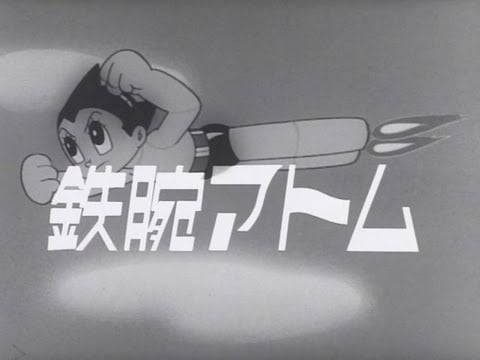
- - Astro Boy (1963) - Tezuka Productions Official Clip. Official Tezuka Productions clip from Astro Boy, Japan's first domestically produced television anime series, which began broadcasting on 1 January 1963.
- - Nausicaä of the Valley of the Wind - 1984 Promotional Reel. The period promotional reel for Nausicaä of the Valley of the Wind, the 1984 Miyazaki film whose success led directly to the founding of Studio Ghibli in 1985.
- - Akira: Production Report (1988). The contemporaneous Japanese production documentary made during Katsuhiro Otomo's Akira, showing the cel work, colour design and recording behind the landmark 1988 film.
- - Spirited Away - Official Trailer. Trailer for Hayao Miyazaki's Spirited Away (2001), the Studio Ghibli film that won the Academy Award for Best Animated Feature and the Golden Bear at Berlin.
- - Akihabara Lights 1. Akihabara electric town street signs. Akihabara Lights
- - Akihabara Lights 2. Akihabara electric town street signs. Another image of the neon lights of Akihabara. Akihabara Lights
- - Ghibli Studio. Ghibli Museum Mitaka building. Studio Ghibli Museum
- - Akihabara Signs. Akihabara electric town street signs. The obligatory snap of Akihabara Electric Town. It's not all that impressive in daylight, to be honest... but if you're a nerd, it's heaven.
- - Nakano broadway entrance. Nakano Broadway Tokyo shopping. A photo of an entrance of Nakano Broadway.Nakano,Nakano-ku,Tokyo,Japan. the head store of "Mandarake"( one of Tokyo's largest vendors of used anime and manga-related products)is located in this building.
- - Tekkoshocon 2010 cosplay 028. cosplay Japan convention photograph. Tekkoshocon at David L. Lawrence Convention Center (2010)
- - Nakano Guide. Nakano Broadway Tokyo shopping. Japanese school uniforms and accesories
- - Concours Cosplay - Groupes - P1380427-P1380428. cosplay Japan convention photograph. Photograph taken during the 6th edition of the Mang'Azur festival, an anime, manga and japanese culture convention organized at the 'Palais Neptune' of Toulon in France.
- - Diver City Tokyo -01. Gundam statue Odaiba Tokyo. Diver City Tokyo. This place is Aomi in Kōtō, Tokyo, Japan.
- - 機動戦士ガンダム - panoramio (2). Gundam statue Odaiba Tokyo. 機動戦士ガンダム
- - Cosplay Libre - Mang'Azur 2013 - P1580500. cosplay Japan convention photograph. Photograph taken during the 7th edition of the Mang'Azur festival, an anime, manga and japanese culture convention organized at the 'Palais Neptune' of Toulon in France.
- - Cosplay Libre - Mang'Azur 2013 - P1580522. cosplay Japan convention photograph. Photograph taken during the 7th edition of the Mang'Azur festival, an anime, manga and japanese culture convention organized at the 'Palais Neptune' of Toulon in France.
- - Ghibli Museum, Mitaka (9406835593). Ghibli Museum Mitaka building. Ghibli Museum, Mitaka
- - Astro Boy: The Secret of Astro's Birth. Official Tezuka Productions special edition retelling Astro Boy's origin, the first of a three-part set directed by Osamu Dezaki.
- - NHK: The Unknown World of Comiket. NHK's 2015 documentary on Comic Market, the doujinshi fair that has run in Tokyo since 1975 and remains the centre of Japan's amateur manga economy.
- - BBC Interview: Hajime Isayama on Attack on Titan. A rare interview with the reclusive Hajime Isayama, creator of Attack on Titan, on the dystopia he built and the point at which he nearly gave up.
- - ACTF: Animator Expression and the Potential of Digital Drawing. A lecture from the Animation Creative Technology Forum 2017, a Japanese Agency for Cultural Affairs project on what animators gain and lose in the move from paper to digital.
- - On the Anime Floor: The Work of the Animation Director. First episode of a Japanese industry programme profiling the people who sustain anime production, focused on the sakuga kantoku (animation director) role.
- - The Impact of Akira. A researched video essay on how Akira's 1988 release changed the international perception of animation and opened Western markets to Japanese anime.
- - Liz and the Blue Bird: The Chief Animation Director. Kyoto Animation's making-of series on Naoko Yamada's Liz and the Blue Bird, this instalment on the chief animation director's role in the film's understated character acting.
- - Kyoto Animation at Work: The Chief Animation Director. Kyoto Animation's own channel shows the chief animation director drawing Violet Evergarden, a rare look at the studio's in-house craft.
- - Kyoto Animation's Background Painters at Work. Kyoto Animation films its background staff constructing the dense European streets and architecture of Violet Evergarden.
- - Rebuild of Evangelion: Digest by Hideaki Anno. Studio Khara's official recap of the Rebuild of Evangelion films, edited by Hideaki Anno himself ahead of the final instalment.
- - Makoto Shinkai Lecture: The Origin of Weathering With You. Toho Animation releases part of Shinkai's own lecture on where Weathering With You began, drawing on his production diary to show how the story took shape.
- - Making Weathering With You: Animation and Music. Excerpt from the making-of documentary on Weathering With You, following the animation and music production of Japan's highest-grossing film of 2019.
- - Tokyo Anime Factory booth 20200801a. AnimeJapan exhibition Tokyo. 2020台北國際ACG博覽會,日本二手動漫商品店 TAF動漫精品專賣店 攤位。
- - Naoko Takeuchi on Sailor Moon. A period laserdisc-bonus interview with Naoko Takeuchi, creator of Sailor Moon, on the manga and the Toei Animation series that defined the magical-girl genre worldwide.
- - Toshio Suzuki Speaks - Ghibli Museum Video Diary. The Ghibli Museum in Mitaka films producer Toshio Suzuki during the museum's pandemic closure, opening a series of interviews about how Ghibli works.
- - Isao Takahata on Grave of the Fireflies. A full interview with director Isao Takahata about Grave of the Fireflies, his 1988 adaptation of Akiyuki Nosaka's semi-autobiographical story of the Kobe firebombing.
- - Mugen Train Hits 10 Billion Yen in Ten Days. TV Tokyo reports Demon Slayer: Mugen Train reaching 10.7 billion yen ten days after opening, the fastest in Japanese history, against Spirited Away's 25 days.
- - TIFF Master Class: The Landscapes Anime Draws. A Tokyo International Film Festival master class on anime background art, how light, atmosphere and increasingly real photographed locations are turned into painted space.
- - Inside Netflix's Anime Push in Tokyo. TV Asahi gains rare access to Netflix's Minami-Aoyama anime hub as Japanese titles hold steady positions in the service's global top ten.
- - Mugen Train Passes Spirited Away as Japan's Biggest Film. TBS reports Demon Slayer: Mugen Train exceeding 32.4 billion yen, overtaking Spirited Away as the highest-grossing film ever released in Japan roughly two and a half months after opening.
- - YOASOBI: Monster (2021). YOASOBI's Kaibutsu, the opening theme of the second season of the anime Beastars, released January 2021 as part of the novel-into-song format the duo built their career on.
- - Polygon Pictures: Creativity and Business in Digital Animation. Polygon Pictures president Shuzo Shiota gives the IMART 2021 keynote on running one of Japan's oldest digital animation studios, maker of Transformers Prime and Star Wars: The Clone Wars.
- - Inside Kazuhiro Fujita's Studio. Weekly Shonen Sunday's channel tours the working studio of mangaka Kazuhiro Fujita, filming his tools and desk while he is mid-serialisation.
- - JAniCA Digital Key Animation Workshop with Nippon Animation. The Japan Animation Creators Association runs a workshop with Nippon Animation on digital key animation and animation-director workflow in Clip Studio Paint, documenting the industry's shift from paper to digital.
- - How Weekly Shonen Jump Is Printed: Inside the Goka Factory. Cameras follow the manufacture of Weekly Shonen Jump at the Kyodo Printing Goka plant in Ibaraki, from platemaking through printing, binding and dispatch.
- - Attack on Titan Final Season: Director and CGI Producer in Conversation. Director Yuichiro Hayashi and CGI producer Yusuke Tannawa discuss the screen design and hybrid 2D/3D pipeline of Attack on Titan's final season at MAPPA.
- - The Techniques That Gave Akira Its Quality. A technical breakdown of the animation methods, full animation, pre-recorded dialogue, elaborate colour separation, that Japan's bubble-era money made possible on Akira.
- - Kinema Citrus's Digital Drawing Workflow. Studio Kinema Citrus documents its full digital animation pipeline, layout, key animation, inbetweens and production management, built on Clip Studio Paint and Toei's digital timesheet.
- - Learning to See With Art Director Nizo Yamamoto. Anime art director Nizo Yamamoto, background painter on Grave of the Fireflies, Castle in the Sky and Princess Mononoke, teaches how to read a landscape as a painter would.
- - Chasing the Manga Dream at Tama Tokiwa-so. Nippon TV follows a 25-year-old who moved to Tokyo to live at the Tama Tokiwa-so housing project and try to become a professional mangaka.
- - The First Fukuoka Indie Game Summit. Full stream of the inaugural Fukuoka Indie Game Summit in 2022, with talks by Japanese doujin and indie developers including CAVYHOUSE on making and shipping small games.
- - Background Art: Seventy Percent of the Frame. TV Tokyo's anime-craft series interviews art director Katsumi Takao, of Pokémon among many series, on how background art builds a show's world.
- - Eiichiro Oda's Original Manga Pages. One Piece's official channel examines Eiichiro Oda's raw manuscript pages, showing the inking, tone work and lettering behind a weekly serialised manga.
- - TBS Radio on the history of anison. TBS Radio music column with singer-songwriter Miton Usui tracing the anime song as a Japanese musical form and export.
- - JAniCA on the Structure of Anime Production. The Japan Animation Creators Association hosts auditor Daisuke Oketa for a long session on how the anime industry is structured and how its money actually flows.
- - Why Netflix Is Cutting Back Anime Production in Japan. Toyo Keizai analyses Netflix's retrenchment in Japanese anime commissioning after the streamer's first back-to-back quarterly subscriber losses in 2022.
- - Traditional instruments taken into Japanese schools. Shakuhachi player Kizan Kawamura's digest of school concerts introducing koto, shamisen and shakuhachi to children, mixing Haru no Umi with Ghibli and YOASOBI.
- - Makoto Shinkai: 'Thoroughly Local' Anime Goes Global. Nikkei interviews Makoto Shinkai about Suzume, made from the 2011 Tohoku disaster, and why he thinks the most local material travels furthest abroad.
- - Analogue and Digital in the Anime Studio. Graphinica and ARCH head Nao Hirasawa discusses where CG and digital drawing now sit against hand-drawn technique in Japanese anime production.
- - Why MAPPA Funded Chainsaw Man Alone. MAPPA's Manabu Otsuka and Shonen Jump+ editor Shuhei Hosono debate the economics of the production committee, sole studio investment and where the manga and anime business is heading.
- - Comiket Returns Without Restrictions. Nippon TV reports from the first Comic Market held without Covid restrictions, attended by 260,000 people, covering cosplay, corporate booths and self-published work.
- - Katsuhiro Otomo on Making Akira. An interview with director Katsuhiro Otomo about Akira, the 1988 cyberpunk feature whose animation budget and detail redefined what theatrical anime could look like.
- - Working Animators Speak: From the Industry Survey. Extracts from Japanese animators' own testimony collected in an industry conditions survey, on pay, hours and the realities of key-animation work.
- - Naoki Urasawa on the Shock of Astro Boy and Reimagining It as PLUTO. Manga artist Naoki Urasawa discusses the impact Osamu Tezuka's Astro Boy had on him as a child and how it led to his manga PLUTO and its Netflix anime adaptation.
- - Anime Exports Rise While Studios Run Short of Staff. Nippon TV reports on Japan's content-export boom set against chronic understaffing in anime and manga production, and the government measures proposed in response.
- - Dragon Ball DAIMA - Teaser. Toei Animation's teaser for Dragon Ball DAIMA, the wholly new series whose story and character designs Akira Toriyama supplied before his death in 2024.
- - Takehiko Inoue: The Vagabond Documentary. A full documentary following Takehiko Inoue, creator of Slam Dunk and Vagabond, at work, brush technique, deadline pressure and the physical labour of weekly manga.
- - THE ONE PIECE: Staff Interview, Production Notes Vol. 1. The official One Piece channel introduces the main staff of THE ONE PIECE, the WIT Studio remake of Eiichiro Oda's manga made for Netflix.
- - A history of anime song. Japanese music history episode on anison, from Astro Boy through the 1970s robot themes to the modern tie-in industry that now drives much of the singles chart.
- - Kyoto Animation's 2025 Lineup Presentation. Kyoto Animation presents its 2025 slate in a special programme, five years on from the 2019 arson attack that killed 36 of its staff.
- - The Reiwa Tokiwa-so: Young Mangaka Living Together. TV Asahi documentary on an NPO-run apartment block in Tokyo where roughly fifty aspiring manga artists live and work, a modern echo of the Tokiwa-so that housed Tezuka and Fujiko Fujio.
- - Takahata on Grave of the Fireflies, as It Reaches Streaming. Asahi Shimbun revisits Isao Takahata's own words on Grave of the Fireflies as the 1988 film becomes the first Ghibli title streamed in Japan, in the 80th year after the war.
- - Making the Action of Moonrise at WIT Studio. Netflix shows how WIT Studio built the lunar action sequences of Moonrise, the series written by Fullmetal Alchemist's Hiromu Arakawa.
- - Rintaro at 84: Working with Tezuka on Astro Boy. Nippon TV interviews director Rintaro, who worked alongside Osamu Tezuka on the original Astro Boy, after he became the oldest ever recipient of the Tezuka Osamu Cultural Prize in June 2025.
- - Demon Slayer: Infinity Castle Chapter One - Main Trailer. Aniplex's official trailer for the ufotable-animated Demon Slayer: Infinity Castle Chapter One, released in Japan on 18 July 2025 and one of the highest-grossing anime films ever made.
- - Building Porco Rosso's Savoia S.21 in Wood. Ghibli Park's official series visits the Ghibli three-dimensional models exhibition, where craftsman Hiroshi Ihara explains constructing Porco Rosso's red seaplane as a wooden artwork.
- - Inside the Weekly Shonen Jump Editorial Office: A First Manga Pitch. Shueisha's official Jump channel films an aspiring mangaka's first editorial meeting, showing how Jump editors critique worldbuilding, protagonist type and readability.
- - Making The Summer Hikaru Died: The Recording Booth. KADOKAWA's making-of documentary takes cameras into the voice recording of The Summer Hikaru Died, including the dialect coaching central to the series.
- - Princess Mononoke in 4K IMAX. Toho's trailer for the IMAX run of the Ghibli-supervised 4K remaster of Princess Mononoke, which drew 14.2 million admissions and 19.3 billion yen on its 1997 release.
- - Inside Bones Film: Making the Anime Gachiakuta. Prime Video Japan documents production at Bones Film on the 2025 series Gachiakuta, roughly 10,000 drawings per episode across a three-year production.
- - State of Play Japan: Games Made in Japan and Asia. Sony devotes a special State of Play, hosted by voice actor Yuki Kaji, to more than forty minutes of games made in Japan and Asia, from major series to indie titles.
- - Inside the Gachiakuta Recording Session. Anime Times films the voice recording for Gachiakuta, showing the moment performances are laid over finished battle animation.
- - Anime Journalist Tadashi Sudo on the State of the Industry in 2025. Analyst Tadashi Sudo reviews the Japanese anime industry's 2025, production volumes, streaming money, and the labour bottleneck, in a long-form industry programme.
- - Dragon Ball at 40 - Toei Animation Special Film. Toei Animation's 40th-anniversary film animates Akira Toriyama's own colour illustrations, preserving the texture and palette of his original artwork.
- - Generative AI Reaches the Anime Studio Floor. Fuji News Network reports from Tokyo studio DLE, makers of Himitsu Kessha Taka no Tsume, where generative AI has cut a three-week task to four days, and asks what that means for animators.
- - Toshio Suzuki on Miyazaki at 85. Tokai TV reports producer Toshio Suzuki describing an 85-year-old Hayao Miyazaki as 'oddly energetic' and still very much working, at the unveiling of his Panorama Box pieces.
- - Princess Mononoke in 4K - Restoration Trailer. Trailer for the 4K digital remaster of Miyazaki's Princess Mononoke (1997), released on 4K UHD in June 2026, Ghibli's back catalogue entering restoration.
- - The Ghibli Editor Who Cut Grave of the Fireflies and Totoro. Takeshi Seyama, editor on most Studio Ghibli films, describes editing the 1988 Totoro/Grave of the Fireflies double bill in parallel and the fundamental difference between how Miyazaki and Takahata made films.
- - Kiki's Delivery Service in 4K. Toho's trailer for the 4K digital remaster of Miyazaki's Kiki's Delivery Service (1989), given a limited two-week national re-release in July 2026.
- - Miyazaki's 31 Peep Boxes Open at Ghibli Park. TV Aichi films the new Ghibli Park display of 31 layered peep boxes Hayao Miyazaki built over about three and a half years, each assembled from separately drawn backgrounds and characters.
- - Goro Miyazaki on His Father's Panorama Boxes. Chukyo TV covers the Panorama Box exhibition at Ghibli Park, 31 dioramas Hayao Miyazaki made over roughly three years, with Goro Miyazaki explaining what his father intended by them.
- - AI Arrives on the Anime Production Line. MBS reports from Japanese anime studios where AI has cut inbetween work from 30 minutes a drawing to 200 drawings in 10-20 minutes, interviewing an animator of 46 years about what it means for the workforce.
- - 85,000 Yen a Month: The Anime Industry's Pay Gap. An analysis of the gap between animator earnings, one artist's best month at 85,000 yen, below minimum wage, and the average salaries of the companies whose logos close the credits.
- - Behind the Scenes at Kyoto Animation. Kyoto Animation's own documentary series on producing the 2026 series Nijusseiki Denki Mokuroku, opening with the cast on auditions and recording.
- - Comiket at Fifty - Anniversary Film. Comic Market's official 50th-anniversary film, marking half a century since the first event on 21 December 1975.