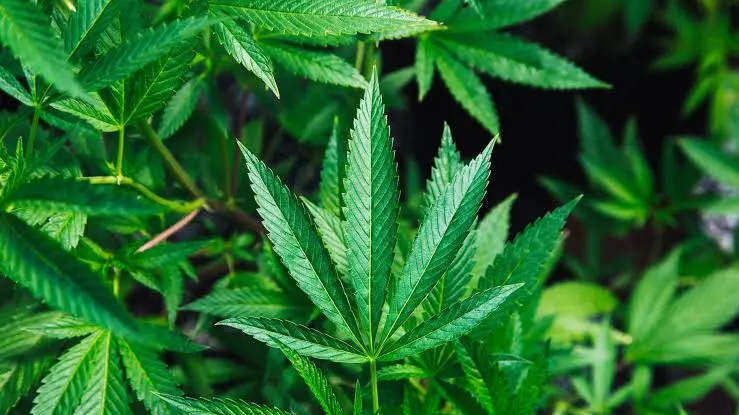
Marijuana
Cannabis has been used by people for at least two and a half thousand years. Mourners burned it in braziers in the Pamir mountains around 500 BC, Chinese herbals listed it, Indian texts made it sacred, and for most of recorded history the same plant was rope, sailcloth, paper and medicine. Then in the twentieth century a plant became a crime. Harry Anslinger built a bureau on it, Hollywood made Reefer Madness, a 1937 tax act ended the legal trade, and in 1970 the United States placed cannabis in Schedule I alongside heroin, where, formally, it largely remains. The war that followed filled prisons unequally and never removed the plant from a single city. Alongside all of it, cannabis kept doing what it had always done: it ran through jazz and reggae and hip-hop, it built its own cinema and its own comedy, and it became the subject of real science after Raphael Mechoulam isolated THC in 1964 and researchers found the receptor system it acts on. Then the law began to move, California in 1996, Colorado and Washington in 2012, Uruguay, Canada, Thailand, Germany. This is the whole arc: the plant, the archaeology, the propaganda, the records, the films, the raids, the research and the votes.
A chronological documentary of 571 moments spanning c. 4800 BC–2026 on Loreline.
Curated by Olivier · last updated 2026-09-20
Eras
- Ancient Roots, The oldest evidence there is. Braziers from the Jirzankal cemetery in the Pamirs, the Yanghai tombs in Turpan, Herodotus on the Scythians, the Chinese herbals, the Atharvaveda and bhang in India, and the long westward spread through the Islamic world into Africa and the Americas.
- Plant, What cannabis actually is. The botany and the long argument about sativa, indica and ruderalis; the trichomes that make the chemistry; THC and CBD and the terpenes around them; the genome, the domestication history and the landraces that regional growers shaped over centuries.
- Hemp and Industry, The same plant as a raw material. Rope, sailcloth, canvas and paper; the colonial hemp economy; the 1942 US government film Hemp for Victory made when the war cut off Manila fibre; and the modern industrial crop that the 2018 Farm Bill brought back to American fields.
- Science, What is actually known. Raphael Mechoulam isolating CBD and then THC in the sixties, the discovery of the receptors and of anandamide, the trials behind Epidiolex and Sativex, cannabis for epilepsy and for chemotherapy nausea, and, honestly, the risk side: psychosis research, cannabis use disorder, and what rising potency has changed.
- Reefer Madness, How a plant was turned into a menace. The 1936 exploitation films, Harry Anslinger and the Federal Bureau of Narcotics, the 1937 Marihuana Tax Act, the newsreels and the press campaign, and the anti-drug advertising that ran from the fifties through DARE and the frying egg.
- Songs, The records themselves. The viper songs of thirties jazz, Cab Calloway, Fats Waller, Louis Armstrong, then calypso, Peter Tosh and reggae, Black Sabbath, Rick James, Cypress Hill, the Chronic era, Willie Nelson and everything after. The music, not documentaries about the musicians.
- Scene, Everything people built around it. The San Rafael students whose meeting time became 420, High Times and the Cannabis Cup, NORML and the marches, the Amsterdam coffeeshops and the Dutch tolerance policy, Rastafari, the counterculture, and the language a subculture invented to talk about itself.
- Drug War, Enforcement and its cost. Nixon in 1971, the Controlled Substances Act placing cannabis in Schedule I, the Shafer Commission that recommended decriminalisation and was ignored, eradication campaigns and raids, mandatory minimums, the deeply unequal arrest record, and the people who spent decades in prison for it.
- Legalisation, The law moving. California in 1996, Colorado and Washington in 2012, the first legal recreational sale on New Year's Day 2014, Uruguay first as a country, then Canada, Thailand, Malta, Luxembourg and Germany, alongside the banking problems, the expungement fights and the illicit market that legal shops never quite replaced.
- Screen and Comedy, Cannabis as a genre. Cheech and Chong inventing an entire kind of film in 1978, Dazed and Confused, Friday, Half Baked, The Big Lebowski, Pineapple Express and Harold and Kumar, the television that followed, and the stand-up comedy that has been working the same material for fifty years.
- - Cord-marked Yangshao amphora, c.4800 BC. Neolithic Yangshao amphora from Banpo, Shaanxi, decorated with cord impressions. Hemp cordage was used to make such marks; the vessel is dated to about 4800 BC and the photograph is a museum record of it.
- - Ebers Papyrus, column 41. Column 41 of the Ebers Papyrus, an Egyptian medical text of about 1550 BC. It is among the ancient pharmacopoeias cited for early medicinal cannabis use.
- - De historia stirpium, cannabis page. Page from Fuchs's De historia stirpivm commentarii insignes showing the cannabis plant, held by the Wellcome Collection.
- - Renaissance herbal cannabis. Cannabis plate from De historia stirpivm commentarii insignes, a Renaissance herbal in the Wellcome rare book collection.
- - Fuchs Kräuterbuch hemp, 1543. Hand-coloured woodcut of hemp from the German edition of Leonhart Fuchs's herbal.
- - Pulling hemp from the retting pit. Wall painting from the workshop of Guercino showing hemp being pulled from the retting pond.
- - Sturm botanical plate, 1796. Copperplate engraving of Cannabis sativa from Jacob Sturm's Deutschlands Flora in Abbildungen.
- - Shiva under the influence of bhang. Kangra school painting in opaque watercolour and gold showing Shiva under the influence of bhang, made about 1810-20. Bhang is ritually associated with Shiva.
- - O'Shaughnessy's gunjah plate, 1839. Illustration of Cannabis Indica (gunjah) from W. B. O'Shaughnessy's 1839 paper on Indian hemp preparations, the study that introduced cannabis to Western medicine.
- - Cannabis Indica materia medica plate. Materia medica illustration of Cannabis Indica, Indian hemp, from the Wellcome Collection.
- - Flora Homoeopathica cannabis, 1852. Hand-coloured plate of cannabis from Edward Hamilton's The Flora Homoeopathica, illustrating plants used as homoeopathic remedies.
- - Cannabis sativa botanical plate. Classic engraved botanical plate of Cannabis sativa showing habit, flowers and seed detail.
- - American Medicinal Plants, 1887. Cannabis plate from American Medicinal Plants (1887), a guide to plants used as homoeopathic remedies.
- - Köhler medicinal plants plate. Chromolithograph of Cannabis sativa from Köhler's Medizinal-Pflanzen, the standard 19th-century atlas of medicinal plants.
- - Hashish smokers, Egypt. Orientalist studio photograph captioned Hashishe Smokers, showing two men with long pipes; produced for the Egyptian tourist trade.
- - Hashish Smoker, Émile Bernard 1893. Drawing of a hashish smoker by Émile Bernard, one of the works from his time in Egypt.
- - Chanvre cultivé, French field atlas. Plate 96 of a French pocket atlas of field and meadow plants, showing cultivated hemp beside flax.
- - Botanisches Bilderbuch plate, 1897. German botanical picture-book plate including Cannabis sativa alongside hops and other plants.
- - Retting the hemp, Loire c.1900. Postcard of hemp retting at Ingrandes-sur-Loire, a major French hemp district.
- - La fumeuse de haschisch, 1900. Orientalist painting by Émile Bernard of a woman smoking hashish, made during the artist's Egyptian period.
- - Hemp smoking, Swaziland. Two young men seated, one smoking hemp, from the Wellcome iconographic collections documenting southern African practice.
- - Hemp smokers, French Congo. Ethnographic postcard by Jean Audema captioned Types Bassokos, Fumeurs de chanvre, French Congo.
- - Fibre plants lithograph, 1902. Lithographed plate of five fibre plants including hemp, from the New International Encyclopedia.
- - Hemp spinner, Brittany. Postcard of a hemp spinner at Pluherlin in Brittany in the early twentieth century.
- - Hemp retting at Ingrandes. Postcard showing hemp retting on the Loire at Ingrandes in the early twentieth century.
- - Parke-Davis catalogue, c.1907. Front page of the Spanish-language Parke, Davis & Co. drug catalogue of about 1907, from the era when cannabis extracts were mainstream pharmacy stock.
- - Die Giftpflanzen Deutschlands, 1910. Cannabis illustration from a 1910 German handbook of poisonous plants.
- - Hemp and hop family plate, 1911. Plate 28 of the Hoffmann-Dennert botanical atlas showing male and female hemp plants with hops.
- - Hemp hurds as paper stock, 1916. Plate from the USDA bulletin Hemp Hurds as Paper-Making Material (1916), the study later cited by hemp-paper advocates.
- - Carding hemp in wartime Britain. A female worker carding hemp in a British factory during the First World War, from the Imperial War Museum women's war work collection.
- - Demon Rum and the drug monsters, 1919. Oliver Herford editorial cartoon of 1919 showing Uncle Sam beset by Demon Rum and a train of drug monsters including hashish, an early image of American drug panic.
- - USDA hemp fibre bulletin. Plate from a USDA bulletin on hemp fibre production, part of the department's fibre investigations programme.
- - Hemp winding room, c.1920. The winding room of a hemp mill about 1920, where spun hemp yarn was wound into balls.
- - Spanish drug catalogue, c.1925. Catalogue of medicaments from the Laboratorio Farmacéutico Nacional in Spain, about 1925, listing cannabis preparations.
- - Louis Armstrong and His Orchestra - Muggles. Recorded in Chicago on 7 December 1928 with Earl Hines; 'muggles' was 1920s slang for cannabis, which Armstrong smoked daily for most of his life.
- - Hemp cultivation, Frattamaggiore 1930. Hemp cultivation at Frattamaggiore, from the Touring Club Italiano historical archive. Italy was the world's second-largest hemp producer between the wars.
- - Cab Calloway - Reefer Man. Cab Calloway's 1932 hit, the definitive jazz-era 'viper' song, released on Banner and popularised by his appearance in the film International House.
- - Benny Goodman and His Orchestra - Texas Tea Party. A 1933 Goodman side with Jack Teagarden; 'tea' was jazz-age slang for cannabis, and the title is a coded joke.
- - Bessie Smith - Gimme a Pigfoot and a Bottle of Beer. Bessie Smith's final recording session, 24 November 1933, whose rent-party lyric 'gimme a reefer' put cannabis into a mainstream blues record.
- - Marihuana: The Devil's Weed, the full 1936 exploitation feature. Dwain Esper's 1936 exploitation picture, in which a young woman's first joint leads her to pregnancy, prostitution and dope dealing. One of the era's most lurid anti-cannabis films.
- - Marihuana (1936) original trailer. The theatrical trailer for Dwain Esper's Marihuana, restored in high definition from the Kino Lorber release.
- - Reefer Madness, the full 1936 propaganda feature. The complete cautionary film, made as Tell Your Children and later recut for the exploitation circuit, in which cannabis drives high-school students to manslaughter and insanity. Posted by Shout! Studios.
- - Mary Lane in Reefer Madness. Actress Dorothy Short as Mary Lane in Reefer Madness (1936).
- - Reefer Madness poster, 1936. Poster for the 1936 exploitation film Reefer Madness, originally released as Tell Your Children, the best-known artefact of anti-cannabis propaganda.
- - Reefer Madness film still. Still from the 1936 propaganda film Reefer Madness, which depicted cannabis as a cause of insanity and violence.
- - Reefer Madness (1936). The full anti-marijuana exploitation feature, originally released as Tell Your Children and directed by Louis J. Gasnier, in which teenagers are driven to murder and insanity by reefer.
- - Stuff Smith and His Onyx Club Boys - You'se a Viper. The 1936 original of the viper anthem, cut by violinist Stuff Smith's band at New York's Onyx Club on 52nd Street.
- - Marihuana (1936). Dwain Esper's exploitation feature in which a young woman's first joint leads her step by step into drug dealing, a companion piece to Reefer Madness.
- - Reefer Madness: Original Trailer. The original theatrical trailer for the 1936 anti-marijuana feature, promising the drug's 'soul-destroying' effects.
- - Assassin of Youth, 1937 scare film part two. The second reel of Periscope Film's preservation scan of the 1937 anti-marijuana exploitation picture.
…and 521 more moments.
Full text archive: /loreline-text/marijuana.md