Steve Perry — Oh Sherrie
JUL 01 1984 · 12:00
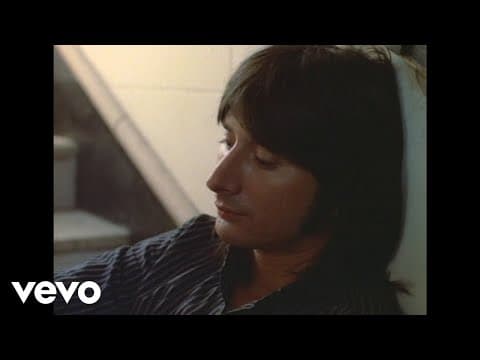
Steve Perry — Oh Sherrie (1984) Director: Jack Cole Era: MTV Golden Age / Arena Rock Peak (1984) - The height of MTV's cultural dominance, when major-label rock acts competed for rotation through ambitious, narrative-driven promotional clips that blurred the line between music video and short film. An essential Tier 1 artifact of the MTV Golden Age. 'Oh Sherrie' is one of the most formally innovative music videos of 1984, introducing a self-aware, meta-cinematic narrative structure at a moment when most rock videos remained straightforward performance clips. Its documented production history — including a significant re-edit that rescued the video's emotional logic — makes it an unusually rich object for study in music video craft, editorial theory, and the commercial sociology of early MTV. The confirmed director credit, cinematographer, and producer provide a robust crew record rare for the period. Context: Released in spring 1984, 'Oh Sherrie' arrived at the apex of MTV's transformation of the American music industry. The video's self-referential, meta-narrative structure — depicting Perry refusing a bombastic director's vision in favor of a sincere personal serenade — was itself a commentary on the escalating absurdity of the early-MTV video format. Produced by CBS/PMI and shot at a Los Angeles architectural landmark, it exemplifies the era's push toward 'mini-movie' production values. The song hit #3 on the Billboard Hot 100 and #1 on the rock chart, with MTV rotation cited as a primary driver. It was released while Perry remained lead vocalist of Journey, making it a pivotal document of the arena-rock solo crossover phenomenon that defined mid-1980s mainstream rock commerce. Director notes: The video was produced by Paul Flattery and shot at the historic Park Plaza Hotel (now The MacArthur) at 607 South Park View St., Los Angeles. The original concept involved an Egyptian motif, which was changed to a Shakespearean setting when no suitable L.A. location could be found for the Egyptian aesthetic. Neighborhood residents and stagehands were used as extras in period costumes. The initial edit of the video did not test well because Perry came across as a 'spoiled rock star'; Cole brought in a film editor who restructured the opening to show multiple takes of Perry enduring ridiculous scenarios before his breakdown, generating audience sympathy. The result was an unusually long-form video with a two-minute narrative intro before the song's first line. Cinematography was by Tom Grubbs. The video received heavy MTV rotation and is widely credited as a key factor in the song's commercial success.
Source: radarchive.org
Part of RAD Archive · Watch in the documentary